



What to Expect During a Georgia Personal Injury Consultation
October 24, 2026 | Firm Name | Blog

Last Updated: October 22, 2026
Quick Summary
A personal injury consultation is a free, no-obligation meeting where an attorney reviews your accident, injuries, and legal options. It usually lasts 30 to 60 minutes, and the goal is simple: find out whether you have a claim worth pursuing.
- Every consultation starts with basic housekeeping and a conflict check to confirm the firm doesn’t represent the other driver.
- Georgia’s statute of limitations for most personal injury claims is two years from the date of injury.
- Bring your crash report, photos, medical records, witness contacts, and insurance information to the meeting.
- Most personal injury attorneys work on contingency, so legal fees come out of any settlement, not your pocket up front.
- Treat the first meeting as a screening, not a verdict, since claim value can’t be finalized in one sitting.
Table of Contents
- What Happens at a Georgia Personal Injury Consultation
- How to Prepare for a Personal Injury Lawyer Consultation
- What to Bring to a Personal Injury Lawyer Consultation
- Questions to Ask a Personal Injury Lawyer
- Personal Injury Consultation Duration and What Comes After
- What a Lawyer Can and Cannot Determine in One Meeting
- Confidentiality, Fees, and Comparing Attorneys After the Meeting
- Frequently Asked Questions
What Happens at a Georgia Personal Injury Consultation
To get your FREE accident report fill out the yellow form on this page.
A personal injury consultation is a free, no-obligation meeting where an attorney reviews your accident, injuries, and legal options. It usually lasts 30 to 60 minutes, and the goal is simple: find out whether you have a claim worth pursuing. (Source: O.C.G.A. § 9-3-33)
At Georgia Accident Report, we help people get their official police accident reports, often the first thing an attorney asks for. Below is exactly what to expect during a Georgia personal injury consultation, so you walk in prepared.
The Opening Conversation and Conflict Check
Every meeting starts with basic housekeeping: your name, the accident date, and where the crash happened. Then comes the conflict check, firms verify they don’t already represent the other driver or an involved insurer, and refer you elsewhere if they do. You’ll also sign a short intake form confirming the meeting is confidential.
How the Attorney Evaluates Your Case Facts
Next, the attorney digs into the details. Expect questions about:
- How the accident happened, step by step
- Road, weather, and traffic conditions at the time
- Whether police came to the scene
The lawyer is not judging you. They’re testing whether fault is clear and whether evidence still exists. Witness memories fade. Camera footage gets overwritten. A good attorney moves fast on both.
How to Prepare for a Personal Injury Lawyer Consultation
Preparation turns a vague conversation into a real case evaluation, and in Georgia, the clock matters.
Know the deadlines before you walk in
Georgia’s statute of limitations for most personal injury claims is two years from the date of injury under O.C.G.A. § 9-3-33. Exceptions shorten it: claims against a government entity generally require an ante litem notice within 12 months under O.C.G.A. § 36-33-5, and some municipalities impose shorter internal windows. Medical malpractice carries a two-year limit plus a five-year statute of repose.
Georgia also applies modified comparative fault under O.C.G.A. § 51-12-33: at 50% or more at fault, recovery is barred; below 50%, damages are reduced by your percentage. That makes early evidence-gathering critical, a witness statement or crash report pinning fault on the other driver can mean the difference between a viable claim and a barred one.
This is general information, not legal advice. Only a licensed attorney reviewing your specific facts can tell you which deadline applies to your case.
Preserve evidence now, not later
Camera footage is the most perishable evidence in any crash. Many commercial fleets overwrite dashcam video within 30 to 90 days, and retail parking lot systems often cycle in 14 to 30 days. A spoliation letter from an attorney can put a footage holder on notice to preserve it, but it has to go out before the overwrite cycle ends, one reason to schedule consultations quickly.
The preparation checklist
Use this as your packing and planning guide:
- A one-page timeline of the accident, from the moment before impact to today
- The official police or state patrol crash report (Georgia uses the Georgia Motor Vehicle Accident Report, completed by the investigating officer)
- Photos of vehicle damage, injuries, road conditions, and any visible hazards
Missing items won’t sink your case, the firm can request records later with your written permission. But each document you bring shortens the investigation and sharpens the attorney’s read on liability.
What to do when evidence is unavailable
Not every crash has a police report, a cooperative witness, or preserved footage. If police didn’t respond, common in minor collisions or private parking lots, write down everything you remember within 24 hours: time of day, weather, lighting, road surface, and the other driver’s exact words.
One common mistake: downplaying your injuries because you “don’t want to seem dramatic.” Attorneys need the full picture, if your neck still hurts three weeks later, say so, and bring the records that document it.
What to Bring to a Personal Injury Lawyer Consultation
Bring anything that documents the crash, your injuries, and your losses. The attorney will sort through it with you.
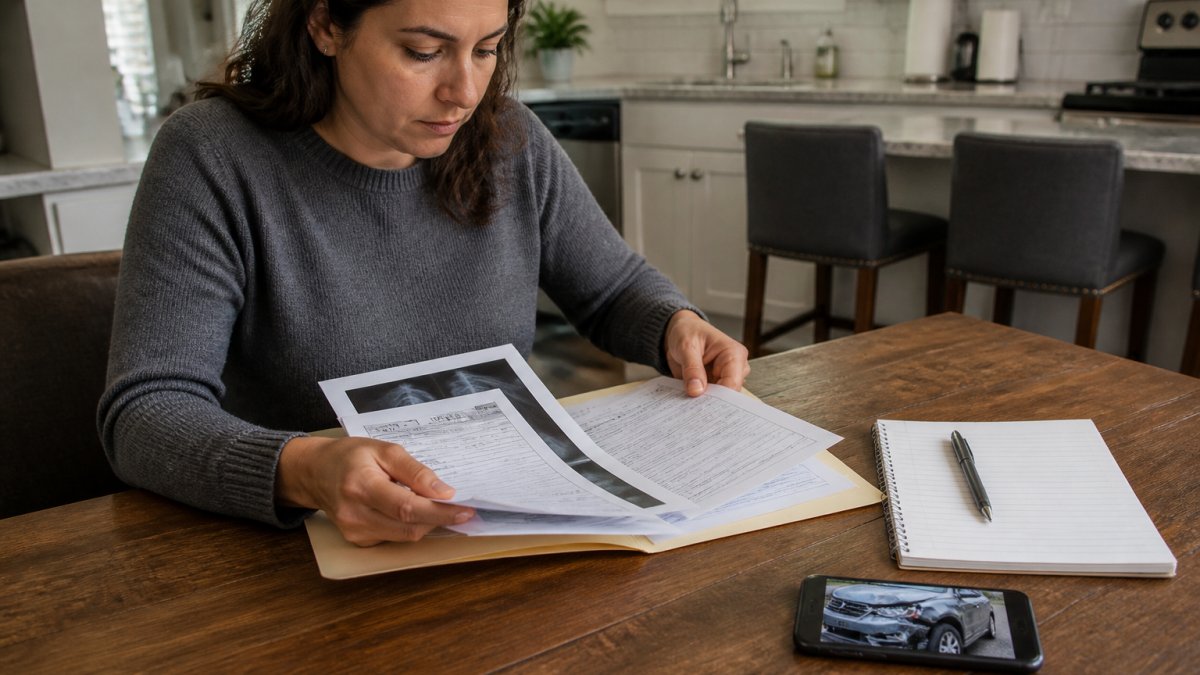
Documents and Records Checklist
Use this list as your packing guide:
- Official police or state patrol accident report
- Photos of vehicle damage, injuries, and the scene
- Medical records, discharge papers, and treatment bills
Missing items won’t sink your case. The firm can request records later with your written permission. But each document you bring shortens the investigation. (Source: modified comparative fault under O.C.G.A. § 51-12-33)
Request a copy of your free accident report →
If you don’t have the crash report yet, our free service can pull it for you. We handle the calls to police and state patrol agencies across Georgia, at no cost to you and with no obligation.
Questions to Ask a Personal Injury Lawyer
Ask direct questions and listen for direct answers. The best questions to ask a personal injury lawyer cover fees, timelines, and communication:
- How many cases like mine have you handled?
- Who pays case expenses, and when?
- How often will I hear from you, and who answers my calls?
Write the answers down. Comparing firms later is much easier with notes in front of you.
Personal Injury Consultation Duration and What Comes After
Personal injury consultation duration is usually 30 to 60 minutes; complex cases with multiple vehicles or serious injuries can run longer. Phone and video meetings are common and often free.
After the meeting, one of three things happens:
- The firm takes the case. You sign a representation agreement, and the investigation begins.
- The firm declines. You get a referral or a clear explanation, and you move on.
- You take time to decide. Totally normal. Ask how long the offer to represent you stays open.
Most personal injury attorneys work on contingency: legal fees come out of any settlement, not your pocket up front. Case expenses like records requests and filing fees are handled differently from firm to firm, so ask.
What a Lawyer Can and Cannot Determine in One Meeting
One meeting gives the attorney a strong preliminary read, not a final answer. Understanding the difference protects you from two opposite mistakes: expecting a guaranteed number on day one, or dismissing an early read as guesswork.
What the attorney can usually assess
In a single consultation, a lawyer can typically form a view on:
- Whether fault appears clear or contested. A rear-end crash with a clean police report reads very differently from a lane-change dispute with no witnesses.
- Whether the deadline is still open. The attorney can check the accident date against the statute of limitations and any shorter notice requirements, such as the ante litem notice for government-entity claims.
- Whether comparative fault is likely to be an issue. Under Georgia’s modified comparative fault rule, a client 50% or more at fault is barred from recovery, so the attorney will probe for facts that could shift blame onto you.
What the attorney cannot determine in one meeting
A lawyer cannot finalize claim value in one sitting, and any lawyer who claims otherwise is overselling. Here is why:
- Medical treatment may not be finished. Future care costs, permanency ratings, and the full extent of injury are unknown until you reach maximum medical improvement.
- Lost wages and future lost earning capacity are not yet calculable. You may not know how long you’ll be out of work or whether the injury will affect your career long-term.
- Insurance coverage limits often take weeks to confirm. Policy limits, uninsured/underinsured motorist coverage, and any commercial or umbrella policies aren’t visible on the crash report; the attorney must request declarations pages and may need to send formal demands.
Why the early read still matters
A preliminary assessment isn’t a promise, but it’s useful: it tells you whether the attorney sees a path forward, what evidence they’d pursue first, and what they’d need from you. It also reveals whether the firm handles your injury type, knows the venue, and communicates in a way that works for you.
If two attorneys give wildly different reads on fault, look closer at the evidence, starting with the official crash report and any witness statements. A second opinion is normal, and most consultations are free.
Confidentiality, Fees, and Comparing Attorneys After the Meeting
What you say in a consultation is confidential even if you don’t hire the firm, attorney-client privilege generally attaches once you’re seeking legal advice, so speak freely. On fees, ask for the contingency percentage in writing, who covers expenses if the case loses, and whether the firm charges anything if there’s no recovery.
After the meeting, compare firms on four points:
|
What to Compare |
Why It Matters |
|---|---|
|
Fee percentage |
Directly reduces your settlement |
|
Communication style |
You’ll work together for months |
|
Case experience |
Familiarity with your injury type and venue |
|
Responsiveness |
Slow answers now mean slow answers later |
Frequently Asked Questions
Is a personal injury consultation free in Georgia?
Most Georgia personal injury attorneys offer a free initial consultation and work on a contingency fee, meaning they are paid a percentage of any settlement or verdict rather than an hourly rate. Ask about the fee structure at the start of the meeting so you understand what you would owe if the case moves forward. The consultation itself is usually no cost and carries no obligation to hire the attorney.
How long does a personal injury consultation take?
Plan for 45 to 90 minutes for a first meeting. A straightforward car accident case with clear liability may take under an hour, while a case involving multiple vehicles, disputed fault, or serious injuries can run longer. Bring your documents organized so the attorney can review case facts quickly. If you have limited time, say so when scheduling and ask whether the meeting can be split into an initial call and a follow-up.
What should I not tell a personal injury lawyer?
Do not guess about details you do not remember, and do not minimize or exaggerate your injuries. Avoid speculating about fault or about whether you were partly responsible. Also skip casual comments about the accident posted on social media, since insurers do review public posts. Be direct and honest about gaps in your memory or treatment. Attorneys need the full picture, including facts that seem unhelpful, to evaluate liability and damages properly.
What happens after a personal injury consultation?
If you hire the attorney, the firm typically sends an engagement agreement, opens a file, and begins gathering evidence such as the accident report, medical records, and witness statements. The attorney then notifies the insurance company and handles communication with adjusters. If you do not hire them, you should still leave with a clearer sense of your options. Either way, ask what the next step is and when you should expect to hear back.
A Georgia personal injury consultation is a low-risk, high-information meeting. The real work starts with paperwork, and it starts with the official crash report. Georgia Accident Report retrieves police accident reports across the state for free, verifies the details were recorded correctly, and connects you with car accident and injury lawyers when you’re ready. Request a copy of your free accident report and walk into your consultation prepared.
Request a copy of your free accident report:
"*" indicates required fields