


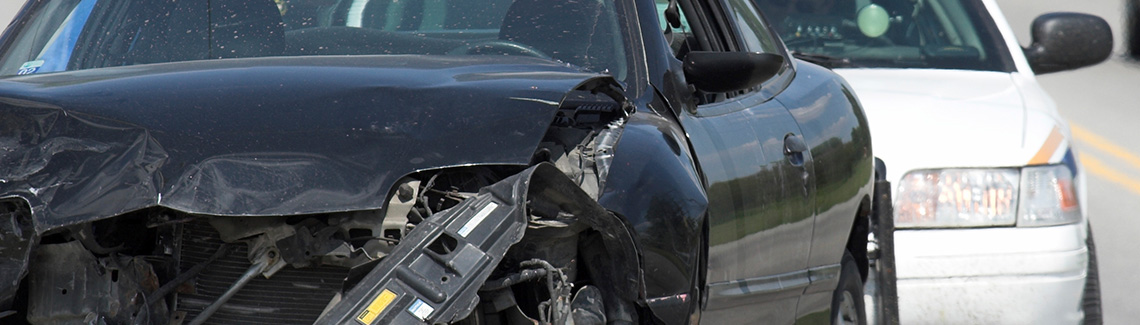
Getting an Accident Report Without Police: A Step-by-Step Guide
October 21, 2026 | Firm Name | Blog
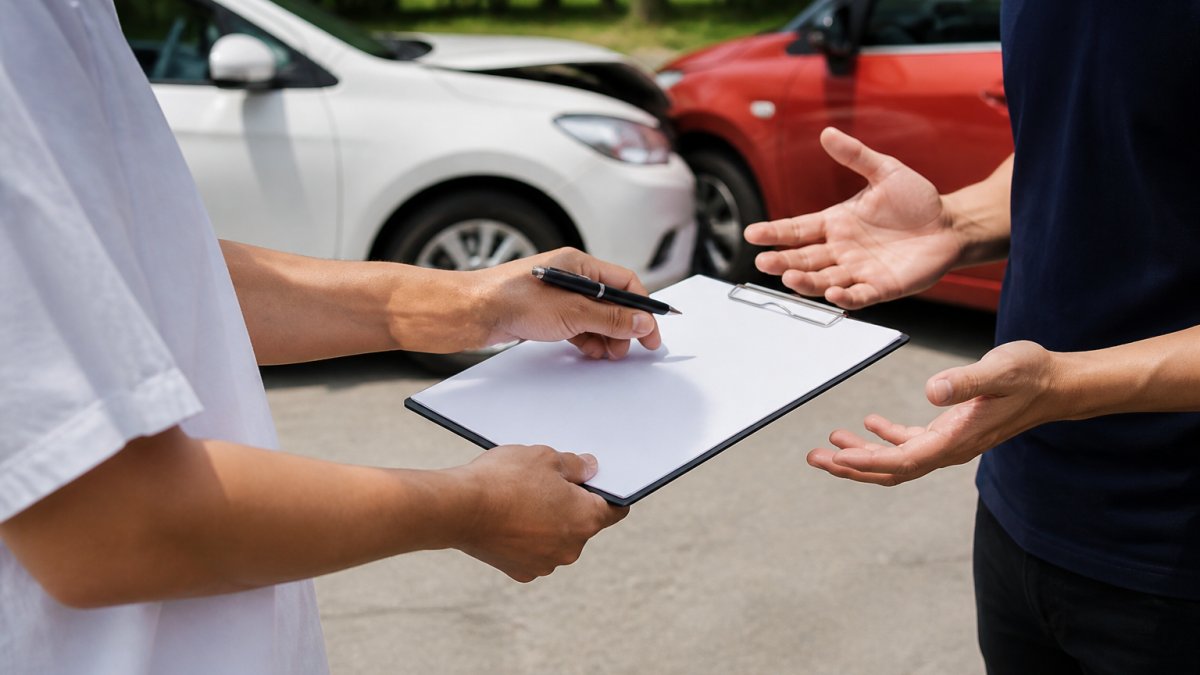
Table of Contents
- Can You Get an Accident Report Without Police Involvement?
- When Police Reports Are Required by State Law
- How to Document a Car Accident at the Scene
- Exchange Information After a Car Accident
- Collecting Evidence for a Car Accident Insurance Claim
- How to File an Insurance Claim Without a Police Report
- Obtaining an Official Report After the Fact
- Frequently Asked Questions
Last Updated: October 21, 2026
Can You Get an Accident Report Without Police Involvement?
To get your FREE accident report please fill out the yellow form.
Yes, you can file an insurance claim and proceed with your case even if police did not respond. The process is more complex without an official police report: you’ll need to document the incident thoroughly and gather evidence proving what happened. (Source: National Highway Traffic Safety Administration (NHTSA) data)
Many drivers assume a police report is mandatory for insurance claims. It’s not. What matters is proving fault and documenting damage. Georgia Accident Report helps by obtaining official reports when they exist and connecting you with lawyers who can build your case using alternative documentation.
An official police report carries weight with insurers because it comes from a neutral third party. Without one, your documentation must be stronger and more detailed. Here’s how to do that.
When Police Reports Are Required by State Law
Police attendance at an accident is not legally required in most situations. But some circumstances trigger a mandatory reporting obligation set by state law, not your insurer.
The two separate obligations people confuse. Calling police to the scene is different from filing a written crash report with a state agency. Many states require the second even when no officer responds.
Common statutory triggers. Most states require a report when an accident involves:
- Injury or death to any person
- Property damage above a dollar threshold (commonly $1,000 to $2,500, though the figure varies widely)
- A hit-and-run, even with no injuries
- A driver who is unlicensed, uninsured, or leaves the scene
- Damage to public property such as a sign, guardrail, or utility pole
Deadlines are short. Reporting windows are typically measured in days, not weeks, commonly 5 to 10 days to submit a written report to the state motor vehicle agency or local police, with commercial drivers facing tighter timelines.
Who files what. In most states the driver files a self-report (often called an operator’s report or crash report) with the state DMV or highway safety office. Police file their own report only when they respond.
How to find your state’s rule in five minutes. Search “[your state] motor vehicle crash report requirement” and look for the state DMV, department of transportation, or highway patrol page.
When calling police is smart even if not required. An officer who responds creates a neutral record, runs the other driver’s license and insurance status, and can note impairment or citations. If the other driver is hostile, uninsured, or refusing to exchange information, call.
State motor vehicle crash reporting requirements and thresholds
How to Document a Car Accident at the Scene
The moment the accident happens, your documentation becomes critical. Most people fall short here: they exchange information and leave, then realize weeks later they have no proof of conditions, damage angles, or scene details.
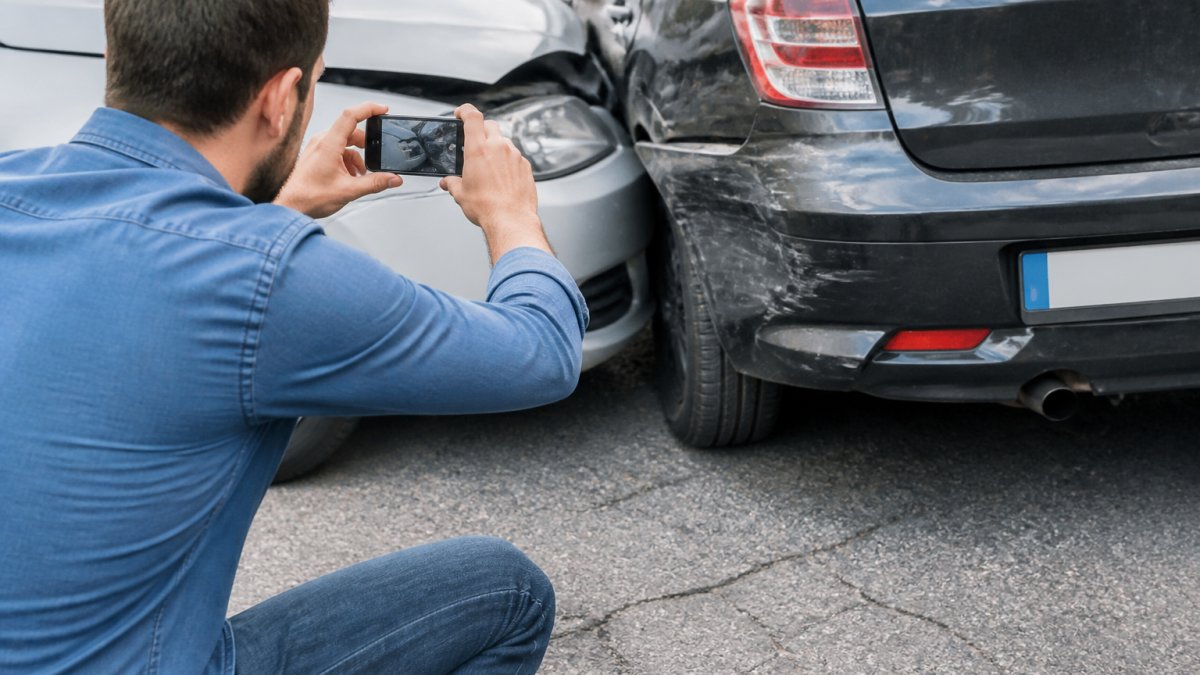
Start by ensuring everyone is safe. Move vehicles out of traffic if possible. Turn on hazard lights. Then pull out your phone.
Take photos and video from multiple angles:
- Wide shots showing the overall scene and vehicle positions
- Close-ups of all vehicle damage, including bumpers, doors, and windows
- License plates of both vehicles
- Street signs, traffic lights, and road conditions
- Skid marks or debris patterns if present
- Weather conditions and lighting
- The other driver and their vehicle
Shoot video as well as stills. Video captures context, road conditions, traffic flow, how vehicles are positioned relative to each other. A 30-second video often tells the story better than five photos.
Document the scene in writing:
- Date and exact time of the accident
- Location with street names and nearby landmarks
- Weather conditions (rain, snow, fog, clear)
- Road conditions (wet, dry, icy, pothole)
- Traffic light status if applicable
- Speed limit and your speed estimate
- Other vehicle’s direction of travel
- Lighting conditions (daylight, dusk, night)
Put this written record in your phone’s notes app immediately, while details are fresh. Paper works too, but digital is easier to preserve and share.
Exchange Information After a Car Accident
The exchange of information is your first step toward building a case without police. Get complete details from the other driver and any witnesses.
From the other driver, collect:
- Full name and phone number
- Home address
- Driver’s license number and state
- Vehicle make, model, year, and color
- License plate number
- Vehicle identification number (VIN)
- Insurance company name
- Insurance policy number
- Insurance agent’s contact information
Write this down, and photograph their driver’s license and insurance card with your phone as a backup.
From witnesses, get:
- Full name and contact information
- What they saw
- Whether they’re willing to provide a written statement later
Witnesses are gold, a neutral person’s account carries enormous weight with insurers. Even if a witness is hesitant, getting their contact info lets you follow up later.
What NOT to do:
- Don’t discuss fault or admit responsibility
- Don’t accept cash as a settlement at the scene
- Don’t leave without exchanging information
- Don’t rely on memory, write everything down
If the other driver refuses to provide information, note that. If they become hostile, step back and call police. Your safety comes first.
Collecting Evidence for a Car Accident Insurance Claim
Beyond scene documentation, gather evidence that supports your version of events and proves damages. (Source: Federal Motor Carrier Safety Administration (FMCSA) regulations)
Medical records and bills establish injury. If you sought treatment, even a quick urgent care visit, request records immediately and document all follow-up appointments, prescriptions, and therapy.
Request a copy of your free accident report →
Repair estimates prove property damage. Get quotes from multiple repair shops. These estimates become part of your insurance claim file. Keep all receipts if you’ve already paid for repairs out of pocket.
Photos of injuries matter if you have visible bruising, cuts, or swelling. These visual records support injury claims.
Your phone’s location data and timestamps on photos prove when and where you were. Most smartphones automatically embed this metadata. Your insurance company can verify it.
Dash cam footage is invaluable if you have it. Even a 10-second clip showing the moment of impact or the other vehicle’s position changes everything.
Text messages or emails between you and the other driver can serve as evidence, especially if they admit fault or acknowledge the accident happened.
Organize all evidence in a digital and physical folder, labeled with dates. This shows insurers you’re serious and credible.
How to File an Insurance Claim Without a Police Report
Filing a claim without an official police report requires extra thoroughness and organization.
Step 1: Notify your insurer immediately. Don’t wait. Call within 24 hours of the accident. Delays raise red flags. Report the accident, provide basic details, and ask what documentation they need.
Step 2: Gather all your evidence. Compile photos, medical records, repair estimates, witness contact information, and written scene notes. Create a timeline of events.
Step 3: Provide a detailed written account. Write a clear, factual summary of what happened, where, and how you were affected. Stick to facts and avoid emotion or blame language.
Step 4: Submit your claim package. Send your insurer everything: photos, medical records, repair estimates, witness information, and your written account. Include a cover letter listing what’s enclosed.
Step 5: Follow up regularly. Don’t assume your claim is being processed. Check in with your adjuster weekly and ask what else they need.
Step 6: Request an independent evaluation if needed. If the adjuster disputes your version of events, ask for an independent investigation. Many insurers have protocols for this.
The absence of a police report doesn’t prevent you from filing a claim. It just means you’re providing more of the evidence yourself.
Obtaining an Official Report After the Fact
The honest answer to obtaining an accident report without police involvement is that you may need to create the record yourself, then request a copy. Four distinct documents get called an “accident report,” and they are not interchangeable:
- Official police crash report, created by an officer who responded. Does not exist if no officer attended.
- State self-report / operator’s crash report, a form you file with the state DMV or highway safety office. This may be the only official record in a no-police accident.
- Insurer claim record, your own carrier’s file. Not a public record, not admissible as a police report, but useful evidence.
- Private incident statement, your written account, witness statements, and photos. Persuasive, but not an official document.
Step 2: File a self-report if your state requires or allows one. Obtain the state’s operator crash report form from the DMV or highway safety office website.
Step 3: Prepare the information before you file. Have ready your driver’s license, registration, insurance card, the other driver’s information (or a note it was unavailable), photos, witness names and numbers, and any medical or repair records.
Step 4: Request the copy. Once a report exists, police or self-filed, request it from the agency that holds it.
Step 5: Check for errors and request correction. Read the report line by line. Wrong plate, wrong direction of travel, or a misstated injury can follow you into the claim.
Step 6: Use the report correctly. An official report, police or state self-report, carries more weight with adjusters than your own narrative, but pair it with photos, medical records, and witness statements.
Special situations. In a hit-and-run, file the police report even if damage is minor, it is often required and it creates the record your insurer needs.
How to request a crash report copy from a state motor vehicle agency
Frequently Asked Questions
Will my insurance company accept a claim without a police report?
Yes, most insurance companies will process claims without a police report, especially for minor accidents. However, your claim adjuster will rely more heavily on your documentation, witness statements, and photos to determine fault and liability. Having an official accident report strengthens your case, but self-documentation can be sufficient if it’s thorough and credible. Contact your insurance company immediately after the collision to report it, even without a police report.
How can I get an official accident report if police never came to the scene?
You can request a delayed report by contacting the police department or sheriff’s office that has jurisdiction over the accident location. You’ll need the exact date, time, location, and vehicle information. If you’re in Georgia, Georgia Accident Report can assist you in obtaining your official police accident report at no cost and connect you with legal assistance if needed.
What documents do I need to file an insurance claim without a police report?
Gather photos of all vehicle damage, the accident scene, and both vehicles’ license plates. Collect the other driver’s name, phone number, address, driver’s license number, and insurance information. Get written statements from any witnesses, including their contact details. Document the date, time, location, and weather conditions. If you have medical records or repair estimates, include those. The more complete your documentation, the stronger your claim will be without an official police report.
What should I do immediately after a minor accident with no police involvement?
Move vehicles to a safe location if possible. Exchange driver information, insurance details, and vehicle information with the other driver. Take photos of all vehicle damage, the accident scene, road conditions, and both license plates. Get names and contact information from any witnesses. Write down the exact date, time, and location. Don’t admit fault or apologize for the accident. Contact your insurance company within 24 hours to report the collision. Keep all documentation organized for your claim.
Request a copy of your free accident report:
"*" indicates required fields