



Georgia Car Accident Legal Help: Your Complete Guide
August 5, 2026 | | Blog
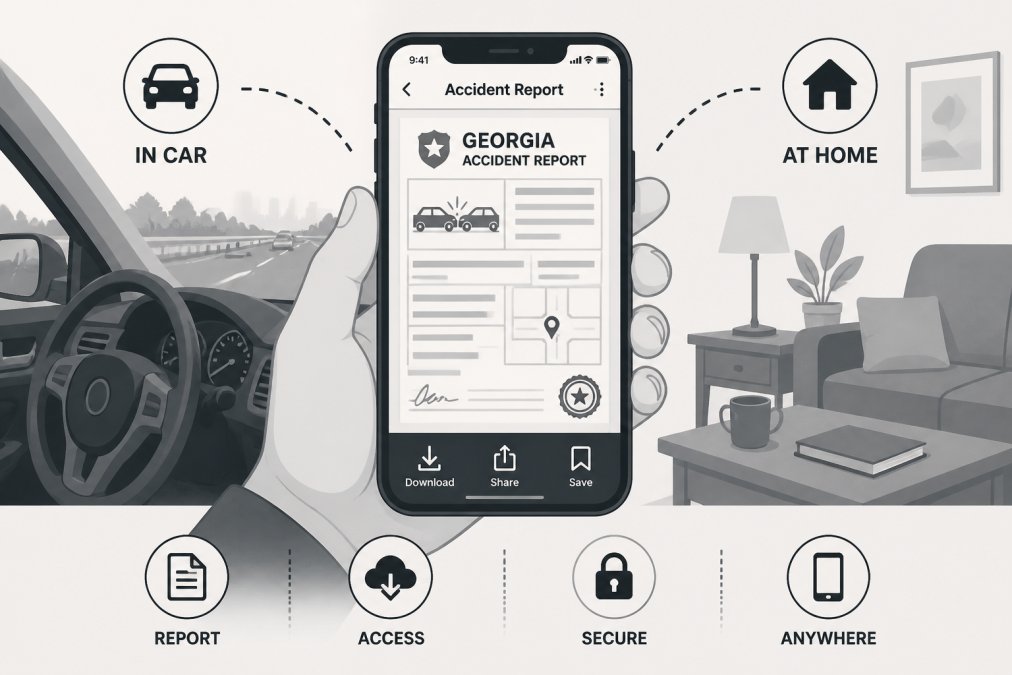
Table of Contents
- What to Do Immediately After a Car Accident in Georgia
- Understanding Georgia Statute of Limitations for Car Accidents
- How Georgia’s Comparative Negligence Law Affects Your Claim
- How to File a Car Accident Claim in Georgia
- Proving Liability and Gathering Evidence
- Types of Compensation Available in Georgia Car Accident Cases
- Getting Your Free Police Accident Report and Legal Support
- Conclusion
Last Updated: August 5, 2026
What to Do Immediately After a Car Accident in Georgia
To get your free accident report visit georgiaaccidentreport.com and fill out the yellow form.
The first hours after a car accident determine whether you’ll have the documentation needed to protect yourself legally and financially. Start by ensuring everyone’s safety. Move vehicles out of traffic if possible and safe to do so. Turn on hazard lights. Call 911 if anyone is injured or if there’s significant property damage. In Georgia, you’re required to report accidents that result in injury, death, or property damage exceeding $500 to law enforcement.
Document the scene thoroughly before leaving. Take photos and videos of vehicle damage from multiple angles, the accident location, traffic signs, road conditions, and weather. Capture images of both vehicles’ license plates and VIN numbers. These visual records become critical evidence later.
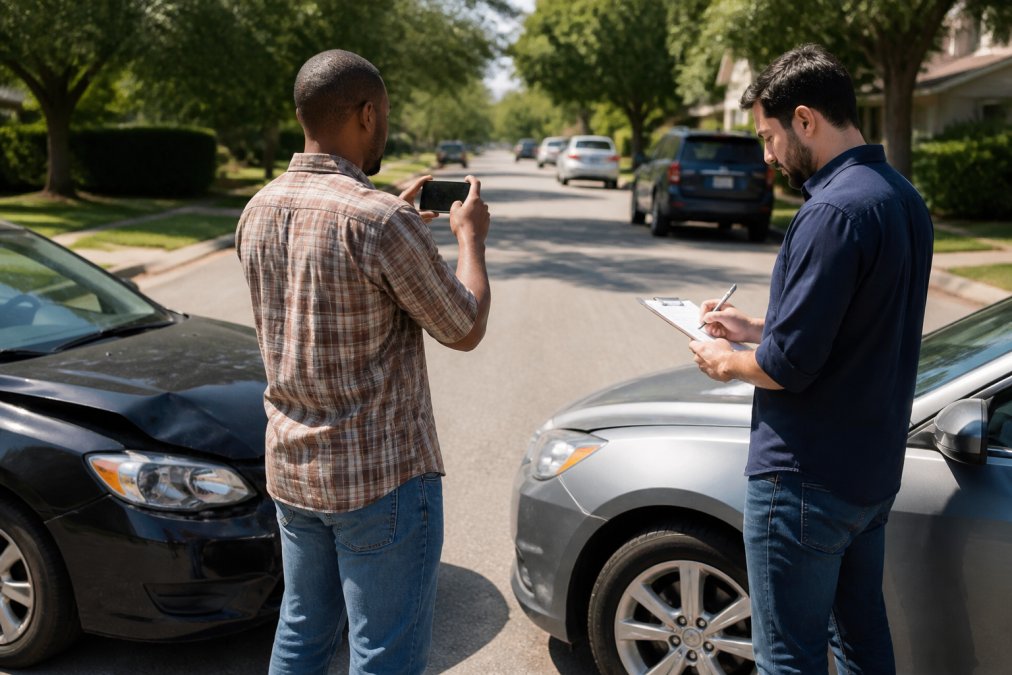
Exchange information with the other driver: name, phone number, address, driver’s license number, vehicle make and model, license plate number, insurance company name, and policy number. Write down the names and contact information of any witnesses. If police respond, get the officer’s name, badge number, and police report number.
Don’t admit fault or apologize for the accident. Statements like “I’m sorry” or “It was my fault” can be used against you later. Stick to factual statements about what happened. Avoid discussing the accident on social media or with anyone except your insurance company and attorney.
Contact your insurance company promptly. Most policies require notification within a specific timeframe. Provide factual information but don’t speculate about fault or injuries. Keep records of all conversations, including dates, times, and names of representatives.
Seek medical attention even if you feel fine. Some injuries appear hours or days after an accident. Get a written medical report documenting any injuries, treatment received, and recommended follow-up care.
Understanding Georgia Statute of Limitations for Car Accidents
Georgia’s statute of limitations sets a strict deadline for filing a lawsuit related to a car accident. For personal injury claims, Georgia allows you two years from the date of the accident to file a lawsuit. For property damage claims, Georgia provides a four-year statute of limitations, though most insurance settlements happen long before this deadline.
The statute of limitations can be extended in limited circumstances. If the defendant leaves Georgia, the time they’re absent doesn’t count toward the deadline. If the injured person is a minor, the two-year clock may not start until they reach age 18. These exceptions are narrow, so don’t rely on them without consulting an attorney.
Missing the deadline has severe consequences. Once two years pass, you cannot file a lawsuit for personal injuries, regardless of how valid your claim might be. Insurance companies know this deadline and may use it strategically in settlement negotiations. Starting the legal process early protects your rights and ensures you won’t accidentally let the deadline slip away.
How Georgia’s Comparative Negligence Law Affects Your Claim
Georgia follows a modified comparative negligence standard, which fundamentally changes how fault and compensation work in car accident cases. You can recover damages even if you were partially at fault for the accident. However, your recovery is reduced by your percentage of fault. If you were 20% at fault and your damages total $100,000, you can recover $80,000. If you’re found to be 50% or more at fault, you cannot recover anything.
Insurance adjusters routinely attempt to assign you partial fault, knowing it reduces what they must pay. Proving you were less at fault requires solid evidence: police reports, witness statements, accident reconstruction analysis, and traffic law violations by the other driver. If the other driver received a traffic citation for running a red light, failure to yield, or reckless driving, that citation carries significant weight in establishing their fault.
Georgia courts consider various factors when assigning fault: whether either driver violated traffic laws, visibility conditions, vehicle speed, road conditions, and driver attention. Insurance companies use comparative negligence strategically, often offering quick settlements at lower amounts, betting you’ll accept rather than fight over fault percentages.
How to File a Car Accident Claim in Georgia
Notify your insurance company within the timeframe specified in your policy. Provide factual information about the accident, the other driver, and any injuries or property damage. Your insurer will assign a claims adjuster who investigates the accident and determines liability.
Gather all documentation supporting your claim: the police report, medical records and bills, repair estimates for vehicle damage, photographs of the accident scene and vehicle damage, witness contact information, and records of lost wages if you missed work due to injuries. Submit a demand letter to the other driver’s insurance company outlining the accident details, the other driver’s liability, your damages, and the amount you’re requesting.
Be prepared for the insurance adjuster’s investigation. They’ll review the police report, inspect vehicle damage, interview witnesses, and may request medical records. Cooperate with reasonable requests but understand that adjusters work to minimize the insurance company’s payout. Keep detailed records of all accident-related expenses.
If the insurance company denies your claim or offers an amount you believe is unfair, you can appeal their decision, file a complaint with Georgia’s Department of Insurance, or pursue litigation. Many accident victims benefit from consulting with a car accident attorney at this stage to evaluate whether the offer is reasonable.
Proving Liability and Gathering Evidence
Establishing liability determines whether you can recover damages. The police report is your first critical document. It contains the officer’s observations, statements from both drivers and witnesses, traffic citations issued, and the officer’s determination of fault. While the report doesn’t determine legal liability in court, it carries substantial weight with insurance companies.
Request a copy of your free accident report →
Witness statements provide independent corroboration of how the accident occurred. Collect witness names, phone numbers, and written statements about what they saw. Photograph and video evidence from the accident scene documents conditions at the time of the crash. Damage patterns often tell the story of how the accident happened; the location and severity of damage indicates vehicle speeds and impact angles.
Traffic law violations by the other driver establish negligence. If they ran a red light, failed to yield, or were speeding, that violation demonstrates they weren’t driving safely. Medical records and expert analysis support causation, proving the accident caused your injuries. For serious injuries, medical experts can testify about the connection between the accident impact and your specific injuries.
Accident reconstruction experts analyze the physics of the collision to determine how the accident occurred. Preserve evidence immediately. Don’t repair your vehicle until the insurance adjuster has inspected it. Keep medical records, bills, and communications with insurance companies.

Types of Compensation Available in Georgia Car Accident Cases
Georgia law allows accident victims to recover several categories of damages. Economic damages compensate for quantifiable financial losses: medical expenses, emergency room visits, hospital stays, surgery, physical therapy, prescription medications, lost wages from missing work due to injuries, and property damage to your vehicle. Future medical care and lost earning capacity for serious injuries are also economic damages.
Non-economic damages compensate for subjective harm: pain and suffering covers physical pain and discomfort caused by the accident and injuries. Emotional distress, anxiety, depression, and post-traumatic stress are recoverable. Loss of enjoyment of life and inability to participate in activities you enjoyed before the accident are compensable. Disfigurement or scarring from accident injuries can justify significant non-economic damages.
Insurance companies and courts often use multipliers to determine non-economic damages, multiplying economic damages by a factor of 1.5 to 5 times depending on injury severity. A severe injury with $50,000 in medical bills might support $150,000 to $250,000 in pain and suffering damages.
Punitive damages are rare in car accident cases but available when the other driver’s conduct was grossly negligent or intentional. Driving under the influence, extreme speeding, or reckless driving that causes serious injury or death might justify punitive damages. Wrongful death damages apply when an accident fatality occurs, allowing surviving family members to recover funeral expenses, lost financial support, loss of companionship, and pain and suffering.
Insurance policy limits cap what you can recover from the at-fault driver’s insurance. Your own uninsured or underinsured motorist coverage may provide additional recovery if the at-fault driver’s coverage is insufficient.
Getting Your Free Police Accident Report and Legal Support
Obtaining your official police accident report is essential for insurance claims and any legal action. Police reports are public records in Georgia, but retrieving them requires knowing which agency responded to your accident and navigating their specific request procedures. Different police departments, sheriff’s offices, and state patrol agencies handle different jurisdictions, and each has different processes for releasing reports.
Georgia Accident Report eliminates that complexity. By submitting a request through their service, you avoid calling multiple departments, waiting on hold, or navigating confusing agency websites. The service handles the legwork of contacting the appropriate agency, requesting your report, and delivering it to you. Since it’s completely free, there’s no financial barrier to getting documentation you need for your insurance claim.
Beyond report retrieval, Georgia Accident Report connects you with car accident and injury lawyers ready to evaluate your case. If your accident resulted in significant injuries or property damage, having legal representation can be highly beneficial. Attorneys understand Georgia’s negligence laws, know how to negotiate with insurance companies, and can file lawsuits if settlement negotiations fail.
Request your free accident report through Georgia Accident Report and get access to legal consultation. You can discuss your specific situation with attorneys who understand Georgia accident law, get answers to your questions, and understand your options without any obligation to hire representation.
The aftermath of a car accident is stressful, but understanding your rights and taking the right steps protects your interests. Getting your official police accident report is the foundation, it documents what happened and establishes a clear record for insurance and legal purposes. Georgia Accident Report provides this critical documentation free of charge, eliminating the bureaucratic hassle of contacting agencies yourself. Beyond the report, connecting with experienced car accident attorneys ensures you understand your legal options, your claim’s value, and whether you’re being treated fairly by insurance companies. Request your free accident report today and get the professional guidance you need to move forward confidently.
|
Step |
Purpose |
Timeline |
|---|---|---|
|
Ensure safety and call 911 |
Protect everyone at the scene |
Immediately |
|
Document the scene with photos |
Create visual evidence of damage and conditions |
Before leaving the scene |
|
Exchange information |
Get driver details for insurance and legal purposes |
At the scene |
|
Notify insurance company |
Start the claims process |
Within 24-48 hours |
|
Obtain police report |
Establish official record of the accident |
Within 1-2 weeks |
|
Seek medical attention |
Document injuries caused by the accident |
Within 24-48 hours |
|
Consult with attorney |
Understand your legal rights and claim value |
Within 30 days |
Frequently Asked Questions
How long after a car accident can you sue in Georgia?
Georgia's statute of limitations gives you two years from the date of the accident to file a personal injury lawsuit. However, this deadline applies to bodily injury claims. For property damage claims, you have a different timeline. It's critical to act within this window—if you miss the deadline, you lose your legal right to recover compensation. Contact a lawyer as soon as possible after your accident to protect your rights and ensure you meet all filing deadlines.
What is Georgia's modified comparative negligence rule?
Georgia follows a modified comparative negligence system, meaning you can recover damages even if you were partially at fault for the accident—as long as you were less than 50% responsible. However, your compensation is reduced by your percentage of fault. For example, if you were awarded $10,000 but found 20% at fault, you'd receive $8,000. This rule makes it essential to gather strong evidence proving the other driver's liability and minimizing any appearance of your own fault.
What types of compensation can I recover from a car accident in Georgia?
You can recover economic damages (medical expenses, lost wages, property damage repair costs) and non-economic damages (pain and suffering, emotional distress, loss of enjoyment of life). In cases involving wrongful death, surviving family members may also claim damages. The amount depends on the severity of injuries, medical documentation, lost income records, and how well liability is established. An experienced attorney can help you calculate fair compensation based on your specific injuries and losses.
Why should I use Georgia Accident Report instead of calling the police department directly?
Contacting multiple police departments or state patrol agencies directly can take weeks and requires navigating different processes by county. Georgia Accident Report handles the entire retrieval process at no cost to you, delivering your official police report faster. You also gain immediate access to qualified car accident lawyers who can review your case and advise you on your legal options—all without obligation. This streamlined approach saves you time and ensures you have professional legal guidance when you need it most.
This article was written using GrandRanker
Request a copy of your free accident report:
"*" indicates required fields