


Top 5 Legal Rights for Hit and Run Victims
October 3, 2026 | | Blog

Table of Contents
- Your First Legal Right: Preserving Evidence at the Accident Scene
- Right to an Official Police Report: How to Get a Police Accident Report in Georgia
- Right to Uninsured Motorist Coverage Georgia Drivers Already Carry
- Right to Fair Treatment: Holding Insurers Accountable for Bad Faith
- Right to Compensation for Damages: What Hit and Run Victims Can Recover
- Statute of Limitations for Personal Injury in Georgia: Don’t Miss Your Deadline
- Conclusion: Taking Action After a Hit and Run
- Frequently Asked Questions
Last Updated: October 3, 2026
Your First Legal Right: Preserving Evidence at the Accident Scene
The hours right after a hit and run decide how strong your case will be. According to the [National Highway Traffic Safety Administration](https://www.nhtsa.gov/research), a hit and run crash happens somewhere in the country roughly every 43 seconds, and each one leaves behind a short window to collect proof.
Your first legal right as a hit and run victim is to gather evidence before it disappears: photograph the scene, note the other vehicle’s description, and write down what you remember while it is fresh.
What to Photograph and Document Before You Leave
- Damage to every vehicle from multiple angles, including close-ups of paint transfer
- The license plate if you caught even part of it, plus the make, model, and color
- Road conditions, skid marks, and traffic signals at the intersection
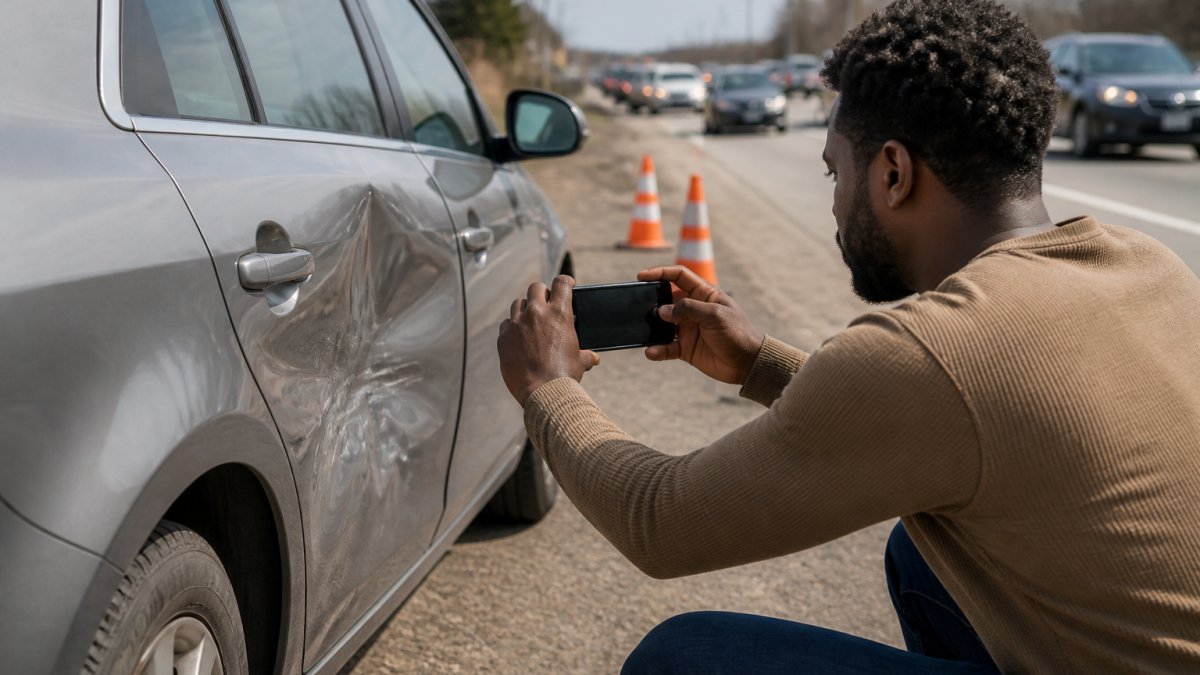
Take a short video walking around the entire scene instead of only still photos. It captures where the cars sat, which lane you were in, and how traffic flowed, details that are hard to reconstruct later from pictures alone.
Right to an Official Police Report: How to Get a Police Accident Report in Georgia
Calling the police is not optional after a hit and run.
To get a police accident report in Georgia, request it from the agency that responded, a city police department, county sheriff’s office, or the Georgia State Patrol. Many route requests through an online portal or records division.
That process is where Georgia Accident Report comes in. The service handles the calls and paperwork for you, serves all of Georgia, and costs nothing, so you can focus on recovery instead of chasing down the right records clerk.
Never settle an insurance claim before you have the official report in hand. Adjusters sometimes quote a fast number that looks generous, and without the report to verify fault and damage, you have no way to know what you are giving up.
Right to Uninsured Motorist Coverage Georgia Drivers Already Carry
Uninsured motorist coverage is the part of your own auto policy that pays when the at-fault driver cannot be found or has no insurance, exactly the situation a hit and run creates.
This matters because the driver who hit you may never be identified. Your own UM coverage then becomes the primary source of compensation, and your insurer steps into the role the missing driver would have played.
How a UM Claim Actually Works After a Hit and Run
A UM claim is a formal claim against your own policy, following the same proof path as a third-party claim:
- Report the hit and run to your insurer promptly. Most policies require notice within a set period, and late notice is a common reason a UM claim is denied.
- Open the claim in writing. Ask for the claim number and the name of the adjuster in the same message so you have a record.
- Prove the other driver was at fault and uninsured or unidentified. The police report is the anchor: one that documents the hit and run, the other vehicle’s description, and any partial plate lets your insurer treat the claim as UM rather than a single-car accident.
- Document your damages. Medical records, bills, wage loss, and repair estimates go to your own adjuster, not the missing driver’s.
- Negotiate the UM limits. Your recovery is capped by the UM limits you purchased, which is why the declarations page is the first document to pull.
UM Property Damage vs. Bodily Injury: Two Separate Claims
One detail most victims miss: UM coverage usually splits into two distinct claims, and you may need to file both.
| Claim Type | What It Covers | Who Files It |
|---|---|---|
| UM Bodily Injury | Medical bills, lost wages, pain and suffering | You, for your injuries |
| UM Property Damage | Repair or replacement of your vehicle | You, for the car |
Filing only one can leave money on the table. In some policies UM property damage carries a separate deductible; in others it is not offered at all, so read the declarations page before assuming the car is covered.
The Hit-and-Run Proof Problem
UM claims for identified drivers are straightforward: the other driver’s insurer is on the hook, and yours only steps in if that coverage is exhausted. Hit-and-run claims are harder because there is no other insurer to pursue. Your company will look for reasons the crash was not a hit and run, including:
- No police report, or a report that does not mention a second vehicle
- Delayed reporting to your insurer
- Gaps between the crash and your first medical visit
A common pattern: a victim who feels fine at the scene, reports days later, and learns the insurer is questioning whether a second vehicle was involved at all. The fix is always the same, report immediately, get the police report, and see a medical provider within a day or two.
Stacking, Limits, and What UM Does Not Cover
Two practical points determine how much UM actually pays. First, your UM limit is a ceiling, not a floor: if you carry the state minimum and the crash causes serious injury, the payout may not cover the full loss, and the difference is usually unrecoverable unless the at-fault driver is later identified and has assets.
UM also does not cover everything: it generally excludes damage to property other than the covered vehicle and punitive damages against the missing driver. It is a safety net, not a substitute for the at-fault driver’s full coverage.
Pull your declarations page before you call your insurer. The UM limits printed there set the maximum your own policy will pay, and knowing that number changes how you approach every conversation that follows.
::: (Source: National Association of Insurance Commissioners’ consumer information on uninsured motorist coverage)
Right to Fair Treatment: Holding Insurers Accountable for Bad Faith
Georgia law gives policyholders a right to fair dealing, and an insurer that unreasonably delays, lowballs, or denies a valid claim can be held liable for bad faith, it may owe more than the original claim.
Watch for these signs that a claim is being handled in bad faith:
- Repeated requests for documents you already submitted
- A settlement offer made before the adjuster has reviewed your medical records
- Delays with no clear explanation and no timeline
Keep a written log of every call, email, and offer. That record is evidence, and it is often what turns a stalled claim into a paid one.
Right to Compensation for Damages: What Hit and Run Victims Can Recover
Compensation in a hit and run case is meant to make you whole, not just cover the tow bill.
Request a copy of your free accident report →
Recoverable damages typically include medical expenses, lost wages and reduced earning capacity, vehicle repair or replacement, and pain and suffering, and in serious cases, permanent injury and its effect on daily life.
The catch is proof: medical records, witness statements, and the official police report convert a claim into a payment.
Statute of Limitations for Personal Injury in Georgia: Don’t Miss Your Deadline
Georgia’s statute of limitations for personal injury sets a firm deadline for filing a lawsuit after a crash. The general rule is two years from the injury date for personal injury claims and four years for property damage, though exceptions and tolling rules can change both.
Two practical points: the clock starts on the injury date, not when you finished treatment or realized the full extent of the damage; and claims against a government entity, such as a city bus or public works vehicle, follow a much shorter notice period, often months rather than years.
Why the Deadline Matters More in a Hit-and-Run Case
The statute of limitations is not just about filing suit. In a hit-and-run case, it interacts with your UM claim in a way most victims never hear about:
- Your policy may require prompt notice. UM coverage typically requires notice within a set period after the crash, which can be far shorter than the lawsuit deadline. Waiting to report can forfeit the claim even if the lawsuit deadline has not passed.
- Evidence disappears faster than the deadline. Traffic camera footage is often overwritten within days or weeks. Witness memories fade. Repair records get purged. The legal deadline may be two years, but the practical deadline for evidence is much shorter.
- The unidentified driver may surface later. If the at-fault driver is identified after the UM claim is filed, the case can shift to a third-party claim, but only if the lawsuit deadline has not already run.
How Time Limits Vary Across States
Because hit-and-run crashes often involve out-of-state drivers, the deadline that applies is not always the one where you live:
| Claim Type | Typical Range | Notes |
|---|---|---|
| Personal injury | 2 to 3 years in most states | A minority allow longer, and a few are shorter |
| Property damage | 2 to 6 years | Often longer than the injury deadline |
| Claims against government entities | 30 days to 1 year notice | Notice is usually required before suit |
| UM claims | Set by policy, not statute | Notice periods can be days or weeks |
The law that applies is usually that of the state where the crash happened, not where you live or where your policy was issued, a distinction that matters near a state line or during a road trip.
Special Rules That Can Extend or Shorten the Clock
A few situations change the math:
- Minors. In most states the clock does not start running against a child until the child reaches the age of majority, which can extend the deadline by years.
- Incapacitation. If the victim is incapacitated at the time of the crash, some states toll the deadline until capacity is regained.
- Fraudulent concealment. If the at-fault driver actively hid their identity, some courts allow additional time.
Because the exact deadlines and exceptions depend on your situation, confirm the current rule with a licensed attorney in the state where the crash happened, or check the state courts’ official information before relying on any timeline. Property damage claims can carry a different deadline than injury claims, so treat them separately, and do not assume the UM notice period matches the lawsuit deadline.
Do not wait for your medical treatment to end before checking the deadline. The clock runs from the date of the injury, and by the time treatment is complete, the window to file may already be closing.
Conclusion: Taking Action After a Hit and Run
Every right in this guide depends on one thing: documentation you can actually produce. The victim who has the police report, the photos, and the medical records holds the use in every conversation that follows.
Georgia Accident Report exists to remove the first obstacle. The service retrieves your official police accident report at no cost, works with agencies across the state, verifies the crash was reported correctly, and connects you with car accident and injury lawyers if you want representation.
Request a copy of your free accident report and start building your case today.
Frequently Asked Questions
Who pays for a hit-and-run accident?
When the at-fault driver cannot be identified, your own uninsured motorist (UM) coverage typically pays for your injuries and property damage. If police later identify the driver, you may pursue a civil claim against them directly. Georgia law requires insurers to offer UM coverage, though you may have declined it in writing. Check your declarations page to confirm your coverage. A personal injury attorney can help you pursue all available sources of compensation.
What is the statute of limitations for hit-and-run accidents in Georgia?
In Georgia, the statute of limitations for personal injury claims, including those arising from hit-and-run accidents, is generally two years from the date of the crash. Property damage claims also carry a two-year deadline. Missing this window can bar your claim entirely. Because deadlines can vary based on whether the at-fault driver is identified, contact a Georgia personal injury attorney promptly to confirm the deadline that applies to your situation.
How does uninsured motorist coverage work for hit-and-run victims in Georgia?
Uninsured motorist (UM) coverage steps in when the at-fault driver has no insurance or flees the scene. In Georgia, UM coverage is divided into two parts: uninsured motorist bodily injury (UMBI) for medical costs and uninsured motorist property damage (UMPD) for vehicle repairs. You must file separate claims for each. Your insurer may require a police report and proof that the other driver could not be found before paying.
Do I need a lawyer for a hit-and-run accident?
Not every hit-and-run case requires a lawyer, but legal counsel helps when injuries are serious, insurance disputes arise, or the at-fault driver is identified and litigation becomes necessary. An attorney can gather surveillance footage, interview witnesses, and negotiate with adjusters who may try to minimize your payout. Many personal injury lawyers work on contingency, meaning you pay nothing unless they recover compensation for you.
Can I file an insurance claim for a hit-and-run with no injuries?
Yes. You can file a claim for property damage through your uninsured motorist property damage (UMPD) coverage or your collision coverage, even without injuries. Georgia requires drivers to carry minimum liability coverage, but UM coverage is optional and must be offered by insurers. File promptly, provide the police report, and document all vehicle damage with photos. Your insurer may still investigate before approving the claim.
Request a copy of your free accident report:
"*" indicates required fields