


Get an Accident Report Outside Georgia: Complete Guide
August 11, 2026 | | Blog
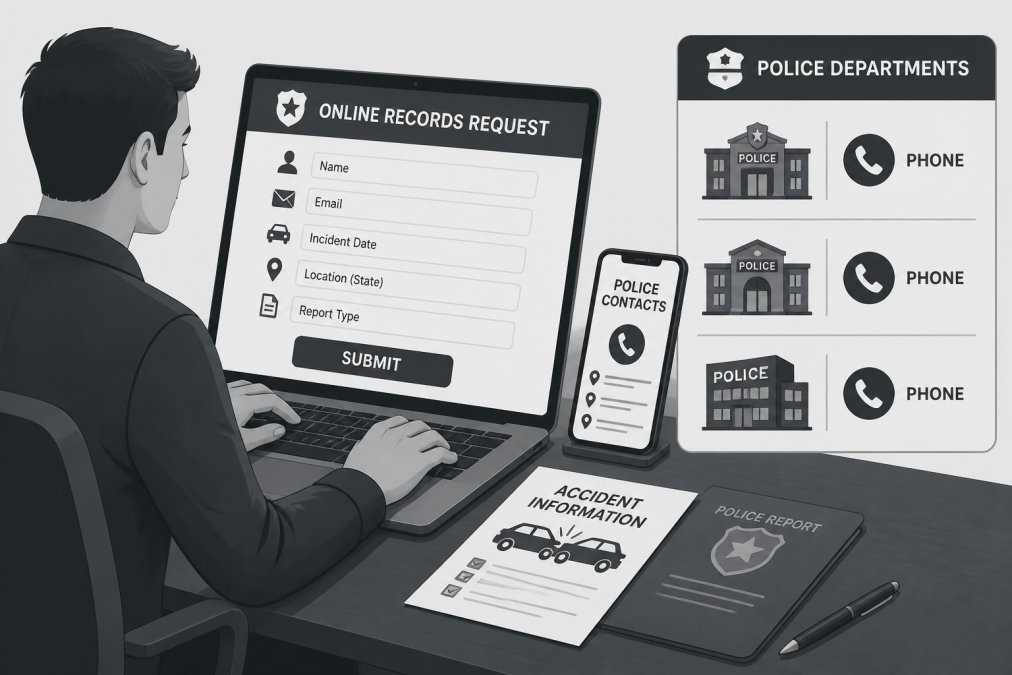
Table of Contents
- Can You Get an Accident Report from Outside Georgia?
- How to Get a Police Report for a Car Accident in Another State
- What Information Is Needed for a Crash Report Request
- How Long Does It Take to Get a Police Report
- Legal Requirements and Filing Deadlines for Out-of-State Accidents
- Troubleshooting Missing or Delayed Accident Reports
- Why Your Insurance Claim Depends on Official Documentation
- Conclusion
Last Updated: August 11, 2026
Can You Get an Accident Report from Outside Georgia?
To get your free accident report visit georgiaaccidentreport.com and fill out the yellow form.
Yes, you can obtain an accident report from outside Georgia. Each state maintains its own crash reporting system, investigating agencies, and record retrieval procedures. The key is identifying the correct jurisdiction and following that state’s specific request process.
If you’re involved in an out-of-state accident, contact the investigating agency in the state where the crash happened, typically the state police, highway patrol, local police department, or county sheriff’s office. Most states now offer online portals or simplified request methods that make retrieval faster than calling directly.
Georgia Accident Report specializes in helping individuals navigate accident report retrieval. While we focus on Georgia incidents, understanding how out-of-state systems work is essential if you were in a crash beyond state lines. Below, we’ll walk you through exactly how to request an accident report from another state, what information you’ll need, and what to do if your report is delayed or hasn’t been filed yet.
How to Get a Police Report for a Car Accident in Another State
Retrieving a police report from another state follows a similar framework to Georgia requests, but the specific steps vary by jurisdiction.
Identify the Correct Investigating Agency
The first step is determining which agency filed the accident report. Start by identifying the exact location where the accident occurred: the city, county, and state. If it occurred on an interstate highway, the state police or highway patrol likely handled it. If it was on a city street, the local police department probably filed the report. County roads typically fall under the sheriff’s office jurisdiction.
Call the non-emergency line for the police department in the city where the crash occurred. Provide the date, location, and names of drivers involved. The dispatcher can tell you which agency has the report and provide contact information. Alternatively, search the state’s official website for the investigating agency directory and look for “accident reports,” “crash records,” or “public records request.”
Contact the Agency Directly or Use Online Portals
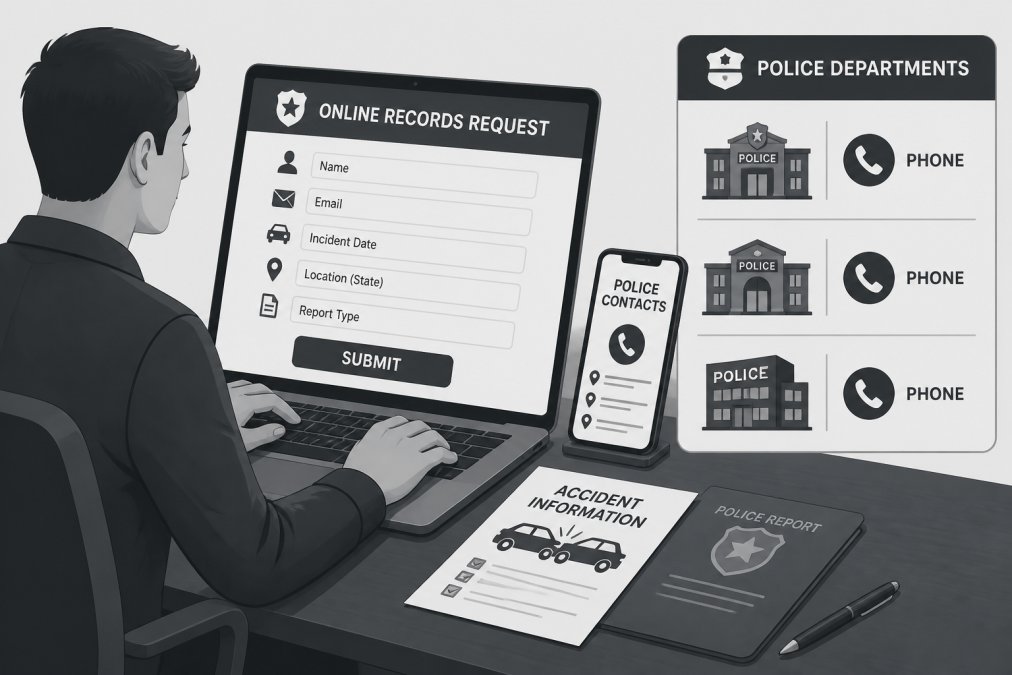
Once you’ve identified the correct agency, you have two options: contact them directly or use their online portal if available.
Many states now offer online systems for requesting accident reports. Search for the agency’s website and look for “request a report,” “public records,” or “accident report retrieval.” If no online option exists, call the agency’s records division during business hours with the accident date, location, vehicle information, and driver names. Email is another option for some agencies, ask if this is available when you call.
Submit Your Request with Required Documentation
Most states require the accident date and approximate time, the specific location (street address, intersection, or mile marker), names of drivers involved, and vehicle information such as license plate numbers or VINs. Some agencies require a completed request form, while others accept requests via phone, email, or their online portal. Check the agency’s website or ask when you contact them about specific documentation needs.
What Information Is Needed for a Crash Report Request
The core information required is the accident date, specific location, and identification of the drivers involved. The date should be as precise as possible; the location must be specific enough for the agency to identify the correct report. Driver names are essential, along with any other identifying information you have: driver’s license numbers, vehicle license plates, or VINs.
Insurance claim information helps too. If an insurance company is handling the claim, provide their name and claim number. Some agencies ask whether the accident resulted in injuries, property damage only, or a hit-and-run situation, which helps them locate the report quickly.
How Long Does It Take to Get a Police Report
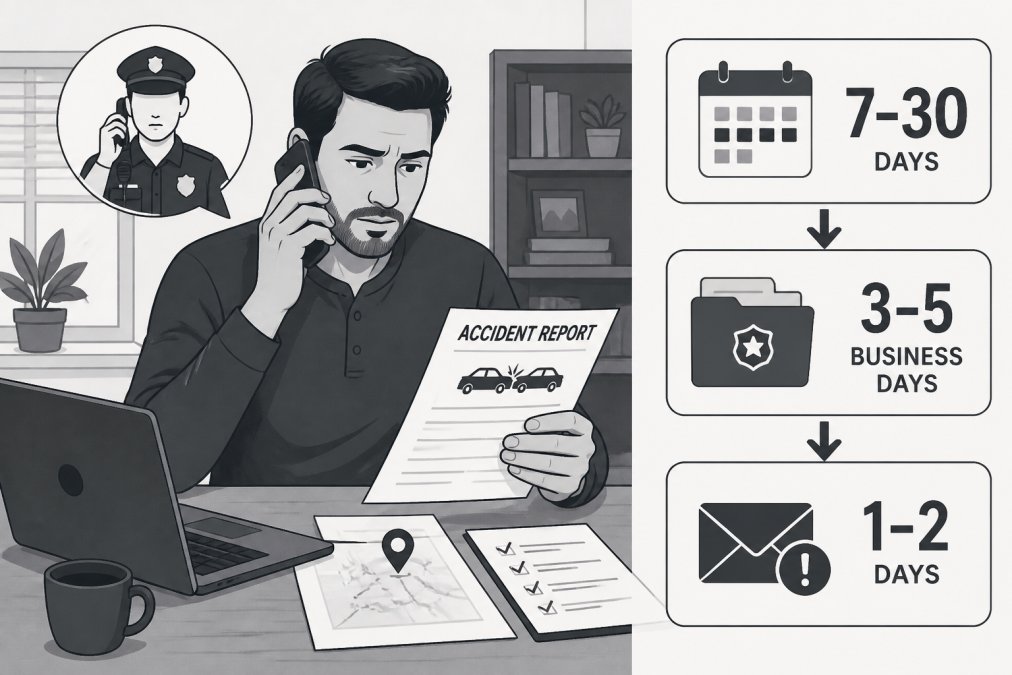
Processing time varies significantly by state, agency, and workload. Many agencies can provide reports within 5 to 10 business days if the accident has already been filed. Some jurisdictions take 2 to 3 weeks, particularly if the investigation is ongoing.
Expedited options exist in some states. If you need the report urgently for an insurance claim or legal proceeding, ask whether the agency offers rush processing, which typically costs more but can reduce the timeline to 2 to 5 business days. Digital delivery speeds up the process compared to physical copies, request email delivery if available.
Legal Requirements and Filing Deadlines for Out-of-State Accidents
Most states require that accidents resulting in injury, death, or property damage above a certain threshold be reported to police. The property damage threshold varies: some states require reporting for damage exceeding $500, others $1,000 or more. Accidents with only minor damage may not generate an official police report.
The deadline for filing a report also varies. Many states require the report to be filed within 24 hours of the accident, while others allow up to 10 days. If the accident occurred several weeks ago and you still don’t have a report, check the state’s statutory requirements, the report may not exist if the accident fell below the mandatory reporting threshold.
Hit-and-run accidents have different requirements. If the other driver left the scene, you’re typically required to report it to police immediately. These reports are filed differently and may be classified as criminal incidents.
Request a copy of your free accident report →
Troubleshooting Missing or Delayed Accident Reports
If you’ve requested an accident report and haven’t received it, or if you’re told no report exists, several troubleshooting steps can help identify the issue.
What to Do If Your Report Hasn’t Been Filed Yet
If the investigating agency tells you no report exists, the accident may not have been officially filed yet. Contact the agency again and ask specifically when the report will be available. Many agencies can tell you whether the report is in progress or has been completed but not yet entered into the system.
If the accident occurred weeks ago and still no report exists, it may be because the accident didn’t meet the state’s mandatory reporting threshold. Minor accidents with no injuries and minimal property damage sometimes aren’t filed as official reports. In this case, contact your insurance company and explain that no official report exists. Your insurance adjuster can work with the other driver’s insurance to resolve the claim without an official police report.
Consider whether a police report was actually filed at the scene. If officers didn’t respond to the accident, no official report may exist. Document everything you have: photos, witness contact information, and any correspondence with the other driver’s insurance company.
Digital vs. Physical Report Retrieval Options
Most agencies now offer both digital and physical delivery of accident reports. Digital delivery via email or online portal is the fastest option, once the report is processed, you can download it immediately or receive it via email within hours. Digital copies are immediately acceptable to insurance companies and easier to share with lawyers.
Physical copies sent by mail take longer because they must be printed and delivered, adding 5 to 10 business days to the total timeline. However, some legal proceedings require certified physical copies with official seals and signatures.
Ask the agency which format they recommend for your specific need. If you’re filing an insurance claim, a digital copy almost always works. If you’re involved in litigation, ask whether a digital copy is acceptable or whether you need an official physical copy with the agency’s seal. Some agencies charge different fees for different delivery methods, digital delivery is often cheaper or free, while certified physical copies cost more.
Why Your Insurance Claim Depends on Official Documentation
Your insurance company needs an official accident report to process your claim, establish liability, and determine coverage. The police report serves as independent, objective documentation of the accident, including the investigating officer’s observations, statements from both drivers, witness accounts, and the officer’s assessment of fault.
Without an official report, your claim becomes a “he said, she said” situation. If the other driver disputes what happened, your insurance company may struggle to determine fault, which can delay claim processing, reduce the settlement amount, or result in a claim denial. An official report also protects you if the other driver later changes their story.
For serious accidents involving injuries or significant property damage, the report is essential. If you’re considering legal action, the official report is critical evidence that your lawyer will use to establish fault and support your injury claim.
Georgia Accident Report understands the critical role official documentation plays in accident resolution. When you request a report through our service, we ensure you receive the official, verifiable documentation your insurance company needs, plus, if your situation involves injury or complex liability questions, we connect you with experienced car accident and injury lawyers who can review your case at no initial obligation.
Getting an accident report from outside Georgia requires identifying the correct investigating agency, submitting a formal request with required documentation, and understanding that processing timelines vary by state. If your report is delayed or missing, troubleshooting steps and confirming filing deadlines can help you move forward. Official documentation is essential for your insurance claim and any potential legal claim, making prompt retrieval a priority after any accident.
Frequently Asked Questions
Can I request an accident report from a different state?
Yes, you can request an accident report from any state where your accident occurred. Each state maintains its own crash database through its state patrol or highway safety agency. You'll need to contact the specific investigating agency in that state—typically the state police, highway patrol, or the local police department that responded to the incident. Most states offer online portals or mail-in request options for non-residents.
What information do I need to request a crash report from another state?
Typically, you'll need the date and location of the accident, the names of drivers involved, vehicle information (make, model, license plate), and your driver's license number. Some states also require the accident report number if you have it, or the investigating officer's name. Contact the specific state agency handling traffic incidents to confirm their exact requirements before submitting your request.
How long does it take to receive an accident report by mail?
Processing times vary significantly by state and agency. Most states require 5-10 business days for processing, plus additional time for mail delivery. Digital retrieval through online portals is typically faster, often available within 24-48 hours. Contact the specific investigating agency in the state where your accident occurred for their exact timeline, as rural agencies may take longer than urban departments.
Is there a fee for requesting an accident report online from another state?
Fees vary by state and retrieval method. Some states offer free online access to crash reports, while others charge processing fees ranging from a few dollars to $15 or more. Digital delivery is often cheaper than physical copies mailed by postal service. Check the official website of the state patrol or records division where your accident occurred for current pricing and payment options.
Request a copy of your free accident report:
"*" indicates required fields