


When to Request Your Accident Report: A Georgia Guide
August 7, 2026 | | Blog

Table of Contents
- When Is the Best Time to Request Your Accident Report
- How to Get a Police Report for a Car Accident in Georgia
- Average Time to Receive Police Report: What to Expect
- What to Do If Your Police Report Is Wrong or Delayed
- Why You Need Your Accident Report and How It Helps
- Getting Your Free Accident Report Without the Hassle
- Conclusion
Last Updated: August 7, 2026
When Is the Best Time to Request Your Accident Report
Request your accident report as soon as possible after the accident, ideally within the first few days. Police reports take time to generate and process, so early requests give you faster access to documentation needed for insurance claims, attorneys, or legal action. Waiting weeks or months doesn’t change the report’s content but delays your access to it.
To get your free accident report visit georgiaaccidentreport.com and fill out the yellow form.
How to Get a Police Report for a Car Accident in Georgia
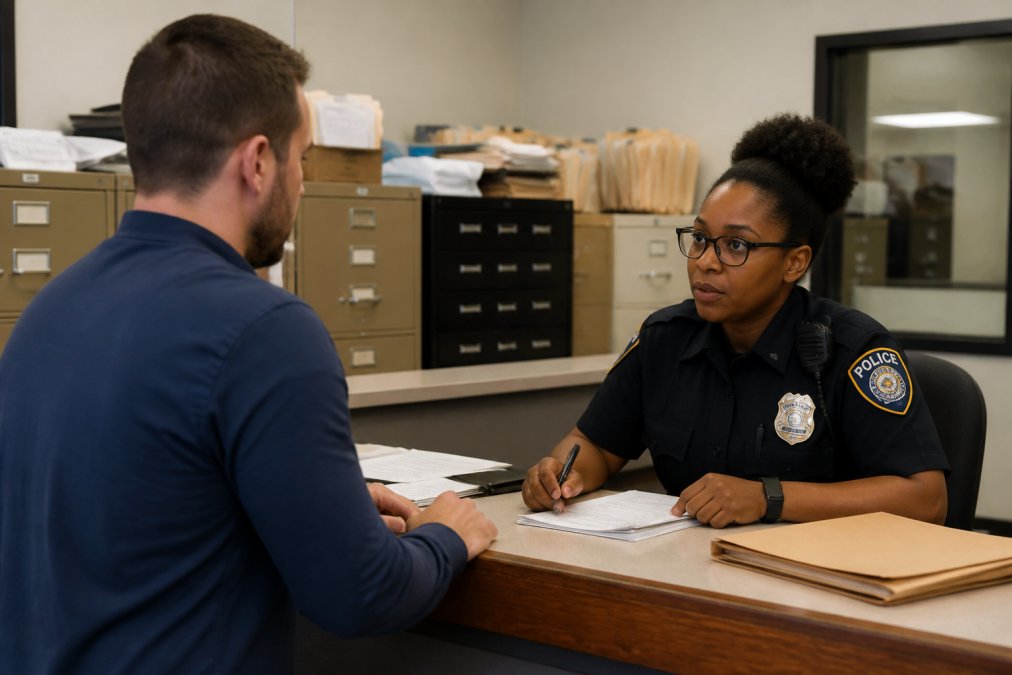
Getting a police report involves contacting the law enforcement agency that responded to the scene or using an online request service.
(/blog/how-to-get-georgia-police-report/)]
Information You’ll Need to Search for Your Report
Before contacting any agency, gather:
- Date and time of the accident
- Location of the accident (street address, intersection, or highway mile marker)
- Case or report number (if provided at the scene)
- Names of involved parties (drivers, passengers, witnesses)
- Vehicle information (make, model, license plate numbers)
- Investigating agency (city police, county sheriff, or state patrol)
The investigating agency depends on location: city police handle accidents within city limits, county sheriff’s offices handle unincorporated areas, and Georgia State Patrol handles state highways.
Requesting Through Law Enforcement Directly
Call the records division or non-emergency line and provide your accident details. Ask when your report will be ready and whether they charge a fee. Be specific about what you need, the official accident report, not just a case number. Confirm whether they provide digital copies via email or require in-person pickup.
Using an Online Request Service
Online services simplify the process by handling contact work for you. Georgia Accident Report is a free service that retrieves your official police report without requiring multiple phone calls to different agencies. You submit your accident details once, and the service contacts the appropriate law enforcement agencies on your behalf.
This approach saves hours of frustration and often connects you with legal resources if you need them for injuries or liability disputes.
Average Time to Receive Police Report: What to Expect
The average time to receive a police report ranges from 3 to 10 business days in Georgia, though this varies significantly based on the investigating agency, report complexity, and workload.
Factors That Affect Report Processing Time
Agency workload. Busy urban departments handle high accident volumes daily, naturally extending processing time. Rural departments with lower accident rates typically respond faster.
Report complexity. Two-vehicle accidents with clear fault process quicker than multi-vehicle collisions with injuries. Accidents requiring investigation, witness interviews, or reconstruction analysis take longer.
Data entry delays. After officers complete reports, administrative staff must enter data into the law enforcement records management system (RMS). Many departments still use legacy systems requiring manual data entry, creating backlogs that can add 5-7 business days.
Personally Identifiable Information (PII) redaction. Before releasing reports, agencies must redact sensitive information: Social Security numbers, home addresses, phone numbers, and medical information. This manual process can delay report release by 3-5 business days beyond initial completion.
Ongoing investigation status. If the accident involves criminal charges, DUI investigation, hit-and-run elements, or civil litigation holds, the report may be withheld from public release. These reports take 30-60 days or longer.
Request method. In-person requests at the records division sometimes get processed same-day or within 24 hours. Mail and phone requests enter standard processing queues and take longer. Certified copies require additional processing time (2-3 business days) beyond standard requests.
Business Days vs. Calendar Days
When an agency says “5 business days,” they mean weekdays only, Monday through Friday, excluding federal holidays. A request made Friday before a three-day weekend should be calculated as starting the following Tuesday. Plan for the longer end of estimated timelines to avoid disappointment.
When to Expect Longer Delays
If your report hasn’t arrived after 15 business days, contact the agency. Common reasons include lost requests, investigation holds, incomplete officer reports, staffing shortages, or supervisor review requirements.
What to Do If Your Police Report Is Wrong or Delayed
If your report contains errors or doesn’t arrive when promised, you need a clear action plan.
Identifying Errors in Your Report
Common errors include incorrect driver information, inaccurate accident details, liability misstatements, missing information, factual contradictions, and incorrect vehicle information. Pay special attention to the officer’s determination of fault, as this directly influences your insurance claim outcome.
Step-by-Step Process for Requesting Corrections
Step 1: Contact the investigating officer directly. Call the non-emergency line and ask to speak with the investigating officer. Be specific about the error and provide your case number.
Step 2: If the officer doesn’t respond, contact the records division. Explain that you submitted a correction request and haven’t received confirmation.
Step 3: Submit a written correction request. Send a formal request via email or certified mail to the records division including your name, accident date, case number, the specific error, correct information, and supporting documentation. Keep a copy for your records.
Step 4: Request an amendment or supplemental statement. Some agencies allow you to submit a written statement that becomes part of the official record, providing your perspective if the officer’s liability determination conflicts with your account.
What to Do When Your Report Is Delayed
If your report is 1-5 days late: Wait. Delays of a few days are normal.
If your report is 10+ business days late: Contact the records division and confirm they received your request. Ask for a specific delivery date. Have ready your full name, date of birth, accident date, location, case number, and request submission date.
If the agency misses the promised deadline: Escalate to the records supervisor or department commander. Explain that you need the report for insurance or legal purposes and request expedited processing.
If the agency says the report isn’t available: Ask why. Possible reasons include investigation hold, incomplete officer report, PII redaction, or supervisor review. If the agency can’t provide a timeline or repeatedly misses deadlines, consider filing a records request under Georgia’s Open Records Act.
Digital vs. Certified Copies: Which One Do You Need?
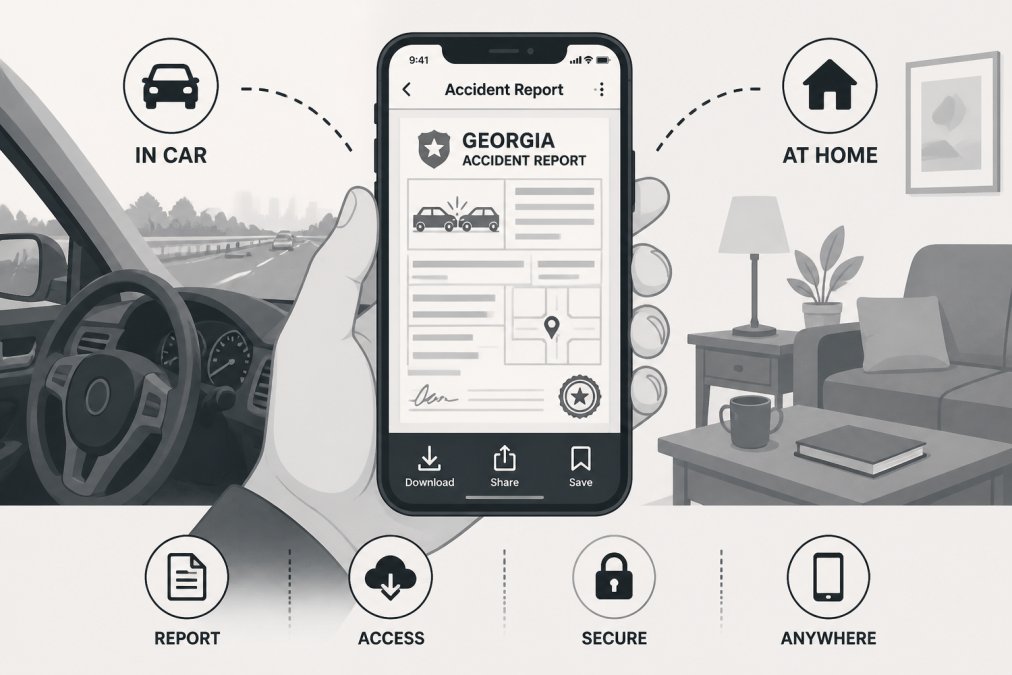
Digital/uncertified copy: An email or download of the report PDF. Fastest to obtain (often same-day or next-day). Most insurance companies accept digital copies. Cost: usually free or $2-5.
Certified copy: An official printed copy with the police department’s seal and signature. Required for court proceedings and legal representation. Takes 3-5 business days longer. Cost: typically $10-25.
Ask your insurance company or attorney which you need. Most initial claim submissions only require a digital copy.
When to Use a Professional Retrieval Service
For significant delays beyond 15-20 business days, consider using a professional retrieval service. Georgia Accident Report handles follow-ups with agencies that miss deadlines and ensures you get your report without continued frustration. This is especially valuable if you’re juggling medical treatment, insurance claims, and potential legal action simultaneously.
Why You Need Your Accident Report and How It Helps
Your accident report is the official legal documentation of what happened. Insurance companies require it to process claims. Attorneys need it to evaluate liability and damages. The report establishes an independent, official account before memories fade or details get disputed.
For insurance purposes, the report supports your claim and provides the investigating officer’s assessment of fault, which influences your claim outcome and potential rate increases. For legal purposes, the report is discovery material referenced in settlement negotiations or litigation. Without your official report, you’re relying on informal documentation and memory, which insurance companies treat as less credible than official police reports.
Getting Your Free Accident Report Without the Hassle
Retrieving your accident report doesn’t have to involve multiple phone calls, unanswered voicemails, or weeks of uncertainty. Georgia Accident Report handles the entire process for you at no cost.
The service contacts appropriate law enforcement agencies on your behalf, tracks your request through their system, and delivers your official report as soon as it’s available. You submit your accident details once, and the retrieval process begins immediately. No obligation, no hidden fees, no surprise charges.
Georgia Accident Report also connects you with experienced car accident and injury lawyers if you need legal guidance. Many drivers aren’t sure whether their accident warrants legal representation. Having access to qualified attorneys through the same platform means you can discuss your situation with a professional without hunting for representation separately.
Frequently Asked Questions
How long does it take to receive a police accident report in Georgia?
Processing times vary depending on the law enforcement agency and report complexity, but most Georgia agencies process requests within 5 to 10 business days. Some reports may be available sooner if the accident investigation is complete. Delays can occur if the report requires PII redaction, additional data entry, or if the investigating agency is backlogged. Contact your local precinct's records division for a specific timeline on your accident report.
What information do I need to request my accident report?
To request your accident report, you'll typically need the incident date, location (street address or intersection), case number (if you have it), and your driver information. Some agencies also accept requests by the investigating officer's name or badge number. If you don't have all details, provide as much information as possible—the records custodian can often search by date and location alone. Online portals usually have search fields for these details.
What should I do if there are errors in my accident report?
If you find errors in your report, contact the investigating officer or the precinct's records division immediately. Provide specific details about what's incorrect—driver information, vehicle details, or accident description. You can request a correction or amendment in writing. Some agencies allow you to file a supplemental report explaining the inaccuracies. Keep copies of your original report and any correspondence about the error for your insurance claim and legal records.
Do I need an official police report to file an insurance claim?
Yes, most insurance companies require an official police report for accident claims involving significant damage or injuries. The report provides official documentation of the incident, establishes the accident date and location, and helps determine fault. Your insurance adjuster will need the case number and report details to process your claim. If the accident was minor and both parties agreed on fault, some insurers may accept a claim without a report, but it's always safer to obtain the official documentation.
Request a copy of your free accident report:
"*" indicates required fields