

Verify Police Report Accuracy: A Step-by-Step Guide
July 29, 2026 | | Blog
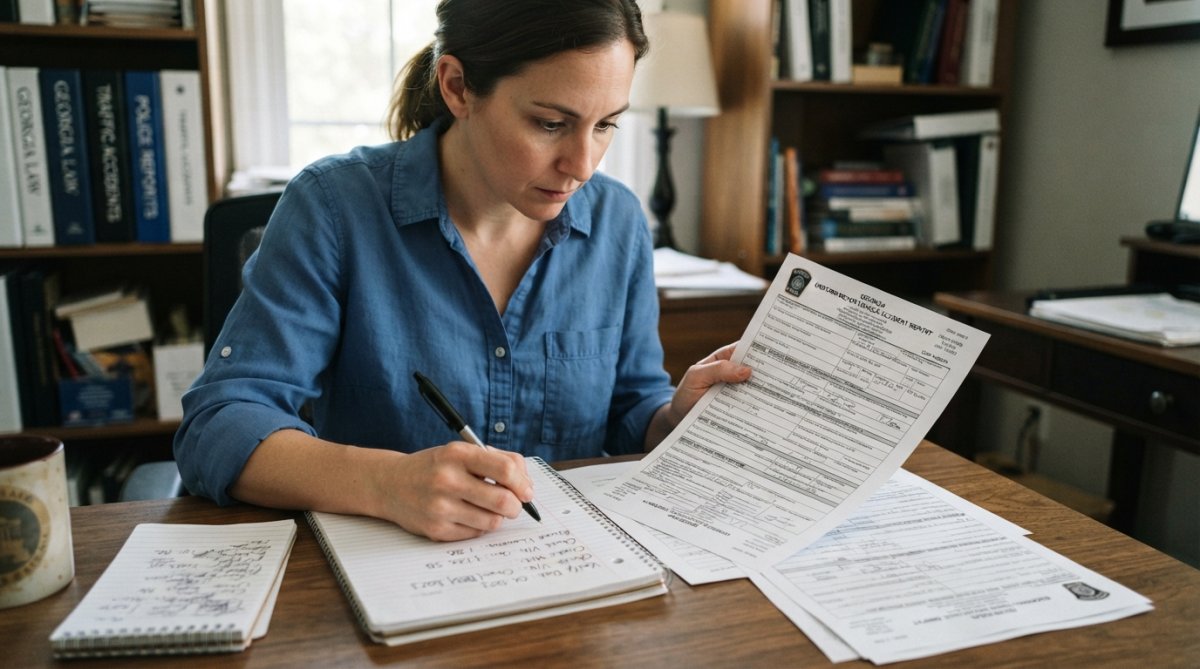
Table of Contents
- How to Verify Police Report Accuracy: The Five W’s
- Understanding Common Police Report Errors
- Step-by-Step: How to Review Your Report
- How to Dispute a Police Report
- The Police Report Amendment Process
- Detecting Fake or Fraudulent Police Reports
- Legal Implications and Next Steps
- Common Mistakes to Avoid When Verifying Reports
Verify Police Report Accuracy: A Step-by-Step Guide
Last Updated: July 29, 2026
Learning how to verify police report accuracy is critical after an accident. At Georgia Accident Report, we’ve helped thousands of individuals identify errors in their official police reports before they impact insurance claims, legal proceedings, or liability determinations. The accuracy of your police report can mean the difference between a straightforward claim and months of disputes.
Most people assume police reports are correct simply because they’re official documents. That assumption costs them. This guide walks you through reviewing your report for accuracy, understanding what constitutes a factual error versus a disputed fact, and taking action if you find problems.
To receive your FREE accident report visit georgiaaccidentreport.com and fill out the yellow form.
How to Verify Police Report Accuracy: The Five W’s
Every police report should contain five essential elements: Who was involved, What happened, When it occurred, Where it took place, and Why the officer believes the accident happened as described.
The “Who” section lists all parties with accurate names, contact information, and vehicle details. The “What” describes the sequence of events. The “When” establishes the exact date and time. The “Where” pinpoints the location with street names and intersections. The “Why” captures the officer’s assessment of how the accident occurred, including contributing factors.
Missing or inaccurate information in any category weakens your report’s reliability. If the officer recorded the wrong vehicle color or misidentified which driver was at fault, these errors directly affect your insurance claim and legal proceedings. According to National Highway Traffic Safety Administration guidance on police report standards, accurate incident documentation is critical for establishing liability.
The narrative section is where subjective interpretation often appears and where you’re most likely to find descriptions that don’t match your recollection.
Understanding Common Police Report Errors
Police report errors fall into two distinct categories. Factual errors are objective inaccuracies: wrong dates, misspelled names, incorrect vehicle identification numbers, or inaccurate damage descriptions. Disputed facts are subjective interpretations: the officer’s conclusion about fault, assessment of who had the right of way, or determination of contributing factors.
Factual errors are easier to correct because they’re verifiable. If your vehicle is listed as red but it’s actually blue, that’s a clear factual error. Disputed facts are more complicated. If the officer wrote that you failed to yield at a stop sign, but you believe you had a green light, that’s a disputed fact requiring extensive evidence: witness statements, photographs, traffic camera footage, or accident reconstruction reports.
Understanding this distinction prevents wasting time trying to “correct” something that’s actually a matter of interpretation.

Step-by-Step: How to Review Your Report
Obtaining Your Official Record
Secure your actual police report from the law enforcement agency that responded to your accident. Contact the police department’s records unit and request a copy by case number or date of accident. Most departments charge a small fee and process requests within 3-7 business days.
Georgia Accident Report simplifies this process by handling retrieval at no cost, eliminating the need to navigate confusing departmental systems.
Checking for Accuracy and Clarity
Begin by verifying all personal information: your name, date of birth, driver’s license number, address, and phone number. Check the same details for other drivers and passengers listed.
Next, confirm vehicle information. The report should list the year, make, model, color, and license plate of your vehicle. Verify the vehicle identification number (VIN) matches your registration exactly.
Examine the accident scene description carefully. The report should include the street name, intersection details, direction of travel, and lane position. Review the damage description and any photographs included with the report.
The narrative is the most critical section. Read it carefully and identify statements that are clearly factual (vehicle positions, traffic control devices, weather conditions) versus interpretive (conclusions about fault, assessments of driver behavior, determinations of traffic violations).
Documenting Evidence and Injuries
If your report contains factual errors, gather documentation to support your correction request. Collect photographs of your vehicle, the accident scene, and any visible injuries. Obtain medical records documenting injuries sustained in the accident.
Gather witness contact information if available. Collect dispatch records or 911 call recordings if accessible. If you have dash camera footage, traffic camera footage, or video from nearby businesses, preserve this carefully. Video evidence is the most compelling documentation because it’s objective and difficult to dispute.
How to Dispute a Police Report
Distinguishing Between Subjective Interpretation and Objective Information
Before filing a formal dispute, clearly understand what you’re challenging. A subjective interpretation is the officer’s judgment about what happened, their conclusion about fault, their assessment of contributing factors. An objective fact is something verifiable: the date, time, location, vehicle descriptions, or weather conditions.
Many people attempt to dispute an officer’s fault determination without realizing this falls into the subjective interpretation category. Challenging that judgment requires substantial evidence, witness testimony, accident reconstruction, or traffic camera footage.
Focus your initial correction request on objective errors. These are quick wins that improve your report’s credibility. Subjective disputes require more preparation and should be handled separately, often with legal counsel if they significantly impact your case.
The Police Report Amendment Process
Requesting a Formal Amendment or Supplement
Once you’ve identified errors, request a formal correction. Most police departments have a process for this, though procedures vary by jurisdiction. Submit a written request to the records unit or the sergeant who supervised the reporting officer.
Your request should be professional and specific. State which factual errors you’ve identified and provide clear documentation supporting your correction. For example: “The report lists my vehicle color as blue. My vehicle registration and the attached photographs show it is actually red. I request that the report be amended to reflect the correct vehicle color.”
Include copies of supporting documentation with your request. Submit your request in writing, preferably by email so you have a record of submission. Include your case number, the date of the incident, and your contact information. Request written confirmation that your amendment request was received and processed.
Many departments will either amend the report or issue a supplemental report that addresses your corrections.
The Role of the Records Unit and Sergeant Review
The records unit maintains all reports and handles requests for copies and amendments. When you submit a correction request, it goes to the records unit first.
If the requested correction is straightforward and factual, the records unit may approve the amendment directly. If the correction involves the officer’s judgment, the request goes to the sergeant who supervised the reporting officer.
If they agree that a factual error exists, they approve the amendment. If they determine that the “error” is actually a subjective interpretation or that your evidence doesn’t support the correction, they may deny the request. The timeline for this process varies from two weeks to 60 days. Follow up in writing if you haven’t received a response within 30 days.
Detecting Fake or Fraudulent Police Reports
Digital Verification Tools and Authentication Methods
In rare cases, individuals encounter reports that appear official but are actually fabricated. Real police reports contain specific elements: official letterhead, case numbers assigned by the department’s records system, officer badge numbers, and department contact information.
Verify the report’s authenticity by contacting the police department directly. Call the records unit and provide your case number or incident details. Ask them to confirm that they have a report on file matching the document you received.
Be especially cautious if someone else provided you with a police report. If an insurance company, attorney, or other party gave you a report, independently verify it with the police department.
Verifying Digital Evidence and Dispatch Logs
Modern police investigations increasingly rely on digital evidence: dispatch recordings, body camera footage, dash camera footage, and digital photographs. Your police report may reference this evidence without including it directly.
Request dispatch logs and recordings through a public records request. If the report references body camera footage or dash camera video, request copies. Verify that any digital evidence referenced in the report actually exists and matches the description.
Legal Implications and Next Steps
When to Consult Legal Counsel
Police report errors can have serious legal consequences, especially in cases involving injuries, significant property damage, or disputed liability. If your report contains factual errors that affect fault determination, or if you believe the report contains misleading or inaccurate information that could harm your case, consulting legal counsel is wise.
An attorney can review your report and advise you on whether the errors are significant enough to warrant formal correction requests or legal action. If you’re facing a personal injury claim, criminal charges related to the accident, or significant property damage disputes, legal counsel is particularly important.
Georgia Accident Report connects you with qualified car accident and injury lawyers who can assess your situation at no cost. They can review your police report, identify errors, and advise you on the best course of action for your specific circumstances.
Common Mistakes to Avoid When Verifying Reports
The biggest mistake is assuming your police report is automatically correct simply because it’s official. Another common error is confusing factual errors with disputed facts. Attempting to “correct” an officer’s judgment about fault is far more difficult than correcting an objective factual error.
Many people wait too long to request corrections. The sooner you submit a correction request after receiving your report, the better. Departments are more responsive to timely requests. Failing to document your correction request is another mistake, always submit requests in writing and keep copies of everything.
People often submit correction requests without sufficient supporting documentation. If you’re claiming a factual error, include evidence that supports your claim. Don’t assume that one correction request will resolve everything. If your initial request is denied, follow up with additional evidence or clarification.
|
Mistake |
Impact |
Prevention |
|---|---|---|
|
Assuming report is automatically correct |
Miss errors that affect your claim |
Review every section carefully |
|
Confusing factual errors with disputed facts |
Waste time on difficult corrections |
Distinguish objective from subjective information |
|
Waiting too long to request corrections |
Department less responsive |
Submit requests within 30 days of receiving report |
|
Submitting requests verbally only |
No documentation of request |
Always submit in writing with confirmation |
|
Lacking supporting documentation |
Correction requests denied |
Include evidence: registration, photos, medical records |
|
Giving up after first denial |
Errors remain in permanent record |
Follow up with additional evidence or legal counsel |
If you’ve identified errors in your police report and need your official documentation for insurance claims or legal proceedings, Georgia Accident Report provides a free, simplified service to help you obtain accurate reports without contacting multiple agencies. The platform also connects you with qualified car accident and injury lawyers who can review your report, identify errors, and advise you on the best next steps. Request your free accident report today and get access to legal expertise that understands exactly what your report should contain.
Frequently Asked Questions
What are the most common errors found in police reports?
Common police report errors include incorrect personal information, inaccurate incident dates or times, mischaracterized vehicle descriptions, factual errors about how the accident occurred, and subjective interpretations presented as objective fact. Spelling errors, wrong officer names, and incomplete dispatch logs also appear frequently. Review your incident documentation carefully against your own records and witness statements to catch these mistakes early.
How do I request a formal amendment to a police report?
Contact your local police department's records unit or administrative division to request the police report amendment process. Most departments require a written request detailing the specific inaccuracies and supporting evidence. Some jurisdictions allow FOIA requests to accompany amendment requests. The sergeant review typically follows, where a supervisor evaluates your claim. Response times vary by department, but allow 30-60 days. Include copies of supporting documentation like photos, medical records, or witness statements with your request.
Can I dispute a police report if I disagree with the officer's interpretation?
Yes, you can dispute a police report by distinguishing between objective information and subjective interpretation. Factual errors—wrong addresses, dates, or vehicle details—are easier to challenge than disputed facts about fault or primary aggressor designation. However, if the reporting officer's narrative contradicts your account, you can request a supplemental report or file a formal dispute through the records management system. Having witness statements, photos, or dispatch logs strengthens your case significantly.
How can I verify if a police report is authentic or fake?
Verify authenticity by checking official department letterhead, case numbers, and officer badge information. Use digital verification tools available through your state's law enforcement database or FOIA portal. Confirm the report came directly from the police department's records unit, not a third party. Check dispatch logs and incident documentation to ensure consistency. For accident reports, cross-reference with your insurance company's records. If you suspect fraud, contact the department's internal affairs division or your state's public records office.
Request a copy of your free accident report:
"*" indicates required fields