


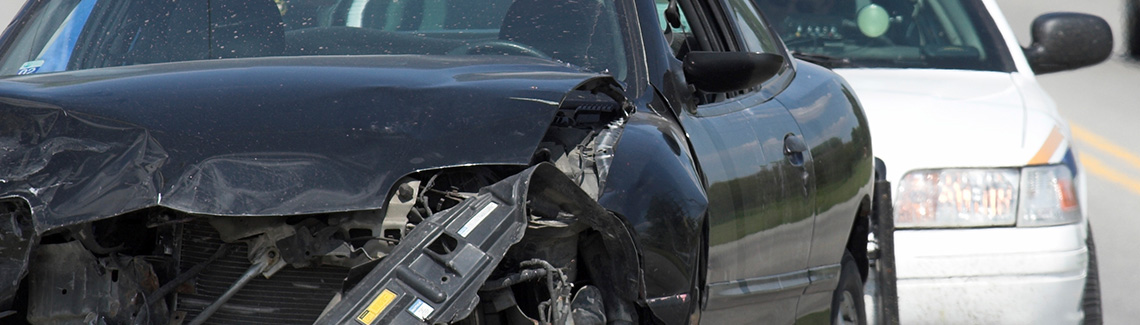
10 Documents Needed for a Car Accident Claim in Georgia
September 10, 2026 | | Blog
Table of Contents
- Why the Right Documents Decide Your Georgia Car Accident Claim
- 1. Police Accident Report
- 2. Medical Records and Treatment Bills
- 3. Photographic Evidence of the Accident Scene
- 4. Insurance Policy Information and Claim Service Card
- 5. Proof of Lost Wages and Income
- 6. Witness Contact Information and Statements
- 7. Communication Logs With Insurance Adjusters
- 8. Repair Estimates and Property Damage Records
- 9. The Georgia Car Accident Statute of Limitations
- 10. Denied Claim and UM/UIM Documentation
- How to Organize Your Documents and Use an Insurance Demand Letter Template
- Frequently Asked Questions
Last Updated: September 10, 2026
Why the Right Documents Decide Your Georgia Car Accident Claim
To get your FREE accident report fill out the yellow form below.
A car accident claim in Georgia rises or falls on paperwork. Insurers pay what you can prove, not what you tell them. Assembling the right car accident claim documents early separates claims that settle fairly from claims that stall for months.
This guide from Georgia Accident Report covers the 10 documents needed for a car accident claim in Georgia, where to get each one, and how to keep them organized. Georgia Accident Report retrieves official police accident reports at no cost.
Most people start with the police report and stop there. That is a mistake. The report establishes that a crash occurred and who responded, but it rarely captures the full cost of your injuries, missed work, or vehicle damage. Each document below fills a gap the others leave open.
1. Police Accident Report
The police accident report is the foundation of a car accident claim in Georgia, recording the date, location, responding officer, involved parties, and the officer’s assessment of contributing factors.
Georgia law requires drivers to report crashes involving injury, death, or property damage above a set threshold, but the exact figure is set by statute and changes, so confirm the current requirement with the Georgia Department of Driver Services rather than relying on secondhand numbers.
How to Get a Police Report in Georgia
You have three routes:
- Request through Georgia Accident Report at no cost. We contact the responding agency, retrieve the official report, and deliver it to you.
- Contact the responding department directly. For state highway crashes, that is the Georgia State Patrol; for city or county roads, it is the local police or sheriff’s office.
- Use the state’s online crash portal where the responding agency participates.
A common mistake is requesting the report from the wrong agency. If a city officer responded, the state patrol will not have it.
2. Medical Records and Treatment Bills
Medical records connect your injuries to the crash and drive the injury portion of your settlement. Request complete records, not just the emergency room summary.
Gather:
- Emergency room and hospital records
- Physician and specialist notes
- Diagnostic imaging reports
- Physical therapy and chiropractic records
- Itemized bills and Explanation of Benefits statements
A treatment gap is one of the most common reasons adjusters reduce an offer. If you missed appointments because of cost or transportation, document why.
3. Photographic Evidence of the Accident Scene
Photos preserve details that memory and reports cannot. Take them at the scene if you are able; if not, ask a passenger or bystander, or return as soon as it is safe.
Capture vehicle damage from multiple angles, road conditions, traffic signals, skid marks, weather, and visible injuries. Note the timestamps, since adjusters use them to verify when photos were taken.
Back up every photo to cloud storage immediately, because phones get lost, damaged, or replaced. Keep the original files rather than edited or cropped versions.
4. Insurance Policy Information and Claim Service Card
Your own policy documents matter as much as the other driver’s. You need your declarations page, showing coverage types and limits, and your claim service card, listing your policy identification number and the claims phone line.
Request the other driver’s insurance information from the responding officer’s report if it was not exchanged at the scene. If the at-fault driver is uninsured or underinsured, your own UM/UIM coverage becomes the source of recovery, and proving it requires the declarations page.
Georgia’s minimum coverage requirements are set by statute and revised periodically. Verify current limits with the Georgia Office of Commissioner of Insurance and Safety Fire instead of assuming.
5. Proof of Lost Wages and Income
Lost wages are recoverable when the crash kept you out of work, but insurers require proof: pay stubs, direct deposit records, and employer letters.
If you are self-employed, the burden is heavier. Gather profit and loss reports, invoices, tax returns, and a letter from your accountant. A bank statement showing reduced deposits helps but rarely stands alone.
Keep a simple daily log of missed hours and dates. It gives your attorney or adjuster a clean timeline.
6. Witness Contact Information and Statements
Witness statements can break a liability dispute when the two drivers tell different stories. Collect names, phone numbers, and email addresses at the scene if you can.
A statement taken soon after the crash, while memory is fresh, carries more weight than a recollection offered weeks later. If a witness will not give a formal statement, their contact information still has value, because your attorney can follow up.
7. Communication Logs With Insurance Adjusters
Log every call, email, and letter to or from an insurance adjuster, recording the date, the person’s name, and what was discussed.
Adjusters change assignments, and verbal promises evaporate. A written log, paired with saved emails and confirmation numbers, records what was said and when. If a claim is later denied, that log becomes central to the appeal.
8. Repair Estimates and Property Damage Records
Repair estimates establish the property damage portion of your claim. Get at least two written estimates, and keep the final invoice and any supplemental estimates for hidden damage found after teardown.
If your vehicle was totaled, keep the valuation report and the salvage or title documents. Diminished value claims, where they apply, depend on proving the vehicle’s pre-accident worth.
9. The Georgia Car Accident Statute of Limitations
The statute of limitations is not a document you collect, it is the deadline that decides whether the documents you collected ever get used. In a Georgia car accident claim, the filing deadline is set by statute, and the period that applies depends on the type of claim and the defendant. Because the figure is statutory and fact-specific, confirm the current period with the Georgia General Assembly’s official code or a licensed attorney rather than relying on a general estimate.
The deadline is not a single date but a set of dates, each proved or tolled by paperwork you should already be gathering:
- The general personal injury deadline. This is the default clock for a negligence claim against a private driver. It runs from the date of the crash in most cases.
- The government-defendant deadline. If a city, county, or state employee or vehicle was involved, a separate, much shorter notice requirement usually applies before you can sue. That notice is itself a document, and missing it can bar the claim even if the general deadline has not passed.
- The tolling exceptions. The clock can pause or restart for minors, for injuries that were not reasonably discoverable at the time of the crash, and in certain other circumstances. Each exception has to be documented, medical records showing when a latent injury was diagnosed, birth certificates for a minor claimant, and so on.
- The UM/UIM wrinkle. Uninsured and underinsured motorist claims can carry their own contractual notice deadlines in your policy, which may be shorter than the statutory period. Your declarations page and the policy’s notice provisions are the documents that control here.
Documents That Prove Your Timeline
Build a one-page timeline and attach the document that supports each date:
- Date of loss, police accident report.
- Date of first treatment, emergency room or urgent care record.
- Date of diagnosis for any latent injury, imaging report or specialist note.
- Date you notified the at-fault insurer, your communication log and the adjuster’s acknowledgment.
- Date you notified your own insurer of a UM/UIM claim, your claim number and the policy’s notice provision.
- Date of any government notice, the filed notice and proof of delivery.
If you are close to any deadline, treat document collection and legal consultation as the same task. An attorney can confirm which clock applies and whether any exception changes it, and that answer determines which of the other nine documents still matter.
10. Denied Claim and UM/UIM Documentation
A denial is not the end of a claim, it is a request for a different file. The documents that got your claim reviewed are not the ones that get it reversed, and UM/UIM claims run on a separate evidentiary track from a standard liability claim. This is where a well-organized file changes the outcome.
If Your Claim Was Denied
A denial letter usually states a reason: no liability, a coverage exclusion, a treatment gap, a pre-existing condition, or a missed deadline. Your appeal file should answer that reason directly and in writing. Gather:
- The denial letter itself, including the claim number, the adjuster’s name, and the specific policy language or reason cited.
- Every document you already submitted, so the reviewer can see the record was complete.
- The policy provision the insurer relied on, pulled from your own declarations page or the at-fault driver’s policy if you have it.
- New evidence that rebuts the stated reason, a supplemental medical record closing a treatment gap, a corrected police report, a witness statement, or a second repair estimate.
- A written appeal letter that quotes the denial reason, cites the document that answers it, and requests a specific re-review. Keep a copy and send it by a method that produces a delivery record.
A common pattern is a denial citing a treatment gap, fixed by a single records request to the provider who can document the reason for the gap. Another is a liability denial that flips once a witness statement or dashcam clip is added.
If the At-Fault Driver Is Uninsured or Underinsured
A UM/UIM claim is a contract claim against your own insurer and requires its own file, kept separate from the liability file so nothing gets cross-filed. You will typically need:
- Your declarations page, showing that UM/UIM coverage was purchased and at what limits.
- Proof the other driver had no coverage or insufficient coverage, the police report listing no insurance, a letter from the other insurer confirming no policy or tendering limits, or a copy of the other driver’s policy showing minimum limits.
- The full medical and wage record, submitted again, because the UM/UIM adjuster evaluates damages independently of the liability adjuster.
- Your own policy’s notice and cooperation provisions, since UM/UIM claims can be denied for late notice even when the crash itself is not in dispute.
- A copy of any settlement with the at-fault driver, because UM/UIM recovery is typically offset by what you already collected.
Keep the Two Files Separate
Use two folders: one labeled with the at-fault driver’s name and claim number, one with your own policy number and the UM/UIM claim number. When you send a demand or appeal, send only the documents that belong to that file. Mixing them invites the adjuster to apply the wrong policy language and slows the review.
If a denial or UM/UIM dispute is in front of you, the fastest path is usually a written appeal with the specific document that answers the stated reason attached. If the insurer will not budge, the same file becomes the foundation for a bad-faith or breach-of-contract claim, so keep every letter, email, and confirmation number.
How to Organize Your Documents and Use an Insurance Demand Letter Template
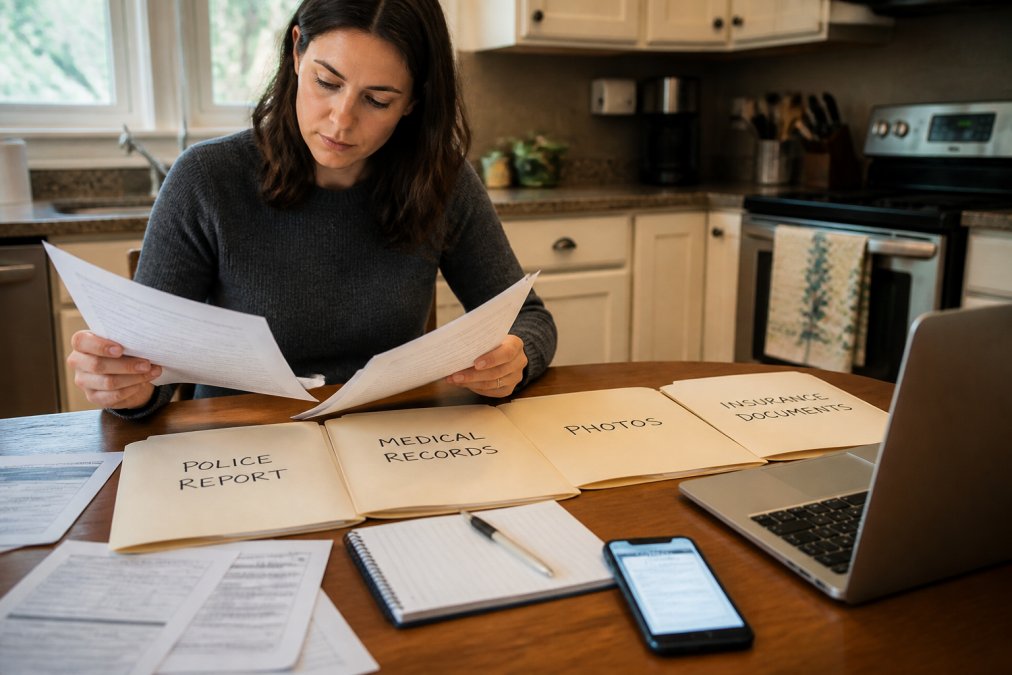
Organization of your car accident claim documents is what makes a claim move. Create one folder, physical or digital, with subfolders for police, medical, wage, property, and correspondence records. Scan paper documents as you receive them so nothing depends on a single copy.
When you are ready to demand payment, an insurance demand letter template gives you a structure. Fill in the blanks with your own facts:
[Date] [Adjuster Name], [Insurance Company] Re: Claim No. [Number], Date of Loss [Date]
Dear [Adjuster Name], I am submitting a claim for damages arising from a motor vehicle collision on [Date] at [Location]. Liability is established by the police report [Report No.] and witness statements attached. My damages include: medical expenses of [Amount], documented by the attached records and bills; lost wages of [Amount], documented by pay stubs and an employer letter; and property damage of [Amount], documented by repair estimates. I request a fair and equitable settlement of [Amount]. Supporting documentation is enclosed. Please respond within [Number] days.
Sincerely, [Your Name]
Attach every document you cite. A demand letter that references records you did not include invites a low counteroffer.
Frequently Asked Questions
What is the statute of limitations for a car accident claim in Georgia?
Georgia law sets a two-year deadline for most personal injury claims arising from a car accident. That clock generally starts on the date of the crash. If you miss it, you can lose the right to sue, even when the other driver was clearly at fault. Property damage claims follow a different timeline. Because deadlines can shift with factors like uninsured motorist claims or a minor involved, confirm your specific date with a Georgia attorney early.
How do I obtain an official police accident report?
You can request the report from the law enforcement agency that responded to the crash, such as the local police department, county sheriff, or Georgia State Patrol. Reports are not always ready the same day, so call ahead or check the agency’s process. Georgia Accident Report offers a free service that contacts the right agency for you and delivers the official report, which saves you from calling multiple departments.
What evidence is most important for proving fault in a crash?
The police accident report, accident scene photos, and witness statements carry the most weight. The report records the officer’s observations and any citations issued. Photos taken before vehicles are moved capture vehicle positions, skid marks, and road conditions. Witness contact information lets an adjuster confirm what happened. Together, these three items give your insurance adjuster a clear, independent picture of liability.
Do I need medical records to support my insurance claim?
Yes. Medical records and treatment bills are the primary proof of your bodily injury damages. They link your injuries to the crash and document the cost of care. Keep every discharge summary, imaging result, and invoice, even for a short emergency room visit. If you delay treatment, the insurer may argue your injuries were not serious, so seek care promptly and keep the paperwork organized.
What should I do if the insurance company denies my claim?
Ask for the denial in writing and note the specific reason given. Then gather your full documentation file, including the police report, medical records, and repair estimates, and compare it against the insurer’s stated reason. You can file a complaint with the Georgia Office of Commissioner of Insurance and Safety Fire. Many denied claims are resolved when missing documents are supplied, so review your file before assuming the decision is final.
Request a copy of your free accident report:
"*" indicates required fields