
Crash Report Narrative Section: How to Read It
September 5, 2026 | | Blog
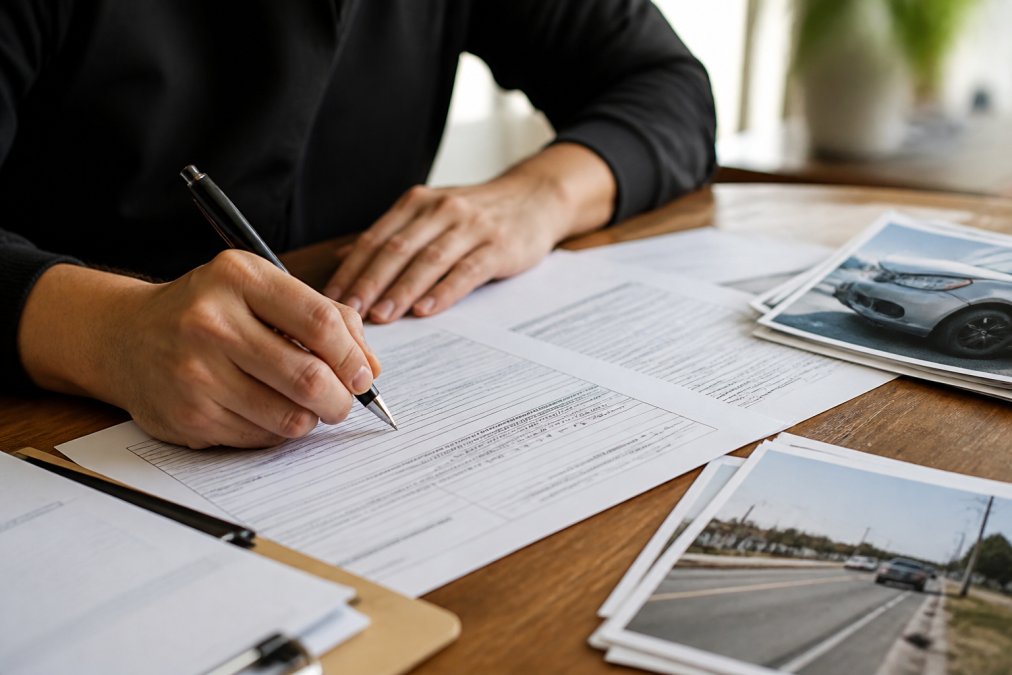
Table of Contents
- What Is the Crash Report Narrative Section?
- What Information Goes Into the Narrative?
- Police Accident Report Narrative Examples
- Importance of Police Report Narrative for Insurance
- Spotting Errors: Narrative vs. Codes Discrepancies
- How to Correct a Police Accident Report
- Get Your Free Accident Report Today
- Frequently Asked Questions
Last Updated: September 5, 2026
What Is the Crash Report Narrative Section?
To get your FREE accident report fill out the yellow at the bottom of the page.
The crash report narrative section is the written portion of a traffic crash report where the investigating officer provides a chronological, factual summary of how the collision occurred. This guide from Georgia Accident Report explains what this section contains and why it matters for your claim. It sits apart from the coded boxes that fill the rest of the form, offering context that checkboxes simply cannot capture.
The narrative tells the story of the accident in the officer’s own words. It describes the sequence of events leading up to the crash, the driver actions observed, and the contributing circumstances the officer identified at the scene. For anyone involved in a collision, this section often carries more weight than the codes because it explains the reasoning behind the officer’s conclusions.
Understanding this document matters because insurance adjusters and attorneys rely on it to determine liability. A single overlooked detail in the narrative can shift how fault is assigned. Below, we’ll show you exactly how to read this section, spot problems, and correct errors when they appear.
What Information Goes Into the Narrative?
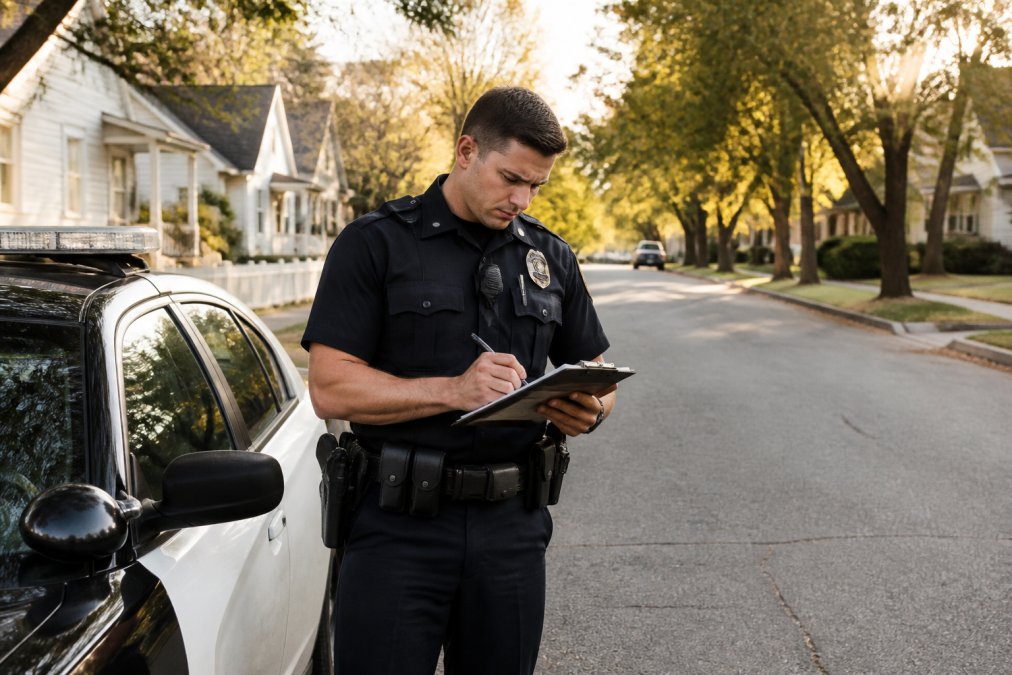
The narrative section functions as the officer’s written reconstruction of the incident. It typically includes the sequence of events in chronological order, the point of impact between vehicles, roadway conditions, weather factors, and any witness statements the officer collected at the scene.
The investigating officer also documents driver actions such as speed limit violations, following too closely, or failure to yield. These observations form the factual summary that supports the official conclusions about who caused the crash.
How the Narrative Differs From Coded Boxes
The report form contains two distinct types of information. The coded boxes use standardized numbers to classify collision details, vehicle dynamics, and traffic violations. The narrative, by contrast, provides the context that makes those codes meaningful.
A code might indicate “failure to yield” as a contributing factor. The narrative explains how that failure occurred, what the driver was doing, and why the officer reached that conclusion. This distinction becomes critical when you review your report for accuracy.
Police Accident Report Narrative Examples
Reading a police accident report narrative example helps clarify what a well-written section looks like. A typical narrative might read: “Vehicle 1 was traveling eastbound on Main Street approaching the intersection with First Avenue. Vehicle 2 was stopped at the stop sign facing northbound. Vehicle 1 entered the intersection on a green light when Vehicle 2 proceeded into the path of Vehicle 1, causing the front of Vehicle 2 to strike the right side of Vehicle 1.”
Notice the structure. The officer describes positions, directions, and the sequence of events without speculation. The narrative focuses on observable facts: where vehicles were, what they did, and what happened next.
What most guides miss is that narratives vary significantly between officers. One officer might write three sentences. Another might write three paragraphs. The level of detail depends on the complexity of the crash, the availability of witness statements, and the officer’s own thoroughness. A shorter narrative is not necessarily a bad one, but it may lack important context.
Importance of Police Report Narrative for Insurance
Insurance companies treat the crash report narrative as a primary source for determining fault (iii.org). When you file a claim, the adjuster reads the narrative to understand how the collision occurred and which driver’s actions contributed to it.
For bodily injury claims, the narrative takes on even greater significance. Your attorney will use the officer’s description of impact severity, vehicle dynamics, and driver actions to build a case for compensation. The narrative can support claims about how the collision happened and who bears responsibility.
According to guidance on traffic crash reporting standards, accurate documentation of crash details is essential for both enforcement and insurance purposes. The narrative provides the official documentation that establishes the factual record of the incident.
Spotting Errors: Narrative vs. Codes Discrepancies
Discrepancies between the narrative and the coded boxes occur more often than most people realize. The officer might describe one driver’s actions in the narrative while the codes attribute the violation to the other driver. These contradictions can create confusion about liability.
Common errors include wrong vehicle descriptions, incorrect directions of travel, missed contributing circumstances, or a sequence of events that does not match witness statements. The narrative might also omit factors that mattered, such as weather conditions or roadway hazards.
A common mistake is assuming the report is accurate simply because it comes from law enforcement. Officers work under pressure at the scene, and errors happen. Reviewing the narrative against the codes and against your own memory of the crash is essential.
The subjectivity of police reporting also deserves attention. The officer arrives after the collision and must reconstruct events from physical evidence and statements. research on police crash investigation procedures highlights how officer interpretation shapes accident documentation. Two officers could write different narratives from the same evidence.
A Practical Guide to Cross-Checking Your Report
To effectively spot a discrepancy, you need a systematic approach. Don’t just read the narrative; actively compare it line-by-line with the data in the coded boxes. Here’s a deconstruction guide to map specific narrative sentences to potential legal liability:
- Identify the Primary Actor: In the narrative, find the sentence that describes the first unsafe action. For example, “Vehicle 1 failed to stop at the red light.” Now, look at the ‘Contributing Factors’ code box. Does it list a code for “Disregarded Traffic Signal” for Vehicle 1? If the code is blank or lists a different factor for Vehicle 1, you have a discrepancy.
- Trace the Sequence of Events: The narrative should describe a logical sequence: Position A -> Action B -> Impact C. Compare this to the ‘Sequence of Events’ codes. If the narrative says “Vehicle 1 was backing from a driveway” but the code for Vehicle 1’s maneuver is “Going Straight Ahead,” the report is internally inconsistent. This inconsistency can be a major point of contention in a liability dispute.
- Check the Diagram Against the Words: The crash diagram is a visual representation of the narrative. If the narrative states that Vehicle 1 was northbound and Vehicle 2 was eastbound, the arrows on the diagram must reflect those directions. A mismatch between the text and the diagram is a clear, objective error that can be challenged.
- Look for Missing Context: The narrative is a catch-all, but it’s not always complete. If the coded boxes indicate “Slippery Roadway” as a condition, but the narrative makes no mention of rain, oil, or gravel, the officer may have failed to connect the environmental factor to the cause of the crash. This omission could be critical if you are arguing that road conditions, not driver negligence, were the primary cause.
By actively cross-referencing these elements, you move from a vague sense that something is wrong to a documented, specific argument about why the report is inaccurate. This level of scrutiny is what separates a simple review from a strategic analysis of your legal position.
Request a copy of your free accident report →
How to Correct a Police Accident Report
If you find errors in the crash report narrative, you have the right to request a correction. The process typically involves contacting the investigating officer or the agency that filed the report and submitting a written request for amendment.
You will need to identify the specific error and explain what you believe is correct, supported by evidence. Photographs, witness statements, or dashcam footage can strengthen your request. The officer may file a supplemental report rather than altering the original document.
The timeline for corrections varies by agency. Some departments respond within days; others take weeks. Follow up in writing and keep copies of all correspondence.
The Amendment Process: A Step-by-Step Guide
While the process varies by state and agency, most follow a similar protocol. Here is a concrete guide based on standard procedures for requesting a correction to an official crash report.
Step 1: Obtain the Official Report and Identify the Specific Error
You cannot request an amendment based on a vague feeling that the report is wrong. You must pinpoint the exact factual error. This could be a misspelled name, an incorrect driver designation (e.g., listing you as Driver 2 when you were Driver 1), a wrong direction of travel, or a narrative that contradicts the physical evidence. Write down the exact sentence or code you believe is incorrect.
Step 2: Draft a Formal Request Letter
Do not rely on a phone call. A formal written request creates a paper trail. Your letter should include:
- Your name, contact information, and the report’s case number.
- The date of the crash.
- A clear, concise statement of the error. For example: “The narrative states that my vehicle was traveling southbound on Main Street. In fact, I was traveling northbound. This is corroborated by the attached dashcam footage.”
- A description of the correct information and the evidence you have to support it.
- A request for the officer to file a supplemental report or amend the narrative to reflect the accurate facts.
Step 3: Submit the Request to the Correct Authority
The request should be directed to the specific law enforcement agency that filed the report. This is typically the police department or sheriff’s office for the jurisdiction where the crash occurred. Address the letter to the attention of the investigating officer, but also send a copy to the agency’s records division or internal affairs bureau. This ensures your request is not lost if the officer is unavailable.
Step 4: Understand the Likely Outcomes
It is rare for an officer to rewrite the original narrative. The most common outcome is the filing of a supplemental report. This is an addendum to the original report where the officer acknowledges the new information and either corrects the record or explains why the original finding stands. A supplemental report is a legally valid part of the crash record and will be seen by insurance companies and courts.
Step 5: Escalate if Necessary
If the agency denies your request or does not respond within a reasonable timeframe (typically 30-60 days), you have options. You can file a complaint with the agency’s internal affairs division. In some states, you may also have the right to petition a court to have the record amended, though this is a more complex legal action that often requires an attorney.
Why This Matters for Your Claim
A supplemental report that corrects a factual error can be the difference between a denied claim and a fair settlement. For example, if the narrative incorrectly states you were speeding, but a supplemental report corrects this to note that you were traveling at the posted speed limit, it directly undermines the insurance company’s primary argument for assigning you fault. This process is not just about administrative accuracy; it is about protecting your legal and financial interests.
Get Your Free Accident Report Today
Securing an accurate copy of your crash report narrative is the first step toward protecting your rights after a collision. Georgia Accident Report provides a free service that handles the legwork of contacting the appropriate agencies to retrieve your official police accident report.
Our service serves all of Georgia, so you do not need to worry about which department filed your report. We also connect you with car accident and injury lawyers who can help you understand what the narrative means for your claim and whether you need legal representation.
Request a copy of your free accident report and verify that the crash report narrative accurately reflects what happened. The team at Georgia Accident Report simplifies the post-accident process so you can focus on recovery while we handle the documentation.
Frequently Asked Questions
Does the narrative section contain the officer’s opinion on fault?
Yes, indirectly. The investigating officer writes the crash report narrative as a factual summary, but their word choices often signal their opinion. Phrases like “failed to yield” or “following too closely” point to who they believe caused the crash. The narrative also includes contributing circumstances the officer observed. If the narrative conflicts with the coded boxes, or you believe the officer missed key details, you can request a correction to the police accident report.
Why is the crash report narrative important for my insurance claim?
The importance of police report narrative for insurance comes down to one thing: it is the adjuster’s primary window into the sequence of events. Coded boxes show data points like speed and point of impact, but the narrative explains how those factors came together. Insurers use it to assign legal liability and decide who pays. A vague or inaccurate narrative can delay your claim or reduce your settlement, which is why reviewing it for errors matters.
Can I request a correction if the narrative section of my report is inaccurate?
Yes. If the crash report narrative contains factual errors, you can request an amendment through the investigating agency. You will typically need to submit a written request identifying the specific mistake and explaining why it is wrong. Supporting evidence like photos or witness statements strengthens your case. This process is exactly why you should obtain your report early and review it before your insurance claim is finalized.
How do I get a copy of my crash report to review the narrative?
You can request a copy from the police department or state patrol agency that responded to the crash. Many agencies have an online portal, but response times vary. Georgia Accident Report offers a free service that handles the retrieval process for you across all of Georgia, so you can review the crash report narrative without calling multiple departments. Once you have it, check both the codes and the narrative for consistency.
Request a copy of your free accident report:
"*" indicates required fields