


How to Get an Official Police Accident Report
August 24, 2026 | | Blog
Table of Contents
- What You Need to Request a Police Accident Report
- How to Request Your Police Accident Report Online
- Mail-In and In-Person Request Methods
- How Long Does It Take to Get a Crash Report
- What to Do After a Car Accident in Georgia
- Insurance Claim Documentation Requirements
- Troubleshooting Missing or Delayed Reports
- Conclusion
Last Updated: August 23, 2026
What You Need to Request a Police Accident Report
To get your FREE accident report visit georgiaaccidentreport.com and fill out the yellow form.
Requesting an official police accident report requires specific information and documentation. Before you contact any agency or request a report, gather the essentials that will speed up the process.
You’ll need the date and time of the accident, the specific location where it occurred, and the names of all parties involved. If you have it, the police report number or case number makes retrieval significantly faster. Insurance claim documentation often includes this reference number on the initial claim form.
Beyond basic details, you should prepare your driver’s license or state ID and any insurance information related to the accident. Some jurisdictions require proof of involvement in the accident before releasing a report. This might mean providing your policy number, vehicle registration, or a statement explaining your role in the incident.
Understanding what constitutes a traffic collision report is important. A police accident report is the official documentation created by law enforcement at the scene of a motor vehicle crash. It contains driver information, vehicle details, witness statements, officer observations, and sometimes preliminary fault determination. This legal documentation serves as the foundation for insurance claims and potential legal proceedings.
Many people don’t realize that police departments and state patrol agencies maintain these records differently. Some jurisdictions digitize everything and allow online access within days. Others still rely on paper filing systems where retrieval takes weeks. Knowing which system your local agency uses helps set realistic expectations.
Georgia Accident Report simplifies this process by handling the legwork of contacting the right agency, gathering necessary information, and retrieving your official report without the frustration of navigating multiple departments.
How to Request Your Police Accident Report Online
Online request systems have become the fastest way to obtain your police accident report in many jurisdictions. Most police departments and state agencies now offer web-based portals where you can submit requests directly from home.

Start by visiting the official website of the police department or county records bureau where the accident was reported. Look for a section labeled “Records Requests,” “Public Records,” or “Accident Reports.” The portal typically asks for the date of the crash, location, and your contact information. Some systems require you to create an account before submitting a request.
When filling out the online form, be as specific as possible. Include the exact date and time of the accident, the city or county, and the names of involved parties if available. Many online systems ask whether you need a certified copy or a standard downloadable document. Certified copies carry an official seal and cost more but are required for certain legal proceedings and insurance claim documentation.
After submitting your request, the system usually provides a confirmation number and estimated processing timeframe. Keep this confirmation number accessible, you’ll need it to track your request or follow up if there are delays. Most online portals allow you to check the status of your request by entering your confirmation number.
The advantage of online requests is immediate submission and often faster processing than mail-in options. However, processing times still vary by jurisdiction. Urban police departments may process requests within 3-5 business days, while rural agencies might take 2-3 weeks.
Georgia Accident Report handles the online submission process for you, ensuring your request reaches the correct agency and follows up if there are any delays or missing information.
Mail-In and In-Person Request Methods
Not all jurisdictions offer online portals, and some people prefer the traditional mail-in or in-person approach. Mail-in requests require you to send a formal letter to the police department or records bureau along with required documentation.
Your mail-in request letter should include your full name, contact information, the date and location of the accident, and a statement explaining why you need the report. Include a copy of your driver’s license or state ID. Address the letter to the Records Bureau or Public Records Division of the police department where the accident was reported.
Mail-in requests typically cost a search fee. Include payment with your request, most agencies accept checks or money orders. Some departments now accept credit card payments through their online systems even for mail-in requests. Always include a self-addressed, stamped envelope to ensure the report reaches you.
In-person requests offer the advantage of immediate answers to questions about your specific accident. Visit the police department’s records division during business hours with your identification and any documentation related to the accident. Staff can often retrieve your report while you wait, though complex cases may still require follow-up.
The trade-off with in-person requests is time and travel. If the accident occurred in a county far from your home, the drive may not be practical. However, for accidents in your local area, stopping by the police station can resolve issues faster than phone calls or emails.
How Long Does It Take to Get a Crash Report
Processing timeframes for a police accident report vary significantly depending on the jurisdiction and how you submit your request. Understanding typical timelines helps you plan for insurance claims and legal proceedings.
Online requests through official portals typically process within 3-10 business days (the CDC). Busy urban police departments may take longer, while smaller jurisdictions often work faster. The timeframe begins when your request is officially received, not when you submit it online. Technical issues or incomplete information can extend this period.
Mail-in requests generally take 7-14 business days for processing, plus additional time for postal delivery (the NIH). Add 3-5 days for mail to reach the police department and another 3-5 days for your report to arrive at your address. In total, expect 2-3 weeks from submission to delivery.
In-person requests at the police station can be resolved in hours if the report is readily available. However, if the accident occurred recently or involves ongoing investigation, staff may tell you the report isn’t yet available for public release. Some incidents require additional time for officer review and completion.
Accidents involving serious injury or fatalities may have delayed report availability. Police departments sometimes restrict access to reports in active investigations. Once the investigation concludes, the report becomes available to involved parties.
Several factors affect processing speed. Reports from recent accidents take longer because officers are still completing documentation. Accidents with multiple vehicles or injuries require more thorough investigation. Reports from rural jurisdictions often process slower due to smaller staff handling higher request volumes.
Georgia Accident Report understands these delays and expedites the retrieval process by working directly with police departments and records bureaus across the state.
What to Do After a Car Accident in Georgia
The immediate steps you take after a motor vehicle crash significantly impact your ability to obtain an official police accident report and file an insurance claim. Knowing the proper sequence protects your interests and ensures complete documentation.
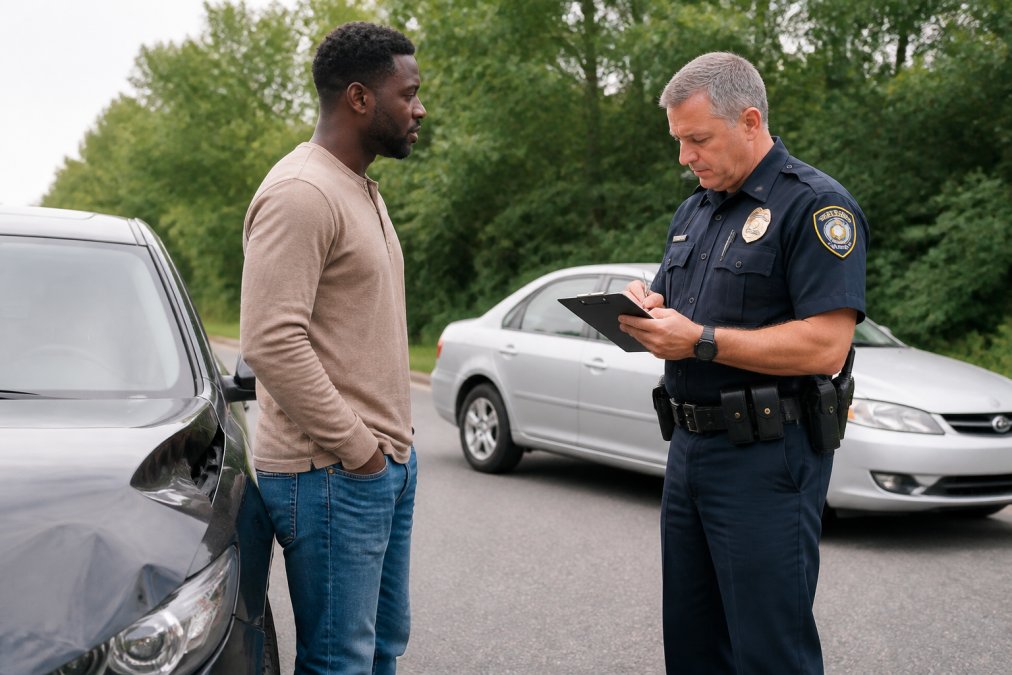
First, check for injuries and call 911 if anyone is hurt. Even minor injuries should be documented by emergency responders. The 911 call creates an official record of the incident and ensures police dispatch and medical attention. Stay at the scene until police arrive, leaving the scene of an accident without providing information is illegal.
When police arrive, provide your name, contact information, driver’s license, vehicle registration, and insurance details. Answer the officer’s questions honestly and completely. The information you provide becomes part of the official police accident report. If you disagree with the officer’s assessment, calmly explain your account, but avoid arguing or becoming defensive.
Request a copy of your free accident report →
Take photos of vehicle damage, the accident scene, road conditions, and traffic signs. These images support your account and help with insurance claims. Photograph the other vehicle’s license plate and registration. Get the names and phone numbers of all witnesses, they may be contacted by insurance companies or attorneys later.
Exchange information with the other driver, but don’t discuss fault or apologize for the accident. Statements about fault can be used against you in claims or legal proceedings. Stick to factual information: names, phone numbers, addresses, insurance company names, and policy numbers.
Report the accident to your insurance company within the timeframe specified in your policy, usually within 24-48 hours (naic.org). Provide the police report number when you file the claim. Your insurance company will request a copy of the official police accident report as part of their investigation.
Document your injuries and medical treatment. Take photos of visible injuries and keep records of all medical appointments, prescriptions, and treatments related to the accident. These records become important if you file a personal injury claim.
Insurance Claim Documentation Requirements
Insurance companies require specific documentation to process claims related to motor vehicle accidents. Understanding these requirements prevents delays in claim resolution and ensures you receive appropriate compensation.
The official police accident report is the foundation of your insurance claim documentation. Your insurance company needs this report to verify that the accident occurred, determine fault, and assess liability. Without this official documentation, claims processing stalls.
Beyond the police report, gather your insurance policy information and the other driver’s insurance details. Your insurer needs the other party’s policy number, insurance company name, and contact information. This allows them to coordinate with the other driver’s insurance company for liability determination.
Medical documentation becomes crucial if you sustained injuries. Collect all medical records, bills, and receipts related to treatment. Include emergency room reports, doctor’s notes, imaging results, and physical therapy records. These documents establish the extent of your injuries and the cost of treatment.
Vehicle repair estimates and invoices are essential for property damage claims. Get written estimates from repair shops before beginning repairs. If you’ve already completed repairs, provide the final invoice showing all work completed and costs incurred. Photos of vehicle damage taken immediately after the accident support repair documentation.
Wage loss documentation is necessary if you missed work due to injuries. Provide a letter from your employer confirming the dates you were absent and your hourly rate or salary. Medical records should reference the period during which you were unable to work.
Keep a detailed journal documenting your recovery process, pain levels, limitations, and how the accident affected your daily life. While not official documentation, this personal record supports claims for pain and suffering damages.
Witness statements strengthen your claim. If witnesses provided contact information at the scene, ask them to provide written statements describing what they saw. Their accounts corroborate your version of events and help establish fault.
Troubleshooting Missing or Delayed Reports
Sometimes police accident reports go missing, get delayed, or contain errors. Knowing how to troubleshoot these issues prevents prolonged delays in your insurance claim or legal proceedings.
If your report hasn’t arrived within the expected timeframe, contact the police department’s records division directly. Provide your confirmation number and the date you submitted your request. Ask specifically about the status and whether additional information is needed. Sometimes requests get lost in the system, and a follow-up call resolves the issue immediately.
Incomplete information on your original request often causes delays. If the police department can’t locate your report, you may have provided insufficient details. Resubmit your request with more specific information: the exact time of day, nearby street names, or business landmarks near the accident scene. Additional details help records staff locate the correct report.
Some accidents don’t generate written police reports if no citation was issued and no significant property damage occurred. In these cases, you can request an incident report or accident notification form instead. These documents serve similar purposes for insurance claims, though they contain less detail than full police reports.
If the report contains errors, incorrect names, wrong accident location, or inaccurate vehicle descriptions, you can file a correction request with the police department. Provide the specific errors and supporting documentation. The department will review your request and issue a corrected report if the errors are confirmed.
Reports involving ongoing investigations may be unavailable for public release. Contact the police department and ask when the investigation will conclude and the report will become available. Serious accidents or those involving criminal charges may take months to finalize.
Some jurisdictions restrict access to reports in certain situations. If you’re not directly involved in the accident, you may not have legal access to the report. However, if you’re an insurance adjuster, attorney, or have documented legal interest in the case, you can request access with proper credentials.
Georgia Accident Report handles these troubleshooting steps for you, working directly with police departments to locate missing reports, request corrections, and expedite access to delayed documentation.
Conclusion
Obtaining your official police accident report doesn’t have to mean navigating a fragmented system of phone calls, mail delays, and bureaucratic confusion. The process becomes manageable when you know exactly what information you need, which request method works fastest for your situation, and how to handle common delays.
Georgia Accident Report simplifies this entire process by handling the legwork of contacting the right agency, submitting your request through the appropriate channels, and following up until you have the official documentation in hand, all at no cost to you. Beyond report retrieval, you’ll gain access to a team of car accident and injury lawyers ready to provide professional guidance on your specific situation. Whether you’re filing an insurance claim, establishing fault, or exploring your legal options, Georgia Accident Report connects you with the documentation and expertise you need to move forward with confidence.
Frequently Asked Questions
Do I need an official police accident report to file an insurance claim?
Most insurance companies require or strongly prefer an official police accident report when you file a claim. The report documents the incident, provides the case number, and includes details like the date, location, and parties involved. Without it, the claims process may take longer or be denied if liability is disputed. Contact your insurance company to confirm their specific documentation requirements before requesting your report.
How long does it take to get a crash report after an accident?
Processing times vary by police department and jurisdiction. Some reports are available within 3-5 business days, while others may take 2-3 weeks or longer, especially for serious collisions requiring investigation. Expedited online requests are often faster than mail-in options. If you need your report urgently for an insurance claim, contact the police department directly or use a streamlined retrieval service to confirm the expected timeline for your specific case.
What information do I need to request a crash report?
You'll typically need the date and time of the accident, the location (street address or intersection), the case or report number if you have it, and your name and contact information. Some departments also request the names of other involved parties or your driver's license number. Having as many details as possible speeds up the search. If you don't have the case number, the police department can usually locate your report using the date and location.
Can I get a police accident report online?
Many police departments offer online portals where you can request certified copies of accident reports. Some allow immediate downloads, while others require payment and processing time before the report is available. Online requests are typically faster than calling or mailing. Check your local police department's website for their online request system, or use a service that handles the retrieval process for you to simplify the steps.
Request a copy of your free accident report:
"*" indicates required fields