


What to Do After a Georgia Accident: Complete Guide
August 12, 2026 | | Blog
Table of Contents
- Immediate Steps to Take After a Georgia Accident
- How to Document a Car Accident Scene
- Exchange Information and Report the Accident
- What to Say to Insurance Adjusters After a Crash
- Seek Medical Attention and Document Injuries
- Understanding Statute of Limitations for Car Accidents
- What Not to Do After an Accident
- Conclusion
Last Updated: August 12, 2026
Immediate Steps to Take After a Georgia Accident
The first minutes after a car accident are critical. Your immediate actions set the foundation for insurance claims, medical documentation, legal protection, and accident investigation.
To get your FREE accident report visit georgiaaccidentreport.com and fill out the yellow form.
Check for injuries and call 911
Assess whether anyone is injured, including yourself, your passengers, and occupants of the other vehicle. Even seemingly minor injuries like neck stiffness, back pain, or headaches can indicate serious harm requiring immediate medical attention.
Call 911 if anyone is injured, if there’s significant property damage, or if a commercial vehicle is involved. Stay on the line and provide your location, the number of vehicles involved, and whether anyone is unconscious or bleeding.
If safe to do so, turn off your engine and turn on your hazard lights. On a highway or in heavy traffic, move your vehicle to the shoulder or parking lot to prevent additional collisions. Do not leave an injured person unattended.
Move to a safe location
Move away from active traffic if possible. Stand on the sidewalk or away from the roadway. Do not stand between vehicles or in traffic paths. If you’re on a busy road and can’t safely move, stay in your vehicle with your seatbelt on and hazard lights flashing.
For minor accidents with no injuries, you may move vehicles to a parking lot or side street to clear the roadway. However, do not move vehicles if anyone is injured or if doing so would obstruct the accident scene police need to document.
Keep a safe distance from the other vehicle and its occupants. If someone becomes aggressive, move away and wait for police. Your safety is the priority.
Call the police and file an accident report
Call the police to file an official accident report, especially if there’s injury, significant property damage, or dispute over fault. An official police report becomes the authoritative record and is essential for insurance claims.
When police arrive, provide factual information about what happened and what you directly observed. Do not speculate about fault or admit responsibility. Let the police officer determine fault based on their investigation.
Request the police report number before officers leave the scene. This allows you to retrieve your official report later. If police do not respond or response is delayed, file a report at the local police station within a reasonable timeframe.
How to Document a Car Accident Scene
Documentation is your evidence. The photos, witness statements, and details you collect at the scene become critical proof if disputes arise later over fault, injuries, or property damage.
Photograph property damage and vehicle positions
Use your smartphone to photograph the overall accident scene first, showing the position of both vehicles relative to the road, traffic signals, and landmarks. Take multiple angles for context.
Photograph all vehicle damage in detail: front, rear, sides, and undercarriage. Capture close-ups of dents, scratches, broken lights, and bent metal. Photograph interior damage if visible, including torn seats, broken dashboards, and deployed airbags.
Photograph the road surface for skid marks, debris, potholes, or road conditions that may have contributed to the accident. Document weather or lighting conditions if relevant.
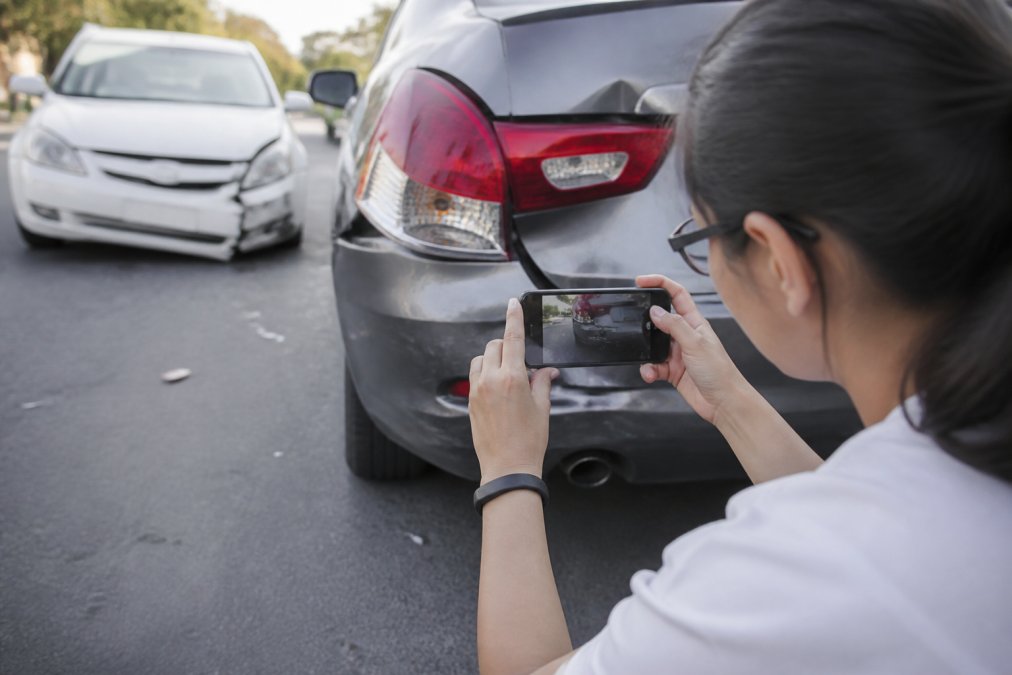
Photograph the other vehicle’s license plate, VIN (visible through the windshield), and damage. Get photos of traffic signals, street signs, and posted speed limit signs near the location.
Upload photos to cloud storage or email them to yourself immediately for backup.
Collect witness statements and contact information
Witnesses provide invaluable independent accounts of what happened. Approach witnesses calmly and ask if they saw the accident.
Get their full name, phone number, email address, and home address. Ask what they saw: which vehicle had the green light, which was speeding, and how fast each vehicle was traveling. Write their statement word-for-word if possible.
Do not pressure witnesses or ask leading questions. Let them describe what they saw in their own words. Take a photo of each witness (with permission) and note their position relative to the accident scene.
Digital evidence preservation
If your vehicle has a dashcam, save the footage immediately. Note if the other vehicle has a visible dashcam and ask the driver if they’ll share footage.
Check if nearby businesses have security cameras. A convenience store, gas station, or office building may have recorded the collision. Note the business name and location for later reference.
Document the time, date, and exact location using your phone’s GPS or nearby street names and landmarks. Record weather conditions, time of day, and visibility while details are fresh.
Exchange Information and Report the Accident
After documenting the scene, exchange information with the other driver to establish a record of the parties involved.
Exchange driver information with other parties
Collect the following information:
- Full name, phone number, email address, home address
- Driver’s license number, state, and expiration date
- Vehicle make, model, year, and color
- Vehicle license plate number and VIN
- Insurance company name, policy number, and agent contact information
Write this information down or photograph their driver’s license and insurance card. Do not rely on memory. If the other driver refuses to provide information, note that and call police immediately.
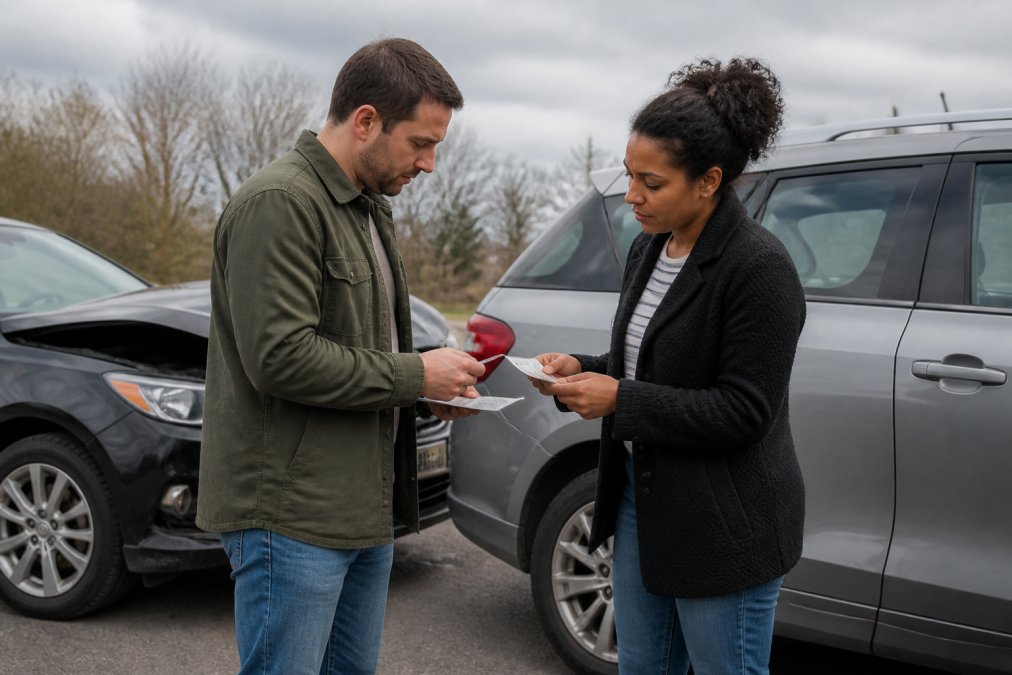
Do not discuss fault, apologize, or make statements about who caused the accident. Stick to factual information. Avoid phrases like “I’m sorry” or “It was my fault,” as these can be interpreted as admission of liability.
If the other driver becomes hostile or refuses to cooperate, do not escalate. Move away and wait for police.
Obtain the official police report
The police report documents the date, time, location, parties involved, vehicles, injuries, and the officer’s assessment of fault. Insurance companies rely heavily on this report to determine liability.
Request the report number from the responding officer and ask where to obtain a copy. After the accident, contact the police department or access the report online using your case number. Some departments charge a small fee; others provide reports free.
Review the report carefully and check that all information is accurate. If there are errors, contact the police department to request corrections.
What to Say to Insurance Adjusters After a Crash
Insurance adjusters investigate accidents to determine fault and assess damages. What you say can significantly impact your claim.
When the adjuster calls, be polite but controlled. Provide basic factual information about the date, time, location, and what you directly observed. Stick to your account of events and do not speculate about fault.
Request a copy of your free accident report →
Do not say “I’m sorry,” “I apologize,” or “I think it was my fault.” These statements can be interpreted as admissions of liability.
Provide the police report number, witness contact information, and photos from the scene. Be organized and factual. Answer the adjuster’s specific questions directly without volunteering additional information.
If asked about injuries, describe them factually: “I experienced neck pain and stiffness starting the day after the accident.” Do not exaggerate or minimize injuries.
Do not agree to a settlement offer immediately. Ask for time to review and consult with a healthcare provider. If you’ve sustained significant injuries or property damage, consider consulting an attorney before accepting any settlement.
Seek Medical Attention and Document Injuries
Injuries from car accidents are not always immediately apparent. Adrenaline can mask pain. Some injuries like whiplash, internal bleeding, or traumatic brain injury develop over hours or days.
Go to an emergency room, urgent care facility, or your primary care physician within 24 hours of the accident, even if you feel fine. Describe all symptoms: neck pain, back pain, headaches, dizziness, or chest pain. The medical record establishes that your injuries are linked to the accident.
Ask the healthcare provider to document the accident as the cause of your injuries. Request copies of all medical records, imaging results, and diagnoses.
Follow your healthcare provider’s treatment recommendations and attend all follow-up appointments and physical therapy sessions. Gaps in treatment can be used by insurance companies to argue that your injuries are not serious.
Keep detailed records of your symptoms and how they affect your daily life. Note when pain is worse, what activities aggravate your injuries, and how the injuries impact your work, sleep, and relationships.
If your injuries are significant, consider consulting an attorney. Many car accident attorneys work on contingency, meaning they only get paid if you recover compensation.
Understanding Statute of Limitations for Car Accidents
The statute of limitations is the legal deadline for filing a lawsuit related to your accident. Missing this deadline means you lose the right to pursue legal action.
In most jurisdictions, the statute of limitations for personal injury claims from car accidents is two to three years from the date of the accident. This varies by location and claim type.
Do not assume you have unlimited time to file. Insurance settlements can take months, and you need to file a lawsuit before the statute of limitations expires if settlement cannot be reached. Consult with an attorney early to understand your specific deadline.
The statute of limitations clock starts on the date of the accident, not when you discover your injuries. Contact an attorney at least six months before the statute of limitations expires to allow time for investigation, evidence gathering, and settlement negotiations.
What Not to Do After an Accident
Mistakes made immediately after an accident can undermine your claim or create legal liability.
Do not admit fault or apologize. Statements like “I’m sorry” or “It was my fault” can be used against you in insurance claims or lawsuits.
Do not leave the accident scene before police arrive or before exchanging information. Leaving the scene can result in criminal charges.
Do not accept cash settlements from the other driver without involving insurance. Cash deals lack documentation and can create disputes later.
Do not post about the accident on social media. Insurance adjusters and opposing attorneys monitor social media and can use your posts against you.
Do not discuss the accident with the other driver’s insurance company without an attorney present, especially if injured.
Do not sign any documents or agree to statements without reading them carefully. Do not sign a release or settlement agreement without consulting an attorney if injuries are involved.
Do not delay seeking medical attention. The longer you wait, the harder it becomes to link your injuries to the accident.
Do not dispose of damaged property or repair your vehicle before the insurance adjuster inspects it.
After a car accident, the steps you take in the first hours and days shape everything that follows. Check for injuries and call for help. Document the scene thoroughly. Exchange information and obtain the official police report. Seek medical attention promptly and keep detailed records. Understand your legal timeline and avoid common mistakes that could harm your claim.
If you’re struggling with the post-accident process, Georgia Accident Report simplifies the journey. The service retrieves your official accident report at no cost and connects you with experienced car accident and injury attorneys who can guide you through the next steps. Request your free accident report today and take control of your recovery.
Frequently Asked Questions
Do I have to call the police for a minor car accident?
In Georgia, you must report any accident that results in injury, death, or property damage to a police officer or state patrol. Even minor fender-benders should be reported to establish an official record for your insurance claim and to document fault. Having a police report strengthens your claim and protects you legally.
What information should I exchange with the other driver?
Exchange your full name, phone number, address, driver's license number, vehicle identification number (VIN), license plate number, and insurance policy details. Also get the name and phone number of their insurance company. If there are witnesses, collect their contact information as well. This information is essential for filing your insurance claim and establishing liability.
Should I see a doctor even if I don't feel injured after a crash?
Yes. Some injuries from car accidents, like whiplash or internal injuries, may not show symptoms immediately. Getting a medical evaluation within 24-48 hours creates documentation that links your injuries to the accident, which is critical for insurance claims and any potential legal action. Medical records also establish a timeline that strengthens your case.
How long do I have to report an accident to my insurance company?
You should notify your insurance company as soon as possible after a Georgia accident, ideally within 24-48 hours. Most insurance policies require prompt notification. Delaying your claim could jeopardize coverage or result in denial. Having the police report and scene documentation ready will speed up the claims process.
What is the statute of limitations for car accidents in Georgia?
In Georgia, you have two years from the date of the accident to file a personal injury lawsuit for bodily injury claims. For property damage claims, the statute of limitations is also two years. However, it's important to act quickly—evidence fades, witnesses become harder to locate, and memories become less reliable. Consult with a legal professional to understand your specific situation.
What should I do if the other driver doesn't have insurance?
If the other driver is uninsured or underinsured, you may be able to file a claim under your own uninsured/underinsured motorist coverage, depending on your policy. Report the accident to your insurance company immediately and provide all documentation. This is why having a police report and detailed scene documentation is critical—it helps establish fault even without the other driver's insurance information.
Request a copy of your free accident report:
"*" indicates required fields