

How to Interpret Vehicle Damage Codes (2026 Guide)
September 6, 2026 | | Blog
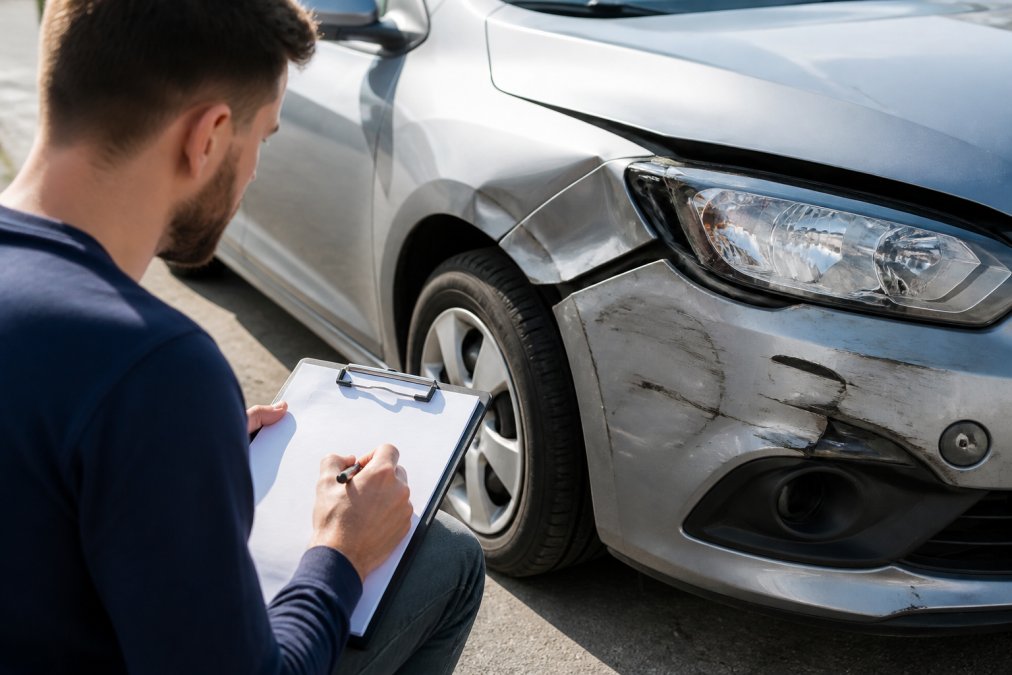
Table of Contents
- Why Vehicle Damage Codes Matter on Your Accident Report
- The Structure of a Vehicle Damage Code
- Police Accident Report Damage Severity Scale Explained
- Common Abbreviations on Police Crash Reports
- How to Dispute Damage Codes on an Accident Report
- Using Damage Codes to Spot Total Loss and Salvage Vehicles
- Get Your Free Accident Report and Review It with an Expert
- Frequently Asked Questions
Last Updated: September 6, 2026
Why Vehicle Damage Codes Matter on Your Accident Report
To get your FREE accident report fill out the yellow form at the bottom of the page.
A single glance at a police accident report reveals a jumble of letters, numbers, and symbols, vehicle damage codes that can mean the difference between a fair insurance settlement and leaving money on the table.
Insurers use these codes to calculate repair costs, adjusters reference them to approve claims, and attorneys rely on them to establish fault. When a report misidentifies the point of impact or understates severity, your claim loses value.
The stakes rise further when these codes determine a total loss declaration, as the severity code becomes the deciding factor.
The Structure of a Vehicle Damage Code
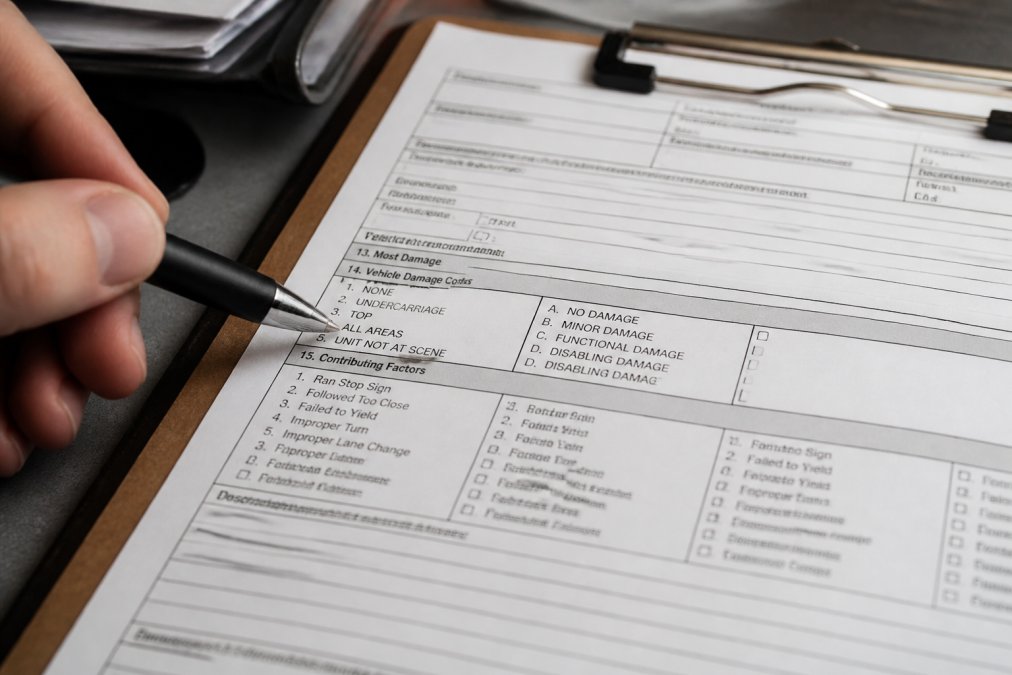
Vehicle damage codes follow a standardized format that combines a location identifier with a severity rating. The system, rooted in AIAG industry standards for vehicle damage reporting, gives every panel and component a specific number, then pairs it with a letter that describes how badly that area was damaged.
Most codes read as a location number followed by a severity letter. A code of “09F” tells a claims adjuster the front bumper area sustained moderate damage; change the letter to “X” and the same location signals severe structural compromise.
Damage Area Codes: Pinpointing the Impact Zone
Damage area codes identify the specific panel or section that absorbed the impact, dividing a car into logical zones that align with how collision repair shops estimate labor and parts.
Common codes include the front bumper, hood, doors, quarter panels, trunk, and roof, with some systems distinguishing left from right and front from rear. The designation tells you whether damage affects a bolted-on component or a welded structural element, directly influencing repair hours and cost.
Damage Severity Codes: Gauging the Force
Severity codes translate the force of impact into a letter grade ranging from minor surface scratches to catastrophic structural failure. A “D” typically indicates superficial damage like a paint scuff, while “G” points to panel replacement.
A code indicating damage to the rocker panel or frame rail signals compromised structural integrity, regardless of how the car looks. Cosmetic and structural damage require entirely different repair approaches, and the severity code tells you which category you’re dealing with.
The AIAG Standard: A Closer Look at the Numbers
The Automotive Industry Action Group (AIAG) publishes the most widely referenced standard for vehicle damage coding in the United States. Their system assigns a three-digit code to every damage event: the first digit identifies the vehicle’s side (1 = front, 2 = left side, 3 = rear, 4 = right side), the second digit pinpoints the specific area (e.g., 1 = bumper, 2 = hood, 3 = fender), and the third digit indicates the severity (0 = no damage, 1 = minor, 2 = moderate, 3 = severe). For example, code “211” means the left front bumper sustained minor damage, while “432” would indicate severe damage to the right rear quarter panel.
This granularity helps repair shops estimate parts and labor and lets insurers compare similar claims. However, not every agency uses the AIAG format, police departments often use a simpler system, and auction houses like Copart and Manheim have proprietary codes. Always confirm which system a report uses before interpreting the numbers.
Visual Damage Locator Chart
To make these codes more intuitive, here’s a visual guide mapping common AIAG area codes to specific vehicle panels:
|
Code |
Area |
Example Damage |
|---|---|---|
|
01 |
Front bumper |
Scratches, cracks, or impact damage |
|
02 |
Hood |
Dents, creases, or misalignment |
|
03 |
Left front fender |
Panel deformation or paint damage |
|
04 |
Right front fender |
Panel deformation or paint damage |
|
05 |
Left front door |
Surface damage or structural intrusion |
|
06 |
Right front door |
Surface damage or structural intrusion |
|
07 |
Left rear door |
Surface damage or structural intrusion |
|
08 |
Right rear door |
Surface damage or structural intrusion |
|
09 |
Left rear quarter panel |
Panel replacement often required |
|
10 |
Right rear quarter panel |
Panel replacement often required |
|
11 |
Trunk lid |
Dent, misalignment, or water leaks |
|
12 |
Rear bumper |
Scratches, cracks, or impact damage |
|
13 |
Roof |
Hail damage or rollover deformation |
|
14 |
Windshield |
Cracks or shattering |
|
15 |
Frame rail |
Structural compromise, often totals the vehicle |
This chart is a starting point; always cross-reference with the specific report’s legend, as some agencies use variations. For example, a “09” might refer to the left rear door in one system and the left rear quarter panel in another. When in doubt, ask the reporting officer or your adjuster to clarify the exact panel referenced.
Why Location and Severity Are Not Enough
While the code tells you where and how hard, it doesn’t tell the full story. Two vehicles with the same code can have vastly different repair costs depending on make, model, and age, a minor dent on a 2005 steel bumper might cost $300, while the same code on a 2024 luxury SUV with aluminum panels and sensor arrays could exceed $2,000. The code also doesn’t indicate damage to underlying components like radiators, airbag sensors, or structural reinforcements.
Always pair the damage code with a professional inspection. A code of “01D” might look like a simple scuff, but if the impact deployed the airbags, the code is likely wrong. Recognizing these discrepancies is the first step in disputing an inaccurate report.
Police Accident Report Damage Severity Scale Explained
The damage severity scale on a police accident report uses descriptive categories, none, minor, moderate, or severe, based on the officer’s visual assessment at the scene.
Minor damage covers surface scratches, small dents, and cracked trim that don’t affect how the vehicle drives. Moderate damage includes bent panels, broken glass, and damage requiring collision repair but leaving the vehicle drivable. Severe damage describes impacts that crush structural components, deploy airbags, or force the vehicle onto a tow truck.
A crucial distinction emerges between what the officer records and what the codes mean for your claim. Officers assess damage quickly at roadside, often in poor lighting, and they don’t open hoods or inspect undercarriages. The National Highway Traffic Safety Administration guidance on crash reporting emphasizes consistent documentation, but field conditions still produce errors. A car that looks “moderately” damaged from the outside may hide frame damage that only a shop lift reveals.
Common Abbreviations on Police Crash Reports
Police crash reports use a shorthand vocabulary that confuses most drivers. Learning these abbreviations helps you spot mistakes before they cost you.
The most frequent abbreviations describe vehicle movement and impact type. “FR” means front right, “RL” means rear left, and “CF” indicates center front. Direction of force abbreviations tell you whether the impact came from the front, rear, or side, which matters for fault determination.
Damage type abbreviations distinguish between collision, hail, burn, and vandalism damage, each triggering different insurance coverage. A report that marks “mechanical failure” instead of collision damage can void your claim, since many policies exclude breakdowns.
How to Dispute Damage Codes on an Accident Report
Errors in damage codes happen more often than agencies admit. If you believe your report misstates the damage, you have the right to request a correction through the reporting agency’s established procedure.
Request a copy of your free accident report →
Start by obtaining a certified copy of your report and reviewing every code against photographs. Document the discrepancy with timestamped images from multiple angles, including close-ups of the specific panels. A repair estimate from a licensed collision shop provides additional evidence, particularly when it identifies structural damage the report missed.
Submit your correction request in writing to the agency that filed the report. Include your supporting documentation and reference the specific code you believe is wrong. The National Highway Traffic Safety Administration resources on crash data note that law enforcement agencies maintain procedures for report amendments, though timelines vary by jurisdiction.
Using Damage Codes to Spot Total Loss and Salvage Vehicles
Damage codes serve as early warning signals for total loss determinations. Insurers declare a total loss when repair costs approach or exceed the car’s actual cash value, and the severity codes on your report feed directly into that calculation.
A salvage vehicle carries a branded title that permanently affects its value and insurability. When you interpret damage codes on a used car’s history report, you can identify whether the vehicle sustained severe structural damage leading to salvage branding. Frame damage, airbag deployment, and damage spanning multiple major panels all point toward a total loss history.
For accident victims, understanding these codes helps you push back when an insurer undervalues your claim. If your report shows severe structural damage but the settlement offer reflects only cosmetic repairs, you have grounds to negotiate. Vehicle condition reports and auction grading systems use similar coding structures, so these skills transfer to evaluating any used car.
How Insurers Calculate Total Loss
In the United States, each state sets its own total loss threshold, typically expressed as a percentage of the vehicle’s actual cash value (ACV). For example, in California, a vehicle is considered a total loss if the estimated repair cost plus the salvage value equals or exceeds the ACV. In Texas, the threshold is 100% of the ACV, while in New York it’s 75%. These thresholds are not uniform, so a vehicle that is totaled in one state might be repairable in another.
Damage codes play a direct role in this calculation. A code indicating severe structural damage (e.g., “X” severity) often triggers a more thorough inspection, and if the frame is bent, most insurers will declare a total loss even if repair costs are below the threshold, a compromised frame cannot be reliably restored to its original crashworthiness.
Reading Auction Codes for Salvage History
If you’re buying a used car, you’ll often encounter damage codes from auction houses like Copart or Manheim, which differ from police report codes. Copart uses a simple system: “Run and Drive” vs. “Starts” vs. “Doesn’t Start,” along with a damage type. Manheim uses a more detailed condition report with a 1-5 scale for each panel, where 1 is excellent and 5 is severe damage.
When you see a code like “FRONT END” on a Copart listing, it doesn’t tell you the severity, it could mean a minor bumper scratch or a catastrophic collision that deployed airbags and crushed the engine bay. Always cross-reference the code with the photos and, if possible, a vehicle history report from Carfax or AutoCheck.
Spotting Salvage Title Fraud
One of the most dangerous uses of damage codes is uncovering salvage title fraud. Some sellers buy a salvage vehicle, make minimal repairs, and try to sell it as a clean-title car, scrubbing the title or failing to disclose the salvage history. Damage codes on an accident report or auction listing can be your first clue.
If a vehicle’s history report shows a severe damage code (like “X” or “S” for structural) but the current title is clean, that’s a red flag. In most states, a vehicle declared a total loss must receive a salvage title that stays with the car permanently, if the title doesn’t show it, the seller may be committing fraud.
To protect yourself, always run a VIN check before buying a used car, looking for “salvage,” “junk,” “flood,” or “rebuilt” in the title history. If you see a damage code indicating structural damage, ask the seller for repair documentation, legitimate repairs should include photos, receipts, and a post-repair inspection certificate from a licensed mechanic.
How to Use Damage Codes in Your Own Claim
If you’re involved in an accident, the damage codes on your police report can help you negotiate with your insurer. If your report shows severe damage to the rear section (code “3X”) but the adjuster offers a settlement based on minor damage, point to the code and request a supplemental inspection. If the adjuster disagrees, you have the right to an independent appraisal, a process outlined in most auto insurance policies.
If your vehicle is declared a total loss, the damage codes can help you verify the insurer’s valuation is fair. A severe structural code supports the total loss declaration, but it also means you should be compensated for the full ACV, not just the repair cost, understanding the codes prevents you from accepting a lowball offer.
Get Your Free Accident Report and Review It with an Expert
Reading your accident report is the first step, but interpreting every code correctly under pressure rarely happens alone. Georgia Accident Report provides a 100% free service that handles the legwork of contacting police or state patrol agencies to retrieve your official report, serving every county in the state.
Once you request your report, you gain access to a team of car accident and injury lawyers ready to provide professional assistance. They can help you verify that the accident was reported correctly, establish fault, and determine whether the documented damage supports the compensation you deserve. You avoid the time-consuming process of calling multiple departments and waiting on hold.
The service costs nothing and carries no obligation. Whether you’re dealing with a minor fender-bender in Atlanta or a serious injury crash in rural Georgia, having your official report in hand with expert interpretation changes how your claim proceeds.
Request a copy of your free accident report and gain access to professional legal assistance.
Frequently Asked Questions
What does a damage code like ’05-F’ mean on my police report?
The code is alphanumeric. The first number identifies the area of the vehicle that was hit, and the letter indicates the severity of that damage based on the police accident report damage severity scale. For example, ’05’ often refers to the front section, while ‘F’ represents the most severe level of damage. Your report should contain a legend explaining the exact codes used by that agency.
How do insurance adjusters use vehicle damage codes to determine total loss?
Adjusters use the damage codes as a starting point, but they primarily rely on their own physical inspection and repair cost estimates. A high severity code, especially one indicating structural or frame damage, is a strong signal that repair costs may approach the vehicle’s value. They combine the code data with labor rates and parts prices to make the final total loss determination.
Are vehicle damage codes standardized across all law enforcement agencies?
No, they are not universally standardized. While many agencies follow the guidelines set by the Auto Industry Action Group (AIAG), local and state police departments often have their own variations. This is why the same crash can be coded differently by two agencies. Always refer to the specific legend or key provided on your copy of the report.
What is the difference between a damage area code and a damage severity code?
The area code tells you where on the car the damage happened, such as the left side, right side, front, or rear. The severity code tells you how bad that damage is, usually on a scale from minor cosmetic scratches to severe structural penetration. Together, they provide a concise description of the impact’s location and force.
Request a copy of your free accident report:
"*" indicates required fields