


How to Prove Negligence in DUI Accident Cases
October 18, 2026 | Firm Name | Blog

Table of Contents
- The Four Elements of Negligence in DUI Accidents
- DUI Accident Evidence: What You Need to Collect
- Police Accident Report for a DUI Crash: Why It Matters
- Understanding Burden of Proof in a Negligence Case
- Partial Fault in a Drunk Driving Accident: Comparative Negligence
- Medical Records and Injury Documentation
- Preserving Evidence and Meeting Deadlines
- Frequently Asked Questions
Last Updated: October 17, 2026
The Four Elements of Negligence in DUI Accidents
To get your FREE accident report please fill out the yellow form at the bottom of the page.
How to prove negligence in DUI accident cases requires proving four legal elements. Without all four, your case falls apart. (Source: National Highway Traffic Safety Administration (NHTSA) data)
The four elements are duty of care, breach of duty, causation, and damages. Each must be proven separately to establish the drunk driver’s legal responsibility.
Duty of Care and How It Applies to Drivers
Every driver has a legal duty of care toward everyone else on the road: operate safely and follow traffic laws.
A driver’s duty of care includes:
- Staying sober and alert
- Following speed limits
- Obeying traffic signals
- Maintaining control of the vehicle
- Avoiding reckless or negligent actions
An impaired driver automatically breaches this duty. Courts treat this as negligence per se: the violation of law itself proves negligence.
Establishing Breach of Duty
A breach of duty occurs when a driver fails to meet the standard of care. In a DUI case, the breach is often straightforward to prove.
Evidence of breach includes:
- A DUI arrest or conviction
- Breathalyzer or blood test results
- Police observations of impairment
- Admission by the driver
- Witness statements about the driver’s behavior
The police accident report for a DUI crash typically documents these facts, making it critical evidence of breach.
Proving Causation of Harm
Causation means the drunk driver’s conduct directly caused your injuries.
Two types of causation matter:
Cause-in-fact: The accident would not have happened “but for” the driver’s impairment. In most DUI cases, the impaired driving directly caused the collision.
Proximate cause: The harm was a foreseeable result of the driver’s conduct. Crash injuries are always a reasonable outcome of drunk driving.
Medical records and crash scene evidence establish causation by showing how the collision produced your specific injuries.
Documenting Damages
Damages are the losses you suffered. These include medical bills, lost wages, pain and suffering, and property damage.
Types of damages in DUI cases:
Economic damages: Measurable financial losses like medical expenses, rehabilitation costs, lost income, and vehicle repair or replacement.
Non-economic damages: Losses without a specific dollar amount, such as pain and suffering, emotional distress, scarring, and loss of enjoyment of life.
DUI damages are often substantial because impaired drivers cannot react or brake effectively. Document all losses.
DUI Accident Evidence: What You Need to Collect
Evidence gathered immediately after a crash shapes your entire case, so start as soon as it is safe.
Police Reports and Accident Documentation
The police accident report is your most valuable document: officer observations, witness statements, and preliminary fault findings.
What the report typically includes:
- Date, time, and location of the crash
- Names and contact information for all parties
- Vehicle information and insurance details
- Officer observations about impairment
- Results of field sobriety tests
- Breathalyzer or blood test results
- Citations issued to the at-fault driver
Request the report immediately. Georgia Accident Report can handle this retrieval at no cost, speeding up your insurance claim and strengthening your legal position.
Witness Statements and Eyewitness Testimony
Eyewitness testimony is powerful: witnesses can describe the drunk driver’s behavior and how the collision occurred.
Collect witness information immediately:
- Full names and contact details
- What they saw before, during, and after the crash
- Whether they observed signs of impairment
- Their account of how the crash happened
- Any dash cam or cell phone video they recorded
Follow up within days and ask witnesses to write down their recollection while fresh; formal statements carry more weight.
If witnesses are reluctant, reassure them their account helps establish the truth. Courts value testimony, especially when multiple witnesses corroborate the same facts.
Photos, Video Footage, and Crash Scene Documentation
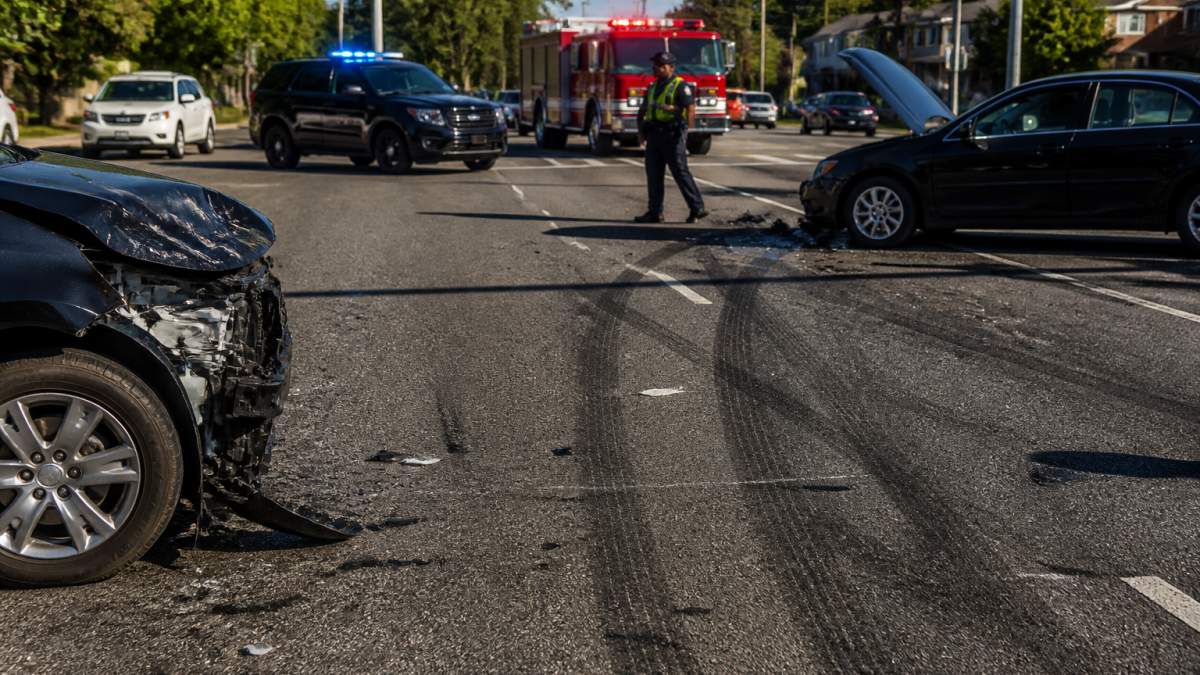
Visual evidence is compelling: it shows damage severity, road conditions, and how the crash unfolded.
Take photos of:
- Vehicle damage from multiple angles
- Skid marks and tire tracks on the road
- Traffic signals and road signs at the scene
- Debris field and point of impact
- Road conditions and lighting
- Your injuries (document these over time as they heal)
- The other driver’s vehicle and license plate
Traffic camera, dash cam, or business video can be decisive. Request it quickly, since most footage is deleted after 30 days.
Police Accident Report for a DUI Crash: Why It Matters
The police accident report for a DUI crash is evidence that establishes negligence and fault.
What Information the Report Contains
A comprehensive police report documents the scene and the officer’s investigation, capturing specific impairment details.
Key sections of a DUI accident report:
- Officer observations: How the driver appeared, their speech, coordination, and odor of alcohol
- Field sobriety test results: One-leg stand, horizontal gaze nystagmus, walk-and-turn
- Breathalyzer or blood test results: Blood alcohol content (BAC) level
- Citations and charges: DUI, reckless driving, or other violations
- Witness accounts: What others saw regarding the driver’s impairment
- Crash scene diagram: How vehicles were positioned and the point of impact
- Vehicle damage: Description of damage to both vehicles
This documentation is essential for proving breach of duty and establishing negligence per se.
How the Report Establishes Negligence Per Se
Negligence per se means the violation of a statute itself proves negligence.
The police accident report for a DUI crash documents the statutory violation, showing the driver operated while impaired. No expert testimony is required: impaired driving is negligence.
Request a copy of your free accident report →
The report becomes the foundation of your claim, proving negligence simply by driving drunk. Causation and damages flow from it.
Understanding Burden of Proof in a Negligence Case
The burden of proof is the standard you must meet to win, and in civil claims it is lower than in criminal cases.
Preponderance of the Evidence Standard
In a negligence case, you must prove your claim by a preponderance of the evidence.
This is much easier than the “beyond a reasonable doubt” standard in criminal cases.
Your evidence must show:
- The defendant owed you a duty of care
- The defendant breached that duty
- The breach caused your injuries
- You suffered measurable damages
Meeting this standard in a DUI case is often straightforward: the police report, medical records, and witness statements typically establish all four elements.
How Criminal DUI Proceedings Differ From Civil Claims
Many people confuse criminal DUI cases with civil injury claims. They are separate processes with different goals and different standards of proof.
Criminal DUI case:
- Prosecuted by the state
- Defendant faces jail time or license suspension
- Requires proof beyond a reasonable doubt (99% certainty)
- Focuses on whether the defendant broke the law
- Result: conviction or acquittal
Civil negligence claim:
- Filed by the injured person against the driver
- Seeks compensation for damages
- Requires preponderance of the evidence (51% certainty)
- Focuses on whether the defendant is liable for injuries
- Result: judgment for damages or dismissal
A criminal acquittal does not prevent a civil claim.
Conversely, a criminal conviction strongly supports your civil claim. It provides powerful evidence of negligence and breach of duty.
Partial Fault in a Drunk Driving Accident: Comparative Negligence
Some accidents involve fault on both sides. Georgia law recognizes this reality through comparative negligence rules.
How Comparative Fault Rules Apply
Comparative negligence allows the court to assign a percentage of fault to each party.
For example:
- Drunk driver is 80% at fault
- You are 20% at fault (perhaps you were speeding or not paying attention)
In this scenario, you can still recover damages. Your compensation is reduced by your percentage of fault.
Georgia follows a “modified comparative negligence” rule.
The police accident report documents how the crash occurred. It helps establish each party’s level of responsibility.
Impact on Your Compensation
Your percentage of fault directly reduces your recovery. If your damages total $100,000 and you are 20% at fault, you receive $80,000.
This makes it critical to minimize your assigned fault. Collect evidence that supports your version of events.
At Georgia Accident Report, we understand how comparative negligence affects your claim. We connect you with experienced car accident and injury lawyers.
Medical Records and Injury Documentation
Medical records prove that you suffered injuries as a result of the crash.
Obtain and preserve:
- Emergency room records from the day of the accident
- Doctor’s notes and diagnoses
- Test results (X-rays, MRI, CT scans)
- Treatment records and therapy notes
- Prescriptions and medication lists
- Follow-up appointment records
- Physical therapy documentation
Medical records serve two purposes. First, they prove causation, they show that the crash caused your injuries.
Keep all original records. Do not rely on memory or informal notes. Courts require official medical documentation to verify injury claims.
Preserving Evidence and Meeting Deadlines
Evidence degrades over time. Witnesses move. Videos are deleted. Documents are lost. Act quickly to preserve what you need.
What to Document Immediately After the Crash
Within the first 24 hours, document everything:
- Take photos and video of the crash scene
- Collect witness names and phone numbers
- Request the police report number
- Note your injuries and take photos of visible wounds
- Write down everything you remember while it is fresh
- Keep medical receipts and bills
- Document time away from work
The first week is critical for evidence preservation. Contact the police department for the accident report. Request traffic camera footage from nearby businesses. Follow up with witnesses to get written statements.
Legal Deadlines for Filing a Claim
Time limits apply to personal injury claims. Missing a deadline means losing your right to sue.
However, do not wait until the last moment. Insurance claims have shorter informal deadlines.
Georgia Accident Report helps you move quickly.
Understanding how to prove negligence in DUI accident cases is challenging, but the evidence is often clear.
Frequently Asked Questions
What is the burden of proof in a negligence case?
In a civil negligence case, the burden of proof is preponderance of the evidence, meaning your claim must be more likely true than not. This is a lower standard than the criminal burden of proof (beyond a reasonable doubt). You must show that the at-fault driver’s negligence more likely caused your injuries than not. Evidence such as police reports, witness testimony, medical records, and crash documentation all help meet this burden.
What evidence can help prove fault in a DUI accident?
Key DUI accident evidence includes the police report documenting the traffic violation or DUI arrest, witness statements from people who saw the crash, photographs of vehicle damage and crash scene conditions, video footage from traffic cameras or nearby businesses, medical records documenting your injuries, and expert testimony about accident reconstruction. The police report is especially valuable because it often includes field sobriety test results, breathalyzer readings, or arrest information that establishes negligence per se.
Can I recover compensation if I was partly at fault in a DUI crash?
Yes, depending on your level of partial fault. Most states follow a comparative negligence rule. If you are less than 50% at fault, you can recover damages reduced by your percentage of fault. For example, if you are 20% at fault and your total damages are $10,000, you can recover $8,000. However, if you are 50% or more at fault, you cannot recover anything. Your attorney can help determine how comparative fault applies to your specific accident.
Does a DUI conviction prove negligence in a civil accident claim?
A DUI conviction or arrest can establish negligence per se in your civil claim, meaning the driver violated traffic laws by driving under the influence. This makes proving negligence easier because you do not need to prove the driver was careless; the law violation itself establishes the breach of duty. However, a criminal conviction is not required to prove negligence in a civil case. You can still prove fault through other evidence like witness testimony, police reports, and medical documentation.
Request a copy of your free accident report:
"*" indicates required fields