



Steps to File an Insurance Claim in 2026
August 14, 2026 | | Blog

Table of Contents
- Immediate Steps After an Accident
- How to Document Property Damage for Insurance
- Gathering Evidence and Filing Your Claim
- What to Include in an Insurance Claim Letter
- How Long Does an Insurance Claim Take to Settle
- Understanding the Claims Investigation Process
- Insurance Claim Denial Appeal Process
- Conclusion
Last Updated: August 14, 2026
Immediate Steps After an Accident
To get your FREE accident report visit georgiaaccidentreport.com
The moments following a car accident set the tone for everything that comes next. Your first priority is safety, then documentation and communication, this is where the insurance claim process actually begins.
If you’re in a minor accident blocking traffic, move vehicles to safety and turn on hazard lights. Call emergency services if anyone is injured, and document responders’ names and badge numbers for your claim record.
Exchange information with the other driver: full name, phone number, address, driver’s license number, vehicle details, license plate, and insurance information. Stick to factual statements and avoid admitting fault.
Take photos of the accident scene from multiple angles, vehicle damage, road conditions, traffic signals, and the overall scene. Get witness contact information and ask if they’ll provide a statement.
Contact your insurance company within 24 hours. Have your policy number ready and describe what happened factually. Your insurer will assign a claims adjuster and explain next steps. Georgia Accident Report can help you obtain the official police report, which is essential for your insurer.
How to Document Property Damage for Insurance
Documenting property damage correctly is the foundation of a successful claim. Insurance companies make decisions based on evidence, and poor documentation often results in lower settlements or denials.

Take photos from multiple angles: front, back, both sides, and close-ups of each damaged area. Include wide shots showing overall damage and close-ups of impact points. Use natural daylight when possible. If the accident happened at night, return during daylight to photograph damage if safe.
Get written repair estimates from at least two body shops, itemizing repairs, parts, and labor. These give you leverage in negotiations with the insurance company’s estimators.
Photograph your vehicle’s odometer, VIN, and maintenance records to establish condition and value. For total loss claims, accurate information helps determine fair market value.
For non-auto claims, photograph every damaged item individually and document serial numbers and purchase information for valuable items. Create a detailed inventory with estimated replacement costs.
Store all photos, estimates, and documentation in one organized location. Upload digital copies to cloud storage so they’re accessible even if your phone is lost.
Gathering Evidence and Filing Your Claim
Gathering comprehensive evidence transforms your claim from disputed accounts into a documented case.
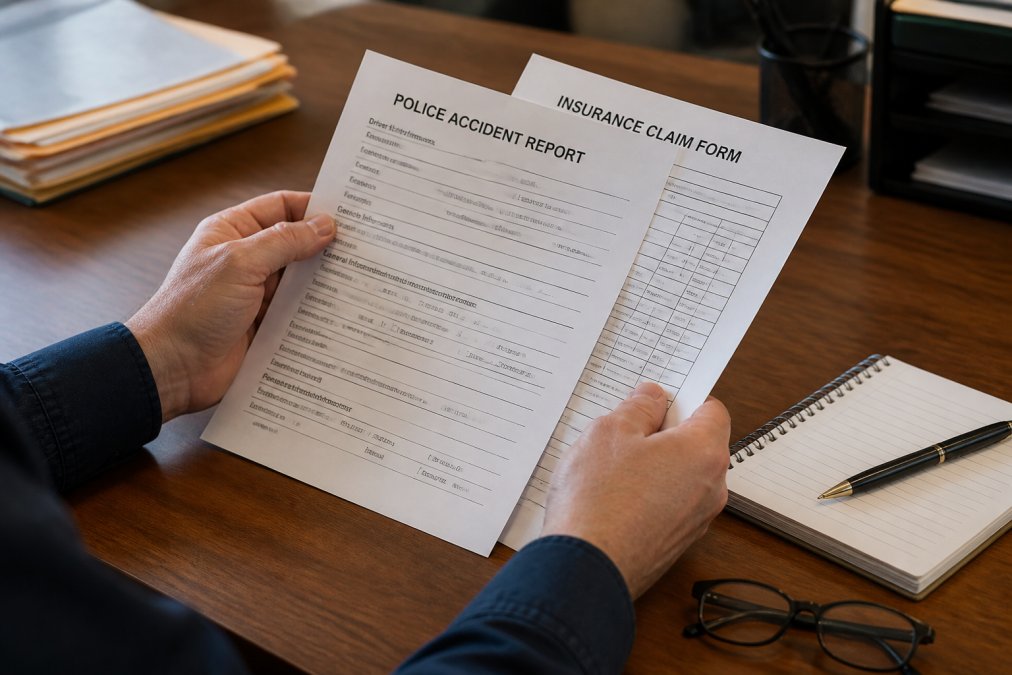
The police report is your most important document. It includes the officer’s assessment, citations, witness statements, and often a fault determination. Request a copy immediately. Georgia Accident Report simplifies this by handling report retrieval for free, eliminating frustration with multiple departments.
Gather witness statements beyond what’s in the police report. Email witnesses asking them to describe what they saw. Written statements are more valuable than verbal ones.
Collect medical records and bills if injured. Even minor injuries should be documented by a healthcare provider. Keep receipts for all medical expenses.
Document lost income with a letter from your employer stating missed work dates and hourly rate or salary.
Preserve all communications with the other driver and witnesses, text messages, emails, and photos are valuable evidence establishing the timeline.
Create a timeline of events: accident date and time, when you called your insurance company, when the adjuster contacted you, and other significant dates.
What to Include in an Insurance Claim Letter
Your claim letter is a formal request for compensation that becomes part of your official claim file.
Start with your policy number and accident date. Describe what happened chronologically in factual terms: “On [date], at [time], I was traveling north on [street] when a vehicle traveling south crossed the center line and struck my vehicle on the driver’s side.”
List all damages and losses: property damage, medical expenses, lost income, rental car costs, and other out-of-pocket expenses. Attach copies of repair estimates, medical bills, and receipts, organized with clear labels.
Reference the police report by number and officer name. If it supports your version or determines fault, mention this.
Include witness information with names and contact details. Note whether you have written statements.
State your claim amount as a total of all damages, itemized clearly.
Close professionally, stating you’re available for additional information. Include your contact information and preferred communication method.
Keep a copy of everything and send via certified mail or email with read receipt for proof of delivery.
How Long Does an Insurance Claim Take to Settle
Most insurance companies acknowledge receipt within 5-10 business days, assigning a claims adjuster. This acknowledgment doesn’t mean approval, just that your claim has entered the system.
The investigation phase typically takes 2-4 weeks for straightforward claims. For complex claims involving serious injuries or disputed liability, investigation can take 6-8 weeks or longer.
Request a copy of your free accident report →
Property damage claims often settle faster than injury claims. With clear liability and straightforward damage, you might receive a settlement offer within 4-6 weeks.
Injury claims take longer because medical treatment often continues after the accident. Insurance companies typically wait until treatment is complete before settling to prevent additional expenses later.
The entire process from filing to settlement typically takes 30-90 days for straightforward claims. Complex claims can take 6 months or longer. Statute of limitations varies by state but is typically 3-6 years, so you’re not in a rush, though prompt action is advisable.
If your claim is denied, you have the right to appeal, which adds additional time to your timeline.
Understanding the Claims Investigation Process
Your assigned claims adjuster is your primary contact. Cooperate fully by providing documents promptly and answering questions honestly.
The adjuster will obtain the police report and review it for citations, fault determinations, and witness statements. They may contact the investigating officer for clarification if needed.
The adjuster may contact witnesses independently to get their accounts. Witness statements carry significant weight as independent accounts.
For property damage claims, the adjuster will arrange a vehicle inspection using their own appraiser or accepting repair estimates you’ve provided. If repair costs exceed 70-80% of vehicle value, it’s declared a total loss.
For injury claims, the adjuster reviews medical records and bills. They may request an independent medical examination by a medical professional they select. You have the right to be present.
The adjuster investigates liability by reviewing the police report, witness statements, accident photos, and damage patterns. Damage patterns often reveal how the accident happened and who was at fault.
The adjuster checks for policy violations or exclusions affecting coverage. Once investigation is complete, they prepare a report documenting findings, liability determination, damage assessment, and recommended settlement amount.
Insurance Claim Denial Appeal Process
If your claim is denied, you have the right to appeal. A denial doesn’t end the process; it means you need to provide additional information or challenge the denial.
Understand why your claim was denied. The denial letter should explain the reason: lack of coverage, failure to notify promptly, policy exclusions, or disputed liability. Understanding the specific reason helps you address it.
Review your policy carefully. Sometimes denials result from misunderstandings about coverage. Your policy spells out coverage limits, deductibles, and exclusions.
Gather additional evidence supporting your claim. For disputed liability, obtain additional witness statements or accident reconstruction analysis. For coverage questions, obtain documentation clarifying circumstances.
Submit a written appeal addressing the specific denial reason and explaining why you believe it was incorrect. Include any new evidence. Send via certified mail with read receipt.
Follow your insurance company’s formal appeal process exactly. Timelines typically allow 30-60 days to submit an appeal after receiving the denial.
If your appeal is denied, you can file a complaint with your state’s Department of Insurance, request an independent appraisal for property damage disputes, or consult an attorney about legal options.
For property damage disputes, either party can request appraisal. Each side selects an appraiser, and the two appraisers select a third (umpire). Their decision is binding.
Keep detailed records of your entire appeal process, documenting all communications, evidence submitted, and responses received.
Filing an insurance claim requires attention to detail and persistence, but becomes manageable when you understand each step. Start immediately after an accident by documenting everything thoroughly. Gather evidence systematically and organize it clearly. Communicate with your insurance company promptly and professionally.
The most common mistakes are waiting too long to report the accident or failing to document property damage properly. Another frequent error is accepting the first settlement offer without understanding whether it’s fair. You have the right to negotiate, and detailed documentation strengthens your position.
Georgia Accident Report simplifies the critical first step by obtaining your official police report quickly without bureaucratic delays. Having this authoritative document accelerates your entire claims process. The service is free and connects you with car accident and injury lawyers who can advise whether your claim is being handled fairly.
If your claim is denied or the settlement offer seems too low, don’t give up. The appeal process exists for situations where initial decisions seem unfair. Many claims are successfully appealed when you provide additional evidence or challenge the insurance company’s reasoning.
Frequently Asked Questions
What is the first step when filing an insurance claim?
The first step is to ensure everyone is safe and call emergency services if anyone is injured. Then document the accident scene with photos and videos, gather witness information, and contact your insurance provider as soon as possible. Report the incident to police if required by your state. Having the official police report strengthens your claim and helps establish the facts of what happened. Your insurer will use this documentation to begin the claims investigation process.
What documentation is required to support an insurance claim?
You'll need the police report, photos of property damage from multiple angles, witness statements with contact information, repair estimates from licensed shops, and proof of loss. Include your policy information, the other driver's details (if applicable), and any medical records if you have injuries. Keep receipts for temporary repairs or out-of-pocket expenses. The more complete your documentation, the faster your claim typically moves through the investigation process and toward settlement.
What should I do if my insurance claim is denied?
Review the denial letter carefully to understand the specific reason. Common reasons include policy exclusions, lack of coverage for the incident type, or missed filing deadlines. File a written appeal with your insurance company within the timeframe specified in your policy (typically 30-60 days), including any new evidence that supports your case. Document all communication. If the denial stands, you may file a complaint with your state's insurance commissioner or consult with an attorney to explore your legal options and potential recovery.
How long do I have to file an insurance claim after an incident?
Most insurance policies require you to report a claim promptly, typically within 30 days of the incident, though some allow up to 90 days. Delaying notification can complicate the investigation and may affect your coverage. The statute of limitations for filing a lawsuit related to the claim varies by state but is generally two to six years. However, don't wait—report immediately to protect your claim and ensure the insurance company has accurate information about the incident while details are fresh.
Request a copy of your free accident report:
"*" indicates required fields