

How to Verify Fault in an Accident: Step-by-Step
August 13, 2026 | | Blog
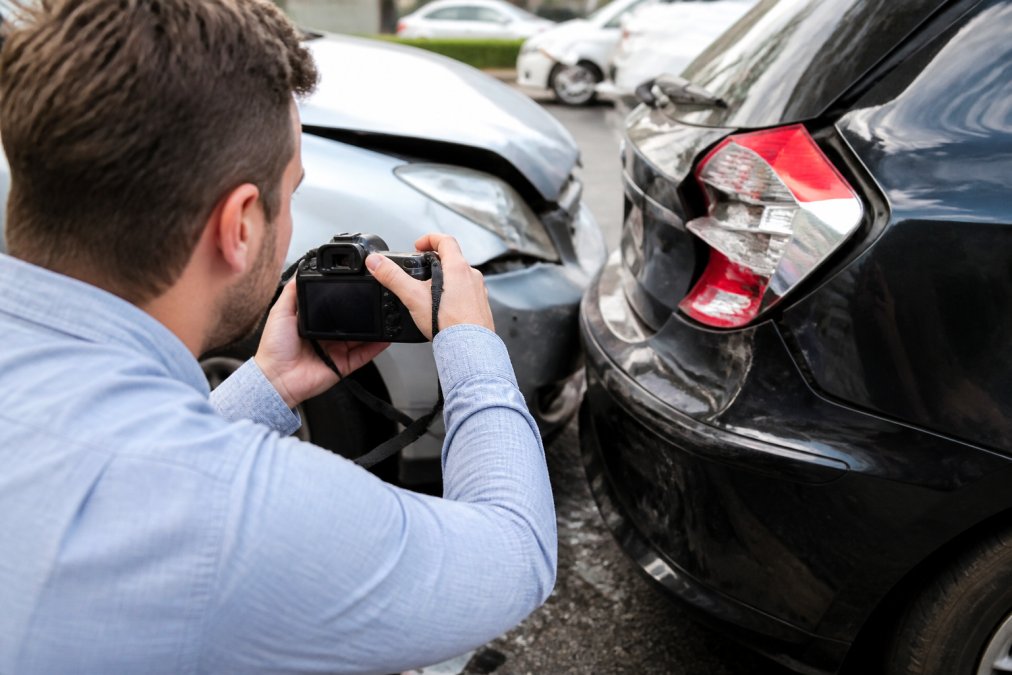
Table of Contents
- Why Verifying Fault Matters After an Accident
- Step 1: Obtain the Police Report
- Step 2: Gather Evidence at the Accident Scene
- Step 3: Collect Witness Statements and Driver Information
- How to Prove You Were Not at Fault in a Car Accident
- Car Accident Evidence Checklist
- How to Dispute an Insurance Fault Decision
- Key Takeaways for Verifying Fault
Last Updated: August 13, 2026
Why Verifying Fault Matters After an Accident
To get your FREE accident report visit georgiaaccidentreport.com and fill out the yellow form.
Determining who caused an accident directly affects your insurance rates, your ability to recover damages, and whether you’ll face legal liability. At Georgia Accident Report, we help accident victims navigate this process by securing the official documentation needed to verify fault accurately. The police report serves as the foundation, but insurance companies, claims adjusters, and legal professionals rely on a combination of physical evidence, witness statements, traffic laws, and accident reconstruction to establish negligence.
Understanding how to verify fault helps you protect your rights and ensure the investigation is thorough and fair. Without proper evidence collection and documentation, you may end up accepting fault unfairly or missing critical details that could shift liability.
Step 1: Obtain the Police Report
The police report is the official foundation of any accident investigation. When law enforcement arrives at the scene, they document the location, weather conditions, vehicle positions, driver statements, and their preliminary assessment of how the accident occurred. This report becomes the baseline document that insurance companies reference when determining liability.
Requesting your police report immediately after an accident is critical. The report contains the officer’s observations about point of impact, vehicle damage patterns, and any traffic citations issued. To obtain your police report, you’ll need the accident report number, which is typically provided at the scene or can be retrieved by calling the police department that responded. Georgia Accident Report simplifies this process by handling the retrieval for you at no cost, ensuring you get the official document without the hassle of contacting multiple departments.
Once you have the police report, review it carefully for accuracy. Check that your statement is recorded correctly, that vehicle positions are accurately described, and that any citations or violations are properly documented. If you spot inaccuracies, you may request corrections through the issuing agency.
Step 2: Gather Evidence at the Accident Scene
Physical evidence collected at the accident scene provides objective data about how the accident occurred. This evidence often tells a clearer story than driver statements alone, especially when memories conflict or drivers dispute their accounts.
The most important evidence to collect includes vehicle damage patterns, road conditions, traffic control devices, and scene measurements. Damage location and severity indicate the point of impact and the direction of force, which helps reconstruct the accident’s mechanics.
Physical Evidence and Damage Documentation
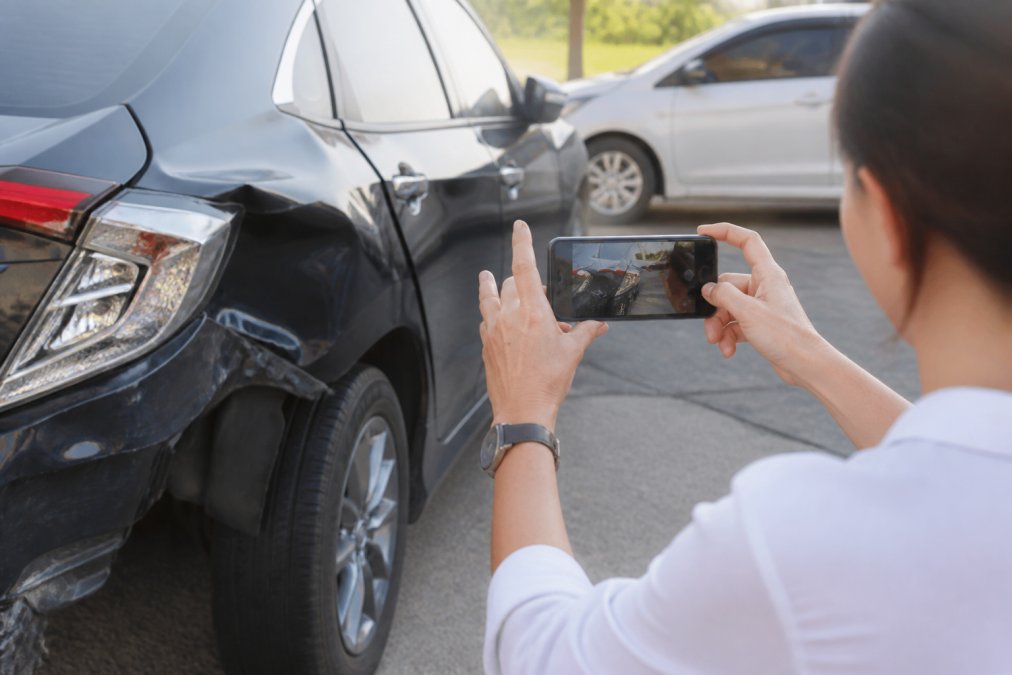
Document all vehicle damage with photographs taken from multiple angles. Close-ups of impact points, scratches, dents, and broken parts provide evidence of where vehicles made contact. Wide-angle photos showing vehicle positions relative to lane markings, curbs, and other reference points establish the spatial relationship between the vehicles at impact.
Measure and note the distance from the accident location to nearby intersections, traffic signals, and landmarks. Photograph road conditions including skid marks, debris fields, and road surface conditions. Skid marks indicate braking effort and vehicle trajectory before impact.
Dashboard Camera Footage and Digital Evidence Preservation
Dashboard camera footage has become increasingly valuable in fault determination. If either vehicle has a dash cam, preserve that footage immediately. Many dash cams record to memory cards that overwrite after a certain period, so retrieving the video quickly is essential.
Request footage from nearby businesses or traffic cameras if the accident occurred near commercial areas or intersections with surveillance systems. Submit formal requests to these entities quickly, as footage retention periods are limited.
Step 3: Collect Witness Statements and Driver Information
Witness statements provide independent accounts of how the accident occurred. Unlike driver statements, which are often self-interested, witness accounts from neutral parties carry significant weight in fault determination.
At the accident scene, ask anyone who witnessed the collision to provide their account. Record their name, phone number, address, email, and insurance information. Ask specific questions about what they saw: Which vehicle entered the intersection first? Was either driver speeding? Did either driver attempt to avoid the collision? What was the traffic signal status when the vehicles collided?
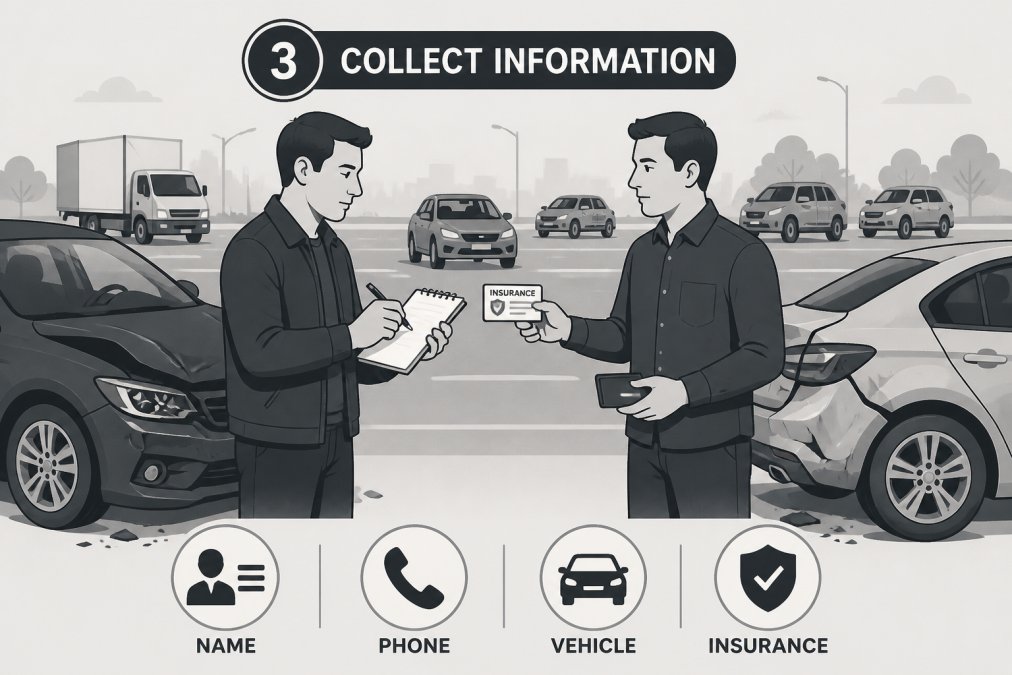
Collect the other driver’s full name, address, phone number, driver’s license number, vehicle identification number (VIN), license plate number, and insurance company details. If the accident involved a commercial vehicle or was caused by a company employee, obtain the business name, address, and phone number. Document the accident scene conditions at the time of the collision, including time of day, weather conditions, visibility, road surface conditions, and traffic volume.
How to Prove You Were Not at Fault in a Car Accident
Proving you were not at fault requires demonstrating that the other driver breached their duty of care and caused the collision. You’ll need to show that you were exercising reasonable care, that the other driver failed to exercise reasonable care, and that the other driver’s negligence directly caused the accident. Evidence supporting this includes your vehicle’s position, damage patterns, witness statements confirming the other driver’s violation, and any traffic citations issued to the other driver.
Understanding Comparative and Contributory Negligence
Comparative negligence and contributory negligence are legal doctrines that determine how fault is allocated when both drivers share some responsibility for the accident. Under comparative negligence, both drivers can be found partially at fault, and damages are reduced by the percentage of fault assigned to the injured party. If you are found 20 percent at fault and the other driver 80 percent at fault, you can recover 80 percent of your damages.
Contributory negligence is a stricter standard. Under this rule, if you are found even partially at fault, you may be barred from recovering any damages. Understanding your state’s negligence standard is essential when verifying fault and determining your recovery prospects.
Request a copy of your free accident report →
Traffic Laws and Point of Impact Analysis
Traffic laws establish the duty of care drivers owe to others on the road. Violations of traffic laws often establish negligence in fault determination. If the other driver violated a traffic law and that violation caused the accident, you have strong evidence that the other driver was at fault.
Point of impact analysis examines where vehicles made contact and what that location reveals about driver actions. If you were hit from behind, the other driver was likely following too closely or not paying attention. Vehicle damage patterns corroborate point of impact analysis and help accident reconstruction experts determine vehicle trajectories and speeds.
Car Accident Evidence Checklist
Systematic evidence collection at the accident scene ensures you capture all information needed for fault verification. Use this checklist to guide your documentation:
|
Evidence Type |
Documentation Method |
Timing |
|---|---|---|
|
Vehicle damage |
Photograph from multiple angles, close-ups of impact points |
Immediately at scene |
|
Scene positioning |
Wide-angle photos, measure distances to landmarks |
Immediately at scene |
|
Road conditions |
Photo pavement, skid marks, debris, weather |
Immediately at scene |
|
Traffic control devices |
Photograph signals, signs, lane markings |
Immediately at scene |
|
Witness information |
Record names, contact info, written statements |
At scene, before witnesses leave |
|
Other driver information |
Copy license and insurance, record details |
At scene |
|
Obtain report number, request official copy |
Within 24-48 hours |
|
|
Dashboard camera footage |
Preserve immediately, backup to cloud storage |
Within 24 hours |
|
Medical records |
Document injuries, treatment, medical expenses |
Ongoing |
|
Repair estimates |
Obtain multiple estimates for vehicle damage |
Within 1 week |
Organize all evidence in a dedicated file. Keep photographs, police reports, witness statements, repair estimates, and medical records together. This organized evidence file becomes essential if you need to dispute an insurance fault decision or pursue legal action.
How to Dispute an Insurance Fault Decision
If your insurance company determines you were at fault when you believe the other driver caused the accident, you have the right to dispute that decision. Begin by requesting a detailed explanation of how the insurance company determined fault. Understanding their reasoning helps you identify weaknesses in their analysis and prepare a stronger rebuttal.
Understanding the Claims Adjuster’s Role
The claims adjuster investigates the accident and recommends a fault determination to the insurance company. Adjusters examine the police report, photographs, vehicle damage, witness statements, and other evidence to reconstruct the accident.
However, adjusters sometimes make errors or overlook evidence. If you believe the adjuster’s investigation was incomplete or their conclusion was incorrect, you can request a review by a supervisor or file a formal appeal. When disputing an adjuster’s decision, provide new evidence the adjuster may have missed, such as additional witness statements, expert analysis, dashboard camera footage, or accident reconstruction reports.
The Subrogation Process and Your Rights
Subrogation is the process by which your insurance company attempts to recover damages it paid on your behalf from the at-fault driver’s insurance company. When your insurance company pays your claim, it acquires the right to pursue recovery from the responsible party.
Your role in subrogation is to cooperate with your insurance company’s investigation and provide evidence supporting your position. Do not settle or admit fault with the other driver without consulting your insurance company, as doing so may complicate subrogation efforts. If your insurance company fails to pursue subrogation aggressively, you may have grounds to challenge their decision.
Key Takeaways for Verifying Fault
Verifying fault in an accident requires systematic evidence collection, careful documentation, and understanding of negligence law. The police report provides the foundation, but physical evidence, witness statements, traffic laws, and damage analysis together establish a complete picture of how the accident occurred.
Collect evidence immediately at the scene: photograph damage, document road conditions, record witness information, and preserve digital evidence. Obtain the police report promptly and review it for accuracy. If the insurance company’s fault determination seems incorrect, dispute it with additional evidence and expert analysis.
Georgia Accident Report handles the retrieval of your official police report at no cost and connects you with car accident and injury lawyers who can review your evidence and guide you through fault determination and claims processes. Request your free accident report today and take the first step toward establishing your position fairly.
Frequently Asked Questions
Does a police report determine fault in an accident?
A police report documents the accident but does not legally determine fault. The officer records statements, observations, and sometimes issues a citation, which can support a fault determination. However, your insurance company's claims adjuster and potentially a court make the final liability decision. The police report is critical evidence that helps verify fault, especially when it includes the officer's assessment of how the accident occurred.
What evidence is needed to verify fault in a collision?
Key evidence includes the police report, photographs of vehicle damage and accident scene, witness statements with contact information, dashboard camera footage if available, traffic citations issued at the scene, and documentation of traffic laws that apply to the accident location. Physical evidence like skid marks, point of impact, and vehicle positions also help establish how the accident happened. Collecting this evidence immediately after the accident strengthens your ability to verify fault.
How long do I have to dispute an insurance fault decision?
Most insurance policies allow you to file a complaint or dispute within a specific timeframe, typically 30 to 60 days from the fault determination, though this varies by your policy and state regulations. Contact your insurance company for their exact deadline. If you disagree with their decision, you can request that they reconsider using additional evidence, file a complaint with your state's insurance commissioner, or consult with an attorney about your legal options.
Should I admit fault at the scene of an accident?
No. At the accident scene, stick to factual statements with the other driver and police officer. Avoid apologizing, admitting fault, or speculating about how the accident happened. Let the police report, evidence, and insurance investigation process determine liability. Even casual statements like 'I didn't see you' can be misinterpreted as an admission of fault. Your insurance company and their claims adjuster will investigate and make the fault determination based on evidence, not your statements at the scene.
Request a copy of your free accident report:
"*" indicates required fields