


What to Do After Getting an Accident Report
September 18, 2026 | | Blog

Table of Contents
- Review Your Accident Report for Accuracy
- How to Read a Police Accident Report
- Correcting Errors on Your Crash Report
- File Your Insurance Claim Process After Accident
- Understand Statute of Limitations for Car Accidents
- Determine Liability and Fault From Your Report
- When to Contact an Attorney
- Frequently Asked Questions
Last Updated: September 17, 2026
Review Your Accident Report for Accuracy
To get your FREE accident report fill out the yellow form at the bottom of the page.
Your accident report after an incident is the official record of what happened. Insurance companies, lawyers, and courts rely on it, so read through your report carefully before taking any action. (Source: National Highway Traffic Safety Administration (NHTSA) guidance)
Check your name, address, driver’s license number, vehicle information, and the accident date, time, and location. Errors in these basic facts can delay your insurance claim or create legal problems.
Review the officer’s narrative about how the accident happened. Does it match your memory? This section is critical because it often influences fault determination.
Pay attention to any citations or traffic violations listed. If you were cited but believe it was wrong, you can challenge it. The citation affects both your insurance rates and your legal liability.
How to Read a Police Accident Report
A police accident report contains several sections. The report starts with basic case information: the report number, the officer’s name and badge number, and the date the report was filed.
The vehicle information section includes make, model, year, color, license plate, VIN, and insurance details for all parties. Verify your vehicle’s information is correct.
The parties involved section lists names, addresses, phone numbers, and driver’s license information for all drivers and passengers. Verify spelling and accuracy.
The accident narrative describes how the accident happened based on witness statements and observations. Look for factual errors or incomplete information.
The diagram shows vehicle positions, road markings, traffic signals, and the point of impact, clarifying the accident sequence.
The officer’s conclusion about fault appears near the end. Some reports explicitly state who caused the accident; others leave that determination to insurance companies.
The National Highway Traffic Safety Administration guide provides details on what information must be included in official accident reports across the country.
Correcting Errors on Your Crash Report
If your report contains errors, you can request corrections, but the process requires documentation and persistence.
Identify and Document the Error
Common errors include misspelled names, incorrect vehicle information, wrong date/time/location, inaccurate accident descriptions, missing witness information, incorrect citations, or misidentified at-fault drivers. For each error, document the incorrect claim and correct information. Gather supporting evidence: photos of scene conditions, witness statements, medical records, or dashcam footage.
File a Formal Correction Request
Contact the police department within 30 days of receiving the report. Request the correction form or written dispute procedure. Submit your request in writing via certified mail or email, including your name, case number, specific errors, correct information with supporting evidence, and contact information. Keep copies of everything.
Understand What Happens Next
If the officer agrees the error is factual, they may file an amended report. However, corrections are limited to factual inaccuracies; officers have discretion in judgments about fault or negligence.
If the department refuses or doesn’t respond, you can: file a complaint with internal affairs or a civilian review board; request a hearing before a supervisor; consult an attorney if the error affects your claim or liability; or file a supplemental statement disputing specific parts, which becomes part of the official record.
Timeline Considerations
Correct errors immediately. The sooner you file your correction request, the more likely it influences their liability assessment.
File Your Insurance Claim Process After Accident
Filing your insurance claim quickly protects your coverage and keeps your claim moving forward, but filing isn’t always the right financial choice. Before you contact your insurance company, understand the trade-off between claim benefits and long-term premium costs.
Decide: File a Claim or Pay Out-of-Pocket?
Filing a claim triggers an investigation and may increase your premiums. Paying out-of-pocket avoids these consequences but costs money upfront.
File a claim if: damage significantly exceeds your deductible; you were not at fault (your insurer pursues subrogation against the other driver’s policy); you have injuries or significant property damage; or the other driver is uninsured or underinsured.
Pay out-of-pocket if: damage is minor and close to your deductible; you were partially or fully at fault (rate increases typically last three to five years); you have a history of claims (frequent claimants face higher premiums); or your insurer has denied similar claims.
Calculate the Real Cost
Contact your insurance agent to estimate the premium increase. Compare that increase over three to five years against the claim payout. Example: repairs cost $2,000, deductible is $500, claim recovery is $1,500, but premiums increase $50/month for five years ($3,000 total). Paying out-of-pocket ($2,000) costs less than filing the claim ($3,000).
File Your Claim Properly
Contact your insurance company within 24 to 48 hours of the accident. Have your policy number ready and provide the date, time, location, and basic description of what happened. The adjuster will ask detailed questions later.
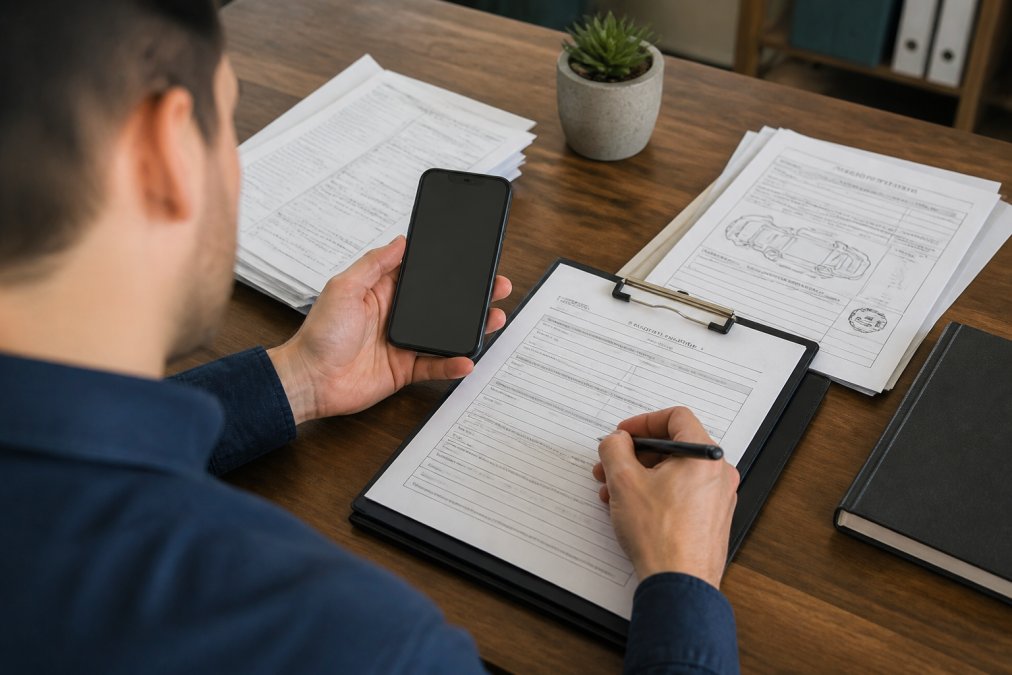
Your insurance company will assign a claims adjuster who investigates the accident and determines the payout. Gather documentation before they call: accident report and number, damage photos, scene photos, witness information, medical records, repair estimates, and maintenance records. Organization speeds up the process.
Be Honest and Thorough
Be honest with your insurance company. Answer all questions accurately and provide official documentation. Misrepresenting facts can result in claim denial or policy cancellation.
Understand the Timeline
Your adjuster will inspect your vehicle, review the police report, interview witnesses, obtain medical records, and request repair estimates. Once complete, you’ll receive a settlement offer. If you disagree, you can negotiate or appeal. Keep copies of all submissions for your records.
Understand Statute of Limitations for Car Accidents
The statute of limitations is the deadline for filing a lawsuit after an accident. For property damage, you typically have three to six years; for bodily injury, two to three years. If suing a government entity, you may have only 30 to 90 days to file a notice of claim. The clock starts when the accident occurs, though some states start it when you discover the injury.
Start the process early. Witnesses’ memories fade, evidence disappears, and documents get lost. The sooner you gather information and consult an attorney, the stronger your case.
The American Bar Association information on statute of limitations provides state-specific details on these deadlines.
Determine Liability and Fault From Your Report
The police officer’s conclusion about fault in the report is not final; insurance companies make their own determination based on the police report, physical evidence, photos, and witness statements. Liability depends on negligence, failing to use reasonable care. Traffic citations suggest negligence. Some accidents involve shared fault; your state’s laws determine how this affects your claim. The accident diagram showing vehicle positions and point of impact is often the strongest evidence of fault. Witness statements support or contradict the officer’s conclusion.
When to Contact an Attorney
Contact an attorney if you suffered significant injuries, the accident involved serious property damage, liability is unclear or disputed, the insurance company denies your claim, or the other driver is uninsured or underinsured. Insurance companies often undervalue injury claims, so legal representation protects your interests.
Many attorneys offer free consultations.
Frequently Asked Questions
What should I do immediately after receiving my accident report?
First, review the entire report for accuracy, checking driver information, vehicle details, incident description, and fault determination. Verify all statements match what actually happened. If you spot errors, note them and begin the correction process with the police department. Then contact your insurance company with the report number and file your insurance claim. Keep the report in a safe place and consider making copies for your records, attorney, and insurance adjuster.
How do I correct errors on a crash report once I receive it?
Contact the police department or highway patrol office that issued the report and request an amendment form. Submit written corrections with supporting evidence such as photos, witness statements, or medical records. The agency will review your request and may issue a supplemental report or correction. Keep copies of all correspondence. If the agency denies your request, you may need legal counsel to challenge the report’s accuracy, especially if the error affects liability determination.
When should I contact a lawyer after reviewing my accident report?
Contact an attorney if you have significant injuries, substantial property damage, disputed liability, or if the insurance company denies your claim. You should also seek legal help if the accident report contains errors that affect fault determination, or if you’re unsure whether you have a valid case. Many accident attorneys offer free consultations to review your situation. Acting quickly protects your rights, as statute of limitations deadlines apply to injury claims and property damage claims.
Does an accident report prove who was at fault?
An accident report documents the officer’s investigation and may include a fault determination, but it is not definitive legal proof. Insurance companies use the report to assess liability, but they conduct their own investigation. The report provides important evidence and documentation, but fault is ultimately determined through insurance negotiations, court proceedings, or settlement agreements. If you disagree with the fault determination in the report, you can dispute it with your insurance company or pursue legal action.
Getting your accident report and understanding what comes next doesn’t have to be stressful. Your accident report is your roadmap for filing insurance claims and protecting your legal rights. Georgia Accident Report simplifies this process by retrieving your official police report for free and connecting you with experienced car accident attorneys. Request your free accident report today and get the professional guidance you need to move forward.
Request a copy of your free accident report:
"*" indicates required fields