

Accident Report Codes and Symbols Explained
September 30, 2026 | | Blog

Table of Contents
- What Accident Report Codes and Symbols Actually Tell You
- The Georgia Uniform Motor Vehicle Accident Report: Structure and Purpose
- Decoding Vehicle Damage Severity and Point of Impact
- Understanding Accident Report Contributing Factors
- Driver Condition and Action Codes Explained
- Reading Collision Diagrams and Environmental Symbols
- How to Request and Obtain a Georgia Accident Report
- Why Accident Report Codes Matter for Insurance and Liability
- Frequently Asked Questions
Last Updated: September 28, 2026
What Accident Report Codes and Symbols Actually Tell You
An accident report codes system transforms raw crash data into standardized language that insurance companies, lawyers, and courts can all understand the same way. When a police officer documents a collision, they’re not writing a narrative essay. They’re filling in boxes, checking codes, and marking diagrams. That coded information becomes the foundation for your insurance claim, determines who pays, and can influence whether you have a legal case. (Source: National Highway Traffic Safety Administration (NHTSA) guidelines)
Understanding these codes matters because they’re often the first thing an insurance adjuster reads. A single mismarked box can delay your claim by weeks or trigger a denial. At Georgia Accident Report, we help drivers access their official police reports and connect with legal professionals who can interpret what those codes actually mean for your situation. The codes aren’t just bureaucratic checkboxes. They’re the language that decides outcomes.
This guide breaks down what those codes represent, how to read collision diagrams, and why getting them right on your report is critical. You’ll learn what each symbol means, how police classify contributing factors, and what vehicle damage codes tell adjusters about the severity of your crash.
The Georgia Uniform Motor Vehicle Accident Report: Structure and Purpose
Georgia uses the Uniform Motor Vehicle Accident Report form, a standardized document that law enforcement completes at every reported crash. The form exists for one reason: to create consistent, comparable data about collisions across the entire state. Every police department in Georgia follows the same format, the same codes, and the same diagram conventions.
The report serves multiple audiences. Insurance companies need it to process claims. Lawyers need it to establish liability. The state tracks accident data to identify dangerous intersections and improve road safety. Your personal copy becomes official documentation that proves the accident was reported, who was involved, and what officers observed at the scene.
The form divides into sections. The first captures basic information: date, time, location, and which vehicles or pedestrians were involved. The middle sections contain the codes that describe what happened. The final section includes a diagram where the officer sketches vehicle positions, points of impact, and road geometry. Each section uses specific codes and symbols that compress detailed information into a scannable format.
Getting a copy of your Georgia accident report is essential after a crash. Georgia Accident Report provides a free service to retrieve your official police report without the hassle of contacting multiple agencies yourself. The report you receive is the same document law enforcement filed. No unofficial versions. No summaries. The actual report your insurance company and any legal team will reference.
Decoding Vehicle Damage Severity and Point of Impact
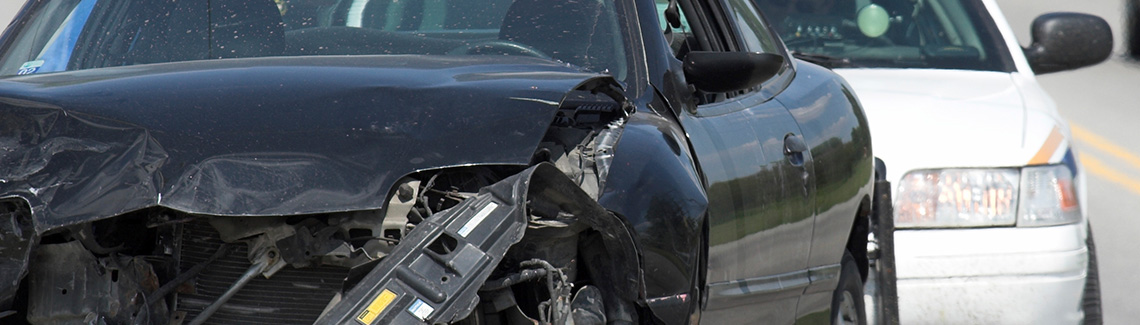
Vehicle damage codes tell the story of how hard the collision hit. Police use a severity scale that ranges from minimal damage to total loss. These codes appear on your report and influence how adjusters evaluate your claim.
Damage severity typically breaks into these categories:
- No damage or minimal damage, Vehicles touched but no visible harm. Paint transfer or minor scratches only.
- Minor damage, Small dents, cracked bumpers, or light scratches. Vehicle remains drivable.
- Moderate damage, Visible deformation of body panels, broken lights, or damage affecting multiple areas. Vehicle may not be safe to drive.
- Severe damage, Major structural damage, crumpled frames, or extensive impact across multiple sections. Vehicle likely not drivable.
- Total loss, Damage exceeds a certain percentage of vehicle value, leading the insurer to declare it a total loss.
The point of impact code shows exactly where the vehicles made contact. Front-end collisions, rear-end impacts, and side-swipe damage tell different stories about fault and injury risk. A rear-end collision almost always means the trailing driver is at fault. A side impact suggests one driver failed to yield or crossed into another lane.
Police mark the point of impact on the collision diagram using standardized symbols.
If your damage severity code seems wrong, request a supplemental report. Police can update the initial assessment if you provide photos or repair estimates showing the damage was more severe than originally documented.
Understanding Accident Report Contributing Factors
Contributing factors are the root causes that led to the crash. They’re not about blame or legal fault. They’re about what conditions or actions made the collision possible. An officer might code “failure to maintain lane” or “following too closely” as contributing factors. These codes describe what the officer observed or what witnesses reported.
Common contributing factors include:
- Driver behavior codes, Speeding, distracted driving, failing to yield, improper lane change, reckless driving
- Vehicle condition codes, Brake failure, tire blowout, steering failure, or other mechanical problems
- Environmental factors, Rain, fog, snow, ice, or reduced visibility
- Road condition codes, Pothole, debris, uneven pavement, or poor road maintenance
- Traffic control violations, Running a red light, ignoring a stop sign, or failing to obey a traffic signal
Never assume the contributing factors on your report are final. If you disagree with what’s coded, you can file a report correction with the police department. Bring evidence like witness statements, photos, or repair estimates that support a different interpretation.
Driver Condition and Action Codes Explained
Driver condition codes describe the physical or mental state of each driver at the time of the crash. These codes address whether the driver appeared impaired, fatigued, or otherwise unable to operate safely. Police note these observations based on what they see during their investigation.
Common driver condition codes include:
- Apparent normal, No signs of impairment or fatigue
- Apparently asleep or fatigued, Driver showed signs of drowsiness
- Apparently under the influence, Officer observed signs of alcohol or drug impairment
- Disabled, Driver had a physical condition affecting their ability to drive
- Ill or faint, Driver experienced sudden illness or loss of consciousness
Common driver action codes include:
- Going straight, Vehicle was proceeding in its direction of travel
- Turning left, Vehicle was executing a left turn
- Turning right, Vehicle was executing a right turn
- Backing up, Vehicle was moving in reverse
- Changing lanes, Vehicle was moving from one lane to another
- Passing, Vehicle was attempting to overtake another vehicle
- Merging, Vehicle was entering a traffic flow from an entrance ramp or side road
Reading Collision Diagrams and Environmental Symbols
The collision diagram is the visual core of your accident report. It’s a bird’s-eye view of the intersection or road section where the crash occurred. The diagram shows vehicle positions, the point of impact, road geometry, and environmental features.
Request a copy of your free accident report →
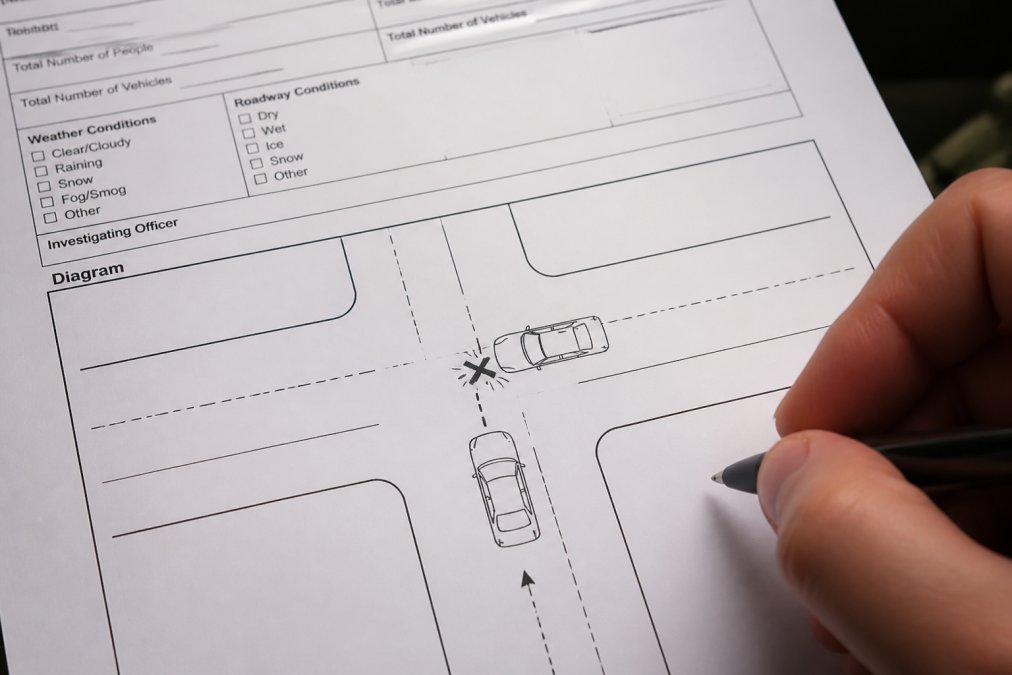
Standard symbols on collision diagrams include:
-
Vehicles, Drawn as small rectangles showing direction of travel with an arrow
-
Point of impact, Marked with an X or circle where vehicles made contact
-
Direction of travel, Arrows show which way each vehicle was moving
-
Road markings, Yellow or white lines show lane boundaries and center lines
-
Traffic control devices, Stop signs, traffic lights, and yield signs are marked
-
Environmental features, Trees, utility poles, buildings, or other landmarks
-
Weather symbols, Rain, snow, fog, or clear conditions
-
Lighting symbols, Daylight, dusk, darkness, or streetlight conditions
-
Surface symbols, Dry, wet, snow-covered, or icy pavement
The collision diagram is your visual reference for what the officer recorded. Compare it to your memory of the crash. If major details don’t match, photograph the scene yourself and bring those photos when you request a report correction.
How to Request and Obtain a Georgia Accident Report
Requesting your official accident report used to mean calling the police department, waiting on hold, and hoping they had it ready. Now there’s a faster way. Georgia Accident Report handles the entire retrieval process at no cost to you. Submit a request through the platform, and the team contacts the appropriate law enforcement agency on your behalf.
The process is straightforward:
- Provide basic information, The date, location, and names of drivers involved
- Submit your request, Georgia Accident Report sends the request to the correct police department
- Receive your report, Once the department processes it, you get the official document
- Connect with legal help if needed, If you have injuries or significant damage, the platform connects you with car accident and injury lawyers who can review your report and advise on next steps
Why Accident Report Codes Matter for Insurance and Liability
Your accident report is the primary document your insurance company uses to make decisions. The codes on that report influence whether your claim is approved, how much you receive, and whether your rates increase. Understanding what those codes mean gives you the ability to spot errors before they become problems.
Frequently Asked Questions
What do the codes on a police accident report mean?
Police accident reports use standardized codes to document contributing factors, driver conditions, vehicle damage, and traffic violations. These codes compress detailed information into shorthand that insurance adjusters, law enforcement, and legal professionals understand consistently. For example, a code might indicate weather conditions, road surface type, or whether a driver was distracted. Understanding these codes helps you verify the accuracy of the report and supports your insurance claim or liability determination.
How do I interpret the vehicle damage codes on a crash report?
Vehicle damage codes describe the severity and location of impact on your vehicle using a standardized damage severity scale. Codes typically indicate whether damage is minor (scratches, dents), moderate (structural damage), or severe (total loss). The point of impact is marked using directional codes like front, rear, side, or roof. These codes are critical for insurance claim processing because they help adjusters assess repair costs and determine whether your vehicle is repairable or a total loss.
How do I get a copy of my official accident report in Georgia?
You can request your official accident report directly from the police department or state patrol agency that responded to your crash. However, this process often requires calling multiple agencies, navigating hold times, and waiting days for delivery. A faster alternative is to use a free report retrieval service that handles the legwork for you, ensuring you receive the official document needed for your insurance claim without the hassle of contacting departments yourself.
What’s the difference between a contributing factor code and a violation code?
Contributing factor codes identify conditions or actions that led to the crash, such as following too closely, improper lane change, or weather conditions. Violation codes, by contrast, document traffic law violations committed by drivers involved. A single accident may have multiple contributing factors but only specific violations cited. Understanding this distinction is important for liability determination and insurance claim processing, as contributing factors establish cause while violations establish legal fault.
Request a copy of your free accident report:
"*" indicates required fields