
Professional Accident Review: Benefits Explained
September 1, 2026 | | Blog

Table of Contents
- What a Professional Accident Review Actually Does
- How to Get a Georgia Police Report for Your Claim
- Establishing Liability and Fault Through Professional Analysis
- The Role of a Car Accident Reconstruction Expert Witness
- Why Accident Investigation Matters for Insurance Claims
- Data Collection and Forensic Analysis in Professional Reviews
- How Professional Reviews Protect You in Court
- Conclusion
- Frequently Asked Questions
Last Updated: August 31, 2026
What a Professional Accident Review Actually Does
To get your FREE accident report visit georgiaaccidentreport.com and fill out the yellow form.
A professional accident review is a comprehensive examination of a motor vehicle accident that goes far beyond what an insurance adjuster or police officer can provide. It involves systematic analysis of the crash scene, vehicle damage, witness statements, and physical evidence to establish a clear factual record of what happened and why.
The core purpose is straightforward: create an objective, forensically sound account of the accident for insurance claims, legal proceedings, or safety improvements. When you get a professional accident review, you’re getting independent analysis from specialists trained in accident reconstruction and liability determination, not relying on incomplete police reports or the other party’s interpretation.
This matters because insurance companies make decisions based on the documentation they receive. If your accident report is incomplete or contradicts the other party’s account, your claim can be delayed or denied. A professional accident review establishes the facts in writing with supporting evidence, making it harder for insurers to dispute your version of events.
Georgia Accident Report simplifies this process by connecting you with the documentation you need and the legal professionals who can interpret it. Rather than spending weeks calling police departments, you can request your official police report for free and gain access to attorneys who understand how to use that documentation effectively.
How to Get a Georgia Police Report for Your Claim
Your official police report is the foundation of any accident claim. It contains the officer’s observations, witness statements, citations issued, and initial liability assessment. Getting this report quickly is essential because insurance companies need it to process your claim.
The direct approach is calling your local police department or state patrol office with your accident report number, date, and case number. Most departments require in-person visits or written requests, which can take weeks. Processing times vary wildly depending on the agency’s workload, and fees range from a few dollars to over twenty dollars per report (georgia.gov).
If your accident happened in an unfamiliar county, you may not know which agency to contact. Rural areas sometimes have limited office hours. If you’re injured or dealing with significant property damage, administrative delays are the last thing you need.
Georgia Accident Report handles this legwork at no cost to you. Submit your accident details once, and the service retrieves your official police report from the appropriate agency without multiple phone calls or visits. The report you receive is the same official document accepted by all insurance companies and courts.
This approach saves time when you’re dealing with injury recovery or vehicle repairs, allowing you to focus on what matters while your documentation is being gathered.
Establishing Liability and Fault Through Professional Analysis
Liability determination is where professional accident reviews earn their value. The police report assigns fault based on the officer’s initial observations, but that assessment isn’t always complete or correct. The officer may have missed evidence, misunderstood collision physics, or relied too heavily on one witness’s account.
A professional accident review re-examines the evidence systematically, analyzing vehicle damage patterns, calculating vehicle speeds at impact, reviewing sight lines and traffic control devices, and evaluating driver actions before the collision.
Consider a rear-end collision where the police report says you stopped suddenly and caused the accident. A professional review measures crush damage on both vehicles, analyzes skid marks, and determines actual stopping distances. The physics often tell a different story than eyewitness accounts. If the vehicle behind you was traveling faster than the stopping distance would allow, the liability shifts.
This analysis becomes critical when insurance companies dispute fault or when the accident ends up in court. A professional accident review creates a documented record of the physical evidence, making it harder for the other party to rewrite the narrative later.
The Role of a Car Accident Reconstruction Expert Witness
When an accident case goes to court or involves serious injury claims, a car accident reconstruction expert witness becomes essential. This specialist testifies about the physics of the collision, the evidence at the scene, and what the physical facts reveal about fault and impact severity.
Expert witness testimony carries weight in court because it’s based on scientific analysis rather than opinion. The expert can explain vehicle dynamics, sight line calculations, and damage patterns in terms the jury can understand.
The expert’s role isn’t to argue your case, it’s to present objective findings about what the evidence shows. When an expert says the vehicle was traveling at forty miles per hour based on damage analysis, that’s measurable fact, not interpretation (peer-reviewed research). When they explain why the driver couldn’t have stopped in time given sight lines and road conditions, that’s physics, not argument.
Having an expert review your accident early in the process shapes how your case develops. If the expert’s analysis supports your version of events, you have leverage in settlement negotiations. If it reveals complications, you know what you’re facing before trial.
Why Accident Investigation Matters for Insurance Claims
Insurance companies process thousands of claims monthly. If your documentation is incomplete or unclear, your file gets flagged for further review, which means delays. If your documentation is thorough and consistent, your claim moves through the system faster.
This is why a comprehensive accident investigation matters. The police report is your starting point, but it’s often incomplete. The officer spent maybe thirty minutes at the scene and didn’t analyze vehicle damage patterns, measure sight distances, or review traffic camera footage. They recorded what they observed, but observation isn’t the same as investigation.
When you request your official police report, you’re getting the documented baseline. A professional review can identify what’s missing or unclear and gather additional evidence if needed, creating a complete file that insurance companies can’t easily dispute.
The practical benefit is faster claim resolution. When your documentation is complete and consistent, the process moves smoothly. Each delay in providing documentation extends your wait for compensation.
Data Collection and Forensic Analysis in Professional Reviews
Forensic analysis in accident reconstruction starts with systematic data collection at the scene. This includes measurements of vehicle positions, damage patterns, road conditions, traffic control devices, and environmental factors.
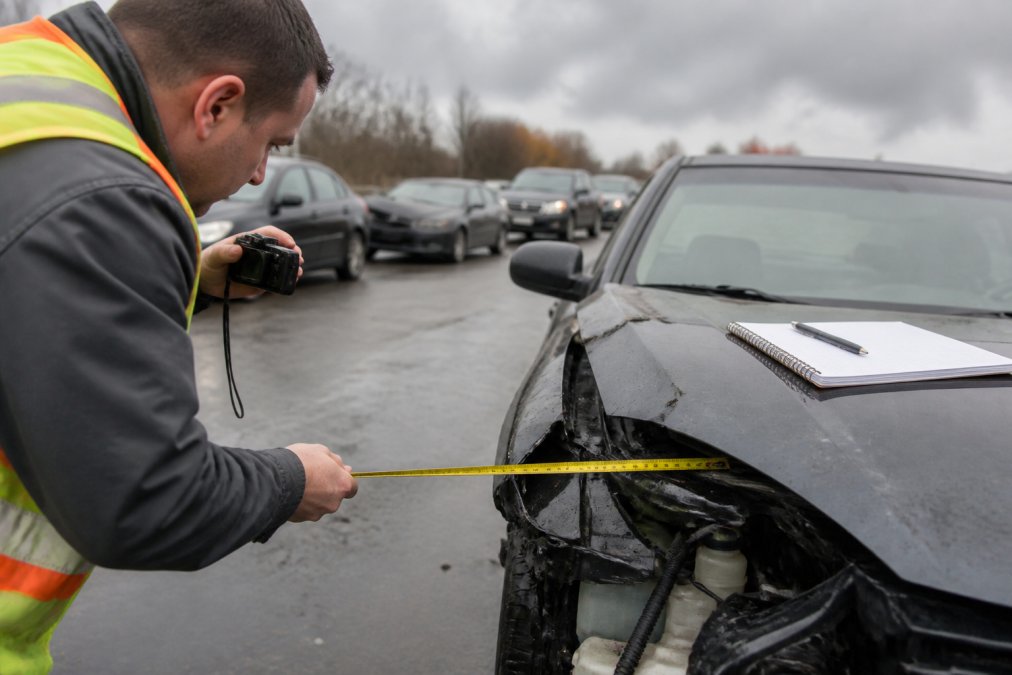
The investigator photographs the scene from multiple angles, capturing the relationship between vehicles, road markings, and surrounding environment. They measure distances from the point of impact to traffic signals, stop signs, and sight obstruction points. They document road surface conditions, wet, dry, debris, potholes, because these affect braking distance and vehicle control.
Vehicle damage analysis involves detailed examination of crush patterns, deformation, and material transfer. The angle and severity of damage reveals the direction of impact and relative speeds. Paint transfer confirms contact points. Broken glass patterns indicate which vehicle struck first.
Modern technology is transforming how this data is collected and analyzed. Dashcam footage from both vehicles provides a real-time record of the seconds before impact, showing driver actions, sight lines, and traffic conditions. Telematics data from vehicles equipped with event data recorders (EDRs) captures vehicle speed, acceleration, brake application, and steering input at the moment of collision (nhtsa.gov). This data is objective and difficult to dispute.
AI-driven analysis tools now process this multi-source data automatically. Software can analyze dashcam footage to detect driver distraction, calculate impact angles from video alone, and cross-reference vehicle telemetry against road conditions and traffic signal timing. Some professional reviewers use 3D laser scanning to create precise digital models of the accident scene.
Witness statements are documented and cross-referenced against physical evidence and recorded data. If a witness says the traffic light was green, but dashcam footage shows the witness couldn’t have seen the signal from their position, that statement gets flagged. When telematics show a vehicle was traveling at 52 mph in a 35 mph zone, that objective measurement overrides any witness claim about speed.
This forensic work, combining traditional scene investigation with modern data sources, creates a documented record that stands up to scrutiny. The integration of dashcam, telematics, and AI analysis means professional reviews today capture far more objective evidence than was possible five years ago.
How Professional Reviews Protect You in Court
If your accident case reaches court, a professional accident review becomes your evidence foundation. The review provides the documented facts that your attorney uses to build your case. Without this documentation, you’re relying on memory and witness accounts, which are notoriously unreliable.
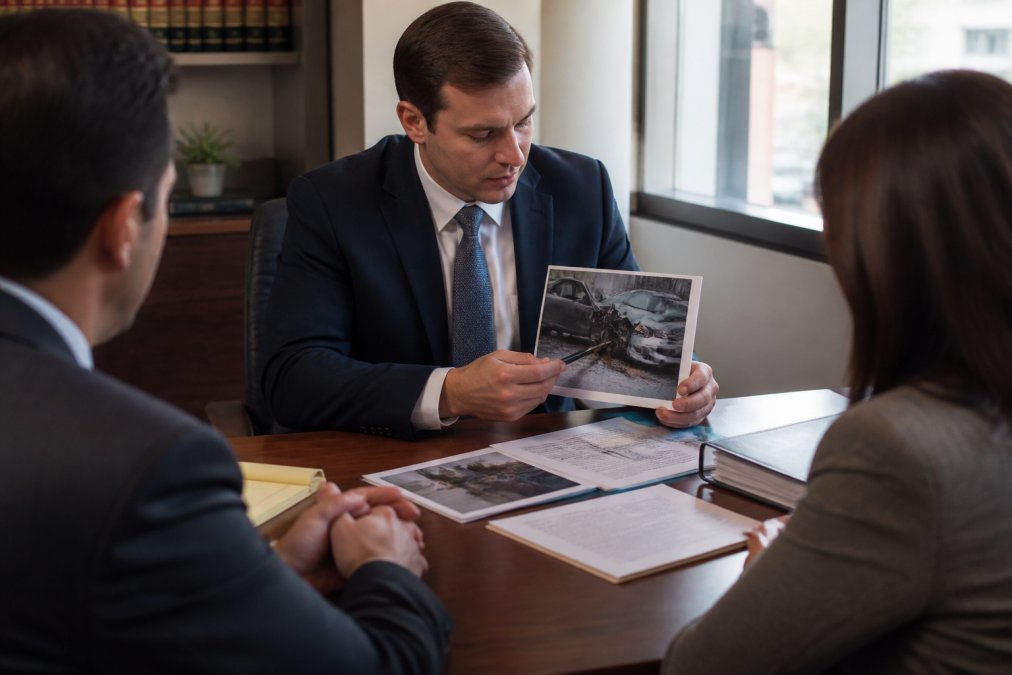
The opposing party will argue their version of events. Without your own professional analysis, you’re fighting interpretation with interpretation. With documented forensic analysis, you’re fighting interpretation with evidence.
A professional accident review establishes the factual foundation, challenges contradictory accounts, and supports causation arguments. If the other party claims you were speeding, but damage analysis shows your vehicle was traveling below the speed limit, that contradiction matters. If the accident caused injuries, the impact severity documented in the review supports claims about injury severity.
The review also protects you against credibility attacks. A professional review that corroborates your account neutralizes attempts to undermine your credibility. The evidence speaks for itself.
Courts respect professional analysis because it’s based on methodology and evidence, not memory or emotion. When an expert testifies about findings, the jury listens differently than when you testify about what you remember.
Conclusion
Getting a professional accident review protects you at every stage after a crash. It establishes the facts when memories are still fresh. It creates documented evidence that insurance companies and courts respect. It gives you leverage in settlement negotiations and protection if your case goes to trial.
The process starts with your official police report. Georgia Accident Report retrieves that report for free, without the hassle of contacting multiple agencies. From there, you have access to legal professionals who understand how to use that documentation effectively and can advise whether additional investigation is needed for your specific situation.
Frequently Asked Questions
What are the key benefits of getting a professional accident review?
A professional accident review establishes clear liability, preserves critical evidence, and creates documentation accepted by insurance companies and courts. It identifies root causes that a standard police report may miss, strengthens your claim with forensic data, and protects you from disputed fault determinations. Most importantly, it accelerates settlement by providing insurers with objective, detailed findings rather than conflicting accounts.
How does a car accident reconstruction expert witness help my insurance claim?
An expert witness applies physics-based modeling and vehicle dynamics analysis to determine what actually happened during the crash. They measure crush patterns, analyze skid marks, and review telematics data to establish fault objectively. Insurance adjusters and courts rely on expert testimony because it removes guesswork. When liability is disputed, an expert’s findings often become the deciding factor in settlement negotiations or litigation.
How do I get a Georgia police report, and how long does it take?
You can request your Georgia police report directly from the law enforcement agency that responded to the scene, or use a streamlined retrieval service that handles the process for you. Direct requests typically take time depending on the agency’s workload. A professional retrieval service can often expedite this by coordinating with multiple departments and ensuring you receive the official report accepted by insurers and courts without delays.
Why is professional accident investigation important for insurance claims?
Insurance companies rely on detailed investigation to validate claims and determine payouts. A professional investigation documents evidence preservation, establishes compliance with safety standards, and creates a factual record that prevents disputes. Without thorough investigation, insurers may deny claims or undervalue them. Professional findings also protect you if the other party contests liability, giving you objective evidence to support your position.
Request a copy of your free accident report:
"*" indicates required fields