

How to Dispute an Accident Report Online: 2026 Guide
October 1, 2026 | | Blog

Table of Contents
- What You’ll Need Before You Dispute an Accident Report Online
- Why Police Accident Reports Contain Errors
- Step-by-Step: How to Amend a Police Report Online
- Using a Police Report Correction Form
- Disputing Fault in a Car Accident: Evidence That Works
- How Long Does a Report Dispute Take? Timeline Expectations
- How a Dispute Affects Your Insurance Premium and Claim
- Frequently Asked Questions
Last Updated: September 29, 2026
What You’ll Need Before You Dispute an Accident Report Online
You can dispute an accident report online, but only if you gather the right documents first, and knowing how to dispute accident report errors starts with preparation. Georgia Accident Report helps drivers across the state collect official crash reports without calling agency after agency. Before you file anything, pull together these items: (Source: National Highway Traffic Safety Administration (NHTSA) data)
- A copy of the crash report with the error circled
- Your driver’s license number and the report number
- Photos of vehicle damage and the scene
- Names and contact details for any witnesses
- Your own written account of what happened
- Any repair estimates or medical records you have
Request your report before you do anything else. You cannot dispute a document you have not read, and errors are easy to miss on a first pass.
Why Police Accident Reports Contain Errors
Police accident reports contain errors because officers write them fast, often at the scene, often in the dark, and often within minutes of a stressful event. A reporting officer may mishear a name, swap a lane, or guess at a vehicle color. These are clerical errors, not lies.
Common mistakes include:
- Wrong license plate or driver name
- Incorrect road or intersection
- Fault assigned to the wrong driver
- Missing witness statements
- Wrong vehicle make or model
Step-by-Step: How to Amend a Police Report Online
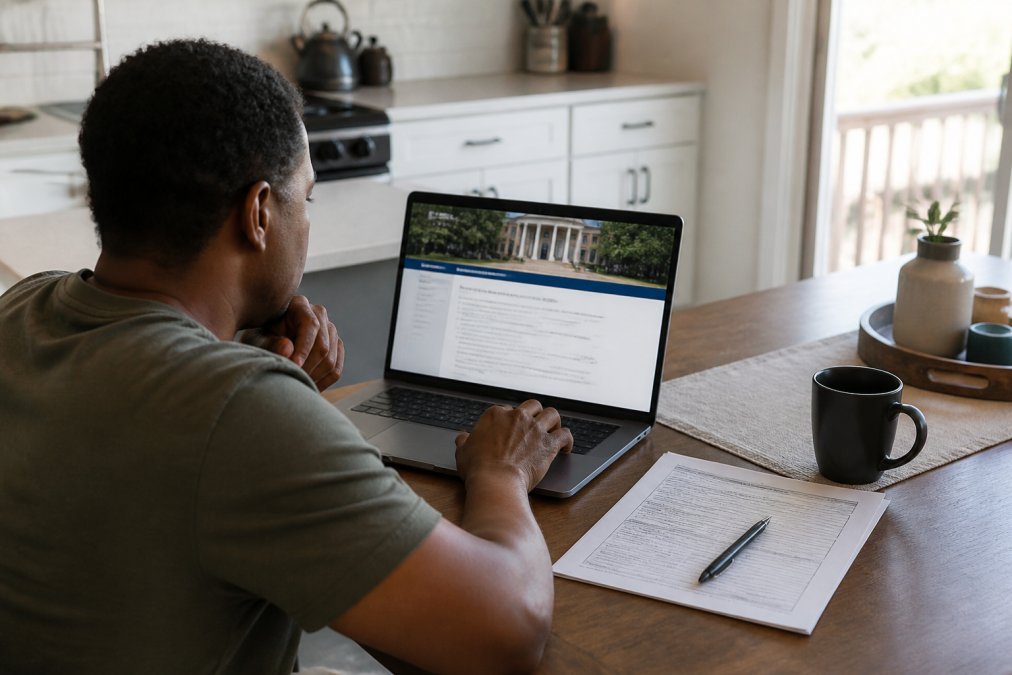
You can amend a police report online by filing a correction request with the law enforcement agency that wrote it. The process is not standardized, there is no single national portal, so the work is in finding the right system and submitting the right document. Here is the full sequence, including the parts most guides skip.
Step 1: Confirm Which Agency Owns the Report
The agency that responded to your crash is the only one that can fix its report. Start with the department named at the top of your copy. Common patterns:
- Municipal police departments typically route records requests through a city-run portal or a records unit email.
- County sheriff’s offices often use a county records portal or a shared regional system.
- State patrol / state highway patrol offices usually run their own statewide crash report system, separate from city portals.
- Campus or transit police have their own records units and rarely share a portal with the city.
Step 2: Locate the Correct Portal Path
Most agency websites bury records requests under a menu label like “Records,” “Public Records,” “Reports,” or “Community Services.” A few common navigation patterns:
- City site → Departments → Police → Records Division → Request a Report
- State patrol site → Crash Reports → Request a Correction
- County site → Sheriff → Records → Public Records Request
Step 3: Pull the Exact Report Number and Date
Every portal will ask for the report number and the date of the crash. The report number is usually in the top corner of your copy, sometimes labeled “Case Number,” “Incident Number,” or “CR Number.” Copy it exactly, a transposed digit will get your request rejected or routed to the wrong file.
Step 4: Write Your Supplemental Statement
A supplemental statement is your written account of what the report got wrong. Keep it short and factual. A workable structure:
- Report number and crash date
- Your name and role (driver, passenger, witness)
- The specific item you are disputing, quoted from the report
- The correct information
- A list of attached evidence
Step 5: Attach Evidence and Submit
Upload or attach copies, never originals. Then submit through the portal, by email, or by mail. Keep a copy of everything you send and note the date. If the portal gives you a confirmation number, save it.
Step 6: Follow Up on a Schedule
A common pattern is to hear nothing for two to three weeks. Mark a follow-up date on your calendar for 14 days after submission. When you call, give the records clerk your report number and confirmation number and ask for a status. Polite persistence moves requests faster than repeated resubmissions.
If the portal times out or rejects your upload, do not assume the request failed. Call the records unit, confirm whether the submission was received, and ask for an email address you can send the documents to directly.
::: (Source: the Code of Federal Regulations)
Step 7: Get the Amended Report in Writing
Ask specifically for an amended or supplemental report, not just a verbal acknowledgment. You want a document you can send to your insurer. If the agency issues a supplemental report rather than editing the original, that is normal, the supplement becomes part of the official file.
Using a Police Report Correction Form
Many agencies publish a police report correction form you can download, fill out, and return. The form usually asks for the report number, the disputed item, and your supporting evidence. Fill it out in plain language and avoid opinions. State facts only.
Disputing Fault in a Car Accident: Evidence That Works
Disputing fault in a car accident comes down to evidence, not argument. Agencies and insurers weigh documents, not emotion. The strongest evidence includes:
Request a copy of your free accident report →
- Photographic evidence of damage, skid marks, and road conditions
- Witness testimony in writing, signed and dated
- Your driver statement, consistent with what you told the officer
- Traffic camera or dashcam footage
- Repair estimates that show impact direction
How Long Does a Report Dispute Take? Timeline Expectations
Most attempts to dispute accident report errors take two to eight weeks, though some agencies move faster and some take longer. There is no universal deadline. Factors that slow things down include missing evidence, a backlog at the records unit, and requests sent to the wrong agency.
| Stage | Typical Time | What Happens |
|---|---|---|
| Gather evidence | 1-3 days | Photos, statements, report copy |
| File correction request | 1 day | Portal, form, or letter |
| Agency review | 2-6 weeks | Officer or supervisor checks findings |
| Amended report issued | 1-2 weeks after review | Updated official record |
How a Dispute Affects Your Insurance Premium and Claim
A successful dispute can lower your insurance premium and strengthen your insurance claim, but the reason is mechanical, not magical. Understanding the chain of records helps you decide how hard to push.
How the Report Reaches Your Insurer
After a crash, the responding agency’s report becomes part of the official crash record. Insurers obtain crash reports through one of a few channels:
- You or the other driver report the crash to your carrier, and the adjuster pulls the report.
- The carrier subscribes to a data aggregator that compiles crash and claims data.
- The state motor vehicle agency shares certain crash data with insurers or with the aggregators they use.
The CLUE Report Connection
Most insurers report claims to a consumer reporting agency that compiles a loss history, commonly referred to as a CLUE report (Comprehensive Loss Underwriting Exchange). That report is what a new or renewing insurer pulls when it wants to see your claims history. If the crash report shows you at fault, the claim is coded as an at-fault loss, and that coding can follow you to the next carrier.
What a Successful Dispute Actually Changes
When the agency amends the report to remove your fault, you now have documentation to send to your insurer. Ask the adjuster to update the claim coding from at-fault to not-at-fault. If the claim was already reported to the loss-history agency, you can also dispute the inaccurate entry directly with that agency, similar to how you would dispute an error on a credit report.
What a Failed Dispute Does, and Does Not, Do
A failed dispute does not usually raise your premium by itself. Your rate is driven by the claim coding, not by the fact that you asked for a correction. But an uncorrected error can sit in the official record and in the loss-history file for years, affecting renewal pricing and quotes from new carriers.
Practical Steps to Protect Your Rate
- Get the amended report in writing before you ask the insurer to re-code the claim.
- Send the amended report to your adjuster and ask, in writing, for the claim coding to be updated.
- If the loss-history agency still shows an at-fault loss, file a dispute with that agency and attach the amended report.
- Keep a copy of every letter, email, and confirmation number.
Do not wait months to dispute an error. Some agencies archive records, and older disputes take longer to resolve. File while the details are fresh, and follow up with your insurer as soon as the amended report is in hand.
Georgia Accident Report retrieves official crash reports for drivers across the state at no cost. The service handles the calls and portal searches, then connects you with car accident and injury lawyers if you want legal help.
Frequently Asked Questions
What do I do if my crash report is wrong?
Contact the law enforcement agency that filed the report and ask about their amendment process. Many agencies accept corrections through an online portal or a police report correction form, while others require you to submit a written supplemental statement in person. Gather supporting evidence such as photographs, witness testimony, or a driver statement before you file. If the error involves liability determination, speak with a legal professional about your options for disputing fault in a car accident.
Can you fight a police accident report?
You can challenge factual inaccuracies in a police accident report, but you cannot remove the original filing. Agencies typically issue an amended report or supplemental report that documents the correction. The original record stays on file. Disputes work best when you have photographic evidence, witness testimony, or other documentation that contradicts a specific error. For disputes involving personal injury or significant property damage, a legal consultation helps you decide whether an official challenge is worth pursuing.
Does an incorrect accident report affect my insurance premium?
It can. Insurers use the police accident report and your motor vehicle record to help with liability determination and to set rates. If the report assigns fault incorrectly, your insurance premium may rise when it should not. Correcting the record through a formal dispute process gives your insurer accurate data to work with. Share the amended report with your claims adjuster as soon as the agency issues it, and keep a copy for your own records.
How long do I have to request a correction to a police crash report?
Deadlines vary by law enforcement agency and by the statute of limitations that applies to your broader claim. Some agencies accept correction requests for months after a traffic collision, while others have shorter internal windows. Do not wait. File your correction request as soon as you notice a factual inaccuracy, and check the agency’s website for its specific policy. If you are unsure whether your window has closed, a legal consultation can clarify your options.
An error on your crash report can cost you money and peace of mind for years. Georgia Accident Report makes the first step easy by getting your official police report into your hands for free, with no obligation. From there, the team can connect you with qualified car accident and injury lawyers who understand how to dispute accident report errors and fight for the outcome you deserve. Request a copy of your free accident report and start correcting the record today.
Request a copy of your free accident report:
"*" indicates required fields