

How to Read Injury Codes on Crash Forms (2026 Guide)
September 4, 2026 | | Blog
Table of Contents
- Why the Injury Codes on Your Crash Report Matter
- How to Get a Georgia Police Report to Check Your Codes
- KABCO Injury Scale Explanation: What Each Letter Means
- Other Critical Codes on Your Accident Report Form
- Correcting Errors on Georgia Accident Report Documents
- What to Do When Your Injury Codes Are Incorrect
- Conclusion: Take Control of Your Accident Documentation
- Frequently Asked Questions
Last Updated: September 4, 2026
Why the Injury Codes on Your Crash Report Matter
To get your FREE accident report fill out the form at the bottom of the page.
The injury codes on your crash report are more than administrative shorthand; they are the official record of your physical condition immediately following a collision. These codes, entered by the investigating officer, directly influence how insurance companies evaluate your claim and how they calculate the severity of your injuries.
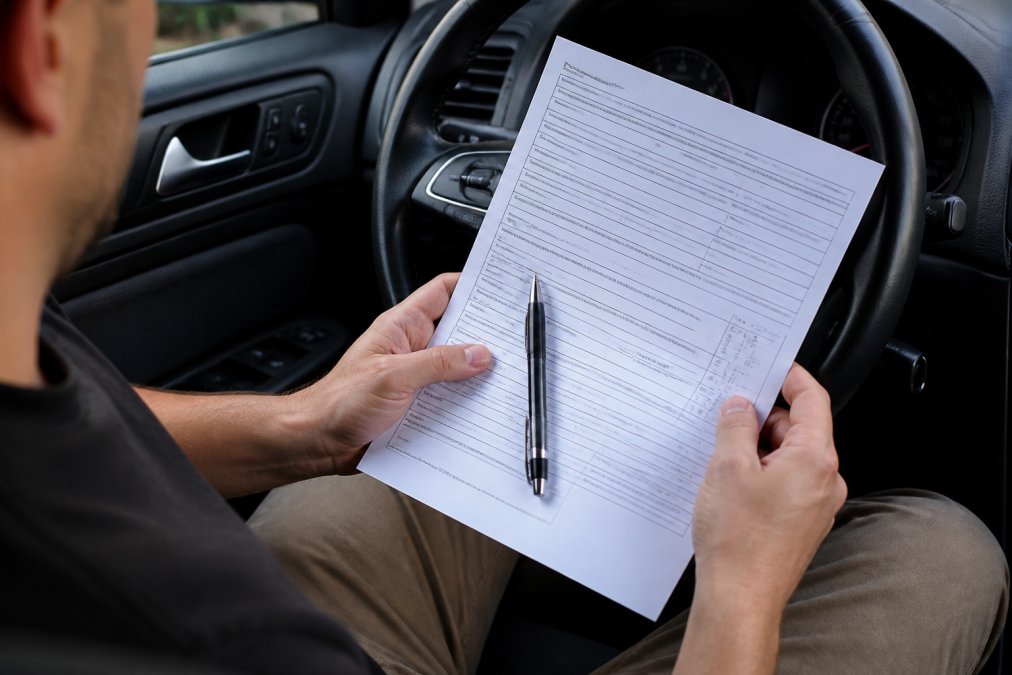
Learning how to read injury codes on crash forms is essential for protecting your rights after an accident. If the officer marks your injury as minor or non-evident, it can severely undervalue your claim. Below, we’ll show you exactly how to decode these codes and what to do when they don’t accurately reflect your experience.
How to Get a Georgia Police Report to Check Your Codes
Before you can dispute an error, you need the official document in hand. Requesting a report directly from the investigating agency can involve calling multiple departments and waiting through administrative delays.
A more direct approach is using a free service like Georgia Accident Report to handle the retrieval. By submitting a request, you receive your official police accident report without the legwork of contacting state patrol or local precincts. Once you have the document, you can verify the codes and check that the narrative matches your account of the crash. This step is critical because the report serves as the foundational evidence for your insurance claim and any potential legal action.
KABCO Injury Scale Explanation: What Each Letter Means
The KABCO scale is the national standard for classifying injury severity on traffic crash reports, developed by the National Safety Council and adopted by the Federal Highway Administration for use in the Model Minimum Uniform Crash Criteria (MMUCC). While the letters are uniform, definitions and field labels can vary slightly by state, so always check the legend on your report form or your state’s crash report manual.
The officer assigns one of these letters based on an on-scene assessment, typically within minutes of the crash. This designation becomes part of the official documentation and is often the primary data point insurers reference when adjusting claims. Officers often default to a lower severity code when the victim is ambulatory or does not visibly complain, which is why understanding the precise definitions matters.
K (Fatal Injury) vs. A (Incapacitating Injury)
A K designation indicates a fatal injury, meaning the crash resulted in a death, either at the scene or within a specified time window (often 30 days, per National Highway Traffic Safety Administration guidelines) (nhtsa.gov). An A designation, or incapacitating injury, means the victim was unable to walk, drive, or perform normal activities after the accident. This includes severe lacerations, broken limbs, or unconsciousness at the scene.
Disputes often arise when injuries worsen after the initial report is filed. An injury that appears minor at the scene, like neck stiffness, can later manifest as a herniated disc requiring surgery. The officer’s assessment is a snapshot, not a medical diagnosis, and the report should reflect what was observable at that moment.
B (Non-Incapacitating Injury) and C (Possible Injury)
A B code represents a non-incapacitating injury, which is visible but does not prevent the person from leaving the scene. This includes cuts, bruises, or complaints of pain that do not require immediate transport. The C code is for a possible injury, often described as a complaint of pain without visible signs. This is where many reports become inaccurate.
Adrenaline can mask pain for hours after a crash. If you tell the officer you feel “okay” at the scene, you may receive a C or O code, even if you wake up the next morning with severe pain. The C code does not mean ‘no injury’, it means ‘not evident at the scene,’ a critical distinction for your claim.
O (No Injury) and the ‘Unknown’ Designation
An O means no injury was reported. Some reports also include a designation for “unknown” or “unable to determine” when the officer cannot assess the driver’s condition, often because the driver was transported before the officer arrived or was unresponsive. If you leave the scene without reporting pain or are transported before speaking with the officer, you risk being marked with an O.
Correcting this later requires medical documentation and a formal amendment request. The burden of proof is on you to show the injury existed at the time of the crash, which is why seeking medical attention within 72 hours is a common benchmark used by insurers and attorneys to establish causation. Without that documentation, an O code can be nearly impossible to overturn.
State-Specific Code Variations You Should Know
While the KABCO letters are standard, states are not required to use them identically. Some states, like Texas and Florida, use a numeric scale (0-4 or 1-5) that maps to KABCO but is not identical. Others, like California, use a separate “Injury Severity” field with codes for “Complaint of Pain” and “Other Visible Injury” that do not map cleanly to the national KABCO definitions.
To find your state’s legend, search for your state’s “crash report manual” or “traffic crash reporting guide”, typically published by the state’s Department of Transportation or Highway Patrol and are public documents. The National Highway Traffic Safety Administration also publishes a state-by-state comparison of injury coding practices under the MMUCC framework.
National Highway Traffic Safety Administration MMUCC guidelines on crash report coding
Other Critical Codes on Your Accident Report Form
Beyond the KABCO scale, your crash report contains other data points that matter for your claim. These include driver condition codes, noting whether the driver appeared normal, fatigued, or under the influence, and driver distraction codes, identifying potential contributing factors like cell phone use.
The report also documents vehicle damage and impact point, detailing where the collision occurred on each vehicle. This helps establish the physics of the accident and can be pivotal in determining fault. The accident diagram and narrative provide a visual and written account of the events. Review these sections to ensure the officer accurately captured the sequence of events, as errors here can misrepresent liability.
Request a copy of your free accident report →
|
Code/Field |
What It Means |
Why It Matters |
|---|---|---|
|
KABCO Letter |
Injury severity classification |
Sets the baseline for claim value |
|
Driver Condition |
Physical/mental state of driver |
Can indicate impairment or fatigue |
|
Driver Distraction |
Actions taking attention away |
Key factor in establishing fault |
|
Impact Point |
Location of damage on vehicle |
Helps reconstruct accident dynamics |
|
Contributing Factors |
Unsafe speed, inattention, etc. |
Directly influences liability decisions |
Correcting Errors on Georgia Accident Report Documents
When you spot a mistake on your accident report, you have the right to request a correction, but the process is not the same in every state. This guide covers the general national framework, with specific notes for Georgia.
Errors can range from an incorrect injury code to a misspelled name or an inaccurate narrative. These mistakes can delay your claim or reduce your settlement offer, so addressing them promptly is essential. The most common error patterns are: (1) an injury code lower than the actual severity, (2) a driver condition code that incorrectly suggests impairment, and (3) an impact point that does not match the vehicle damage photos.
The General Correction Process Across States
Most states follow a similar procedure for amending a crash report:
- Obtain the official report from the investigating agency, this is typically the local police department, county sheriff’s office, or state highway patrol, depending on who responded.
- Identify the specific error and gather supporting evidence. For an injury code error, this means medical records, imaging reports, or a physician’s statement that documents the injury and its onset.
- Submit a formal written request to the agency’s records division or the officer’s supervisor. Many states have a specific form for this, often called a “Crash Report Correction Request” or “Amendment Request.”
- Follow up in writing if you do not receive a response within 30 days. Some states have a statutory deadline for the agency to act.
A critical detail is that the officer who filed the report must typically approve the change. If the officer disagrees, you may need to escalate to the agency’s internal affairs or records supervisor. In some states, you can file a petition with the local court to compel a correction, though this is rare and usually requires legal representation.
Georgia-Specific Procedures
In Georgia, the process is governed by the Georgia Department of Transportation and the investigating agency. The Georgia Crash Report Manual specifies that corrections must be requested in writing and supported by documentation. The Georgia State Patrol and local police departments have their own records divisions, and processing timelines can vary from a few weeks to several months.
A unique aspect of Georgia law is that the report is considered a legal document, and knowingly providing false information to the officer is a misdemeanor. This means the officer has a strong incentive to be accurate, but corrections are not granted casually. You must demonstrate that the original code was factually incorrect, not merely that you disagree with the officer’s assessment.
The High-Intent Gap: What to Do When the Officer Refuses to Amend
Most guides stop at “request a correction,” but officers often refuse to change a code, especially if they believe their initial assessment was reasonable. If you face a refusal, your options are:
- File a complaint with the agency’s internal affairs division, this is a formal process that can take 60-90 days but may prompt a supervisory review.
- Request a copy of the officer’s notes and any dashcam or bodycam footage, this can reveal whether the officer missed observable injuries.
- Hire an attorney to send a formal demand letter, legal representation often expedites the process because agencies prefer to resolve disputes without litigation.
- Use the report as-is but supplement your claim with medical evidence, insurers are not bound by the officer’s code; they must consider all evidence, including your medical records and testimony.
Why Acting Quickly Matters
The longer you wait to request a correction, the harder it becomes. Officers may retire or transfer, records may be archived, and insurers may close your claim based on the original code. Most states have a statute of limitations for amending a crash report, often one to three years, but insurers typically make their initial settlement offer within 30 to 60 days of the crash. If you wait until after that offer, you are fighting an uphill battle.
A common pattern is that injured drivers receive a low settlement offer based on a C or O code, then seek medical treatment and realize the injury is serious. By that point, the insurer has already anchored the claim value to the original code. Correcting the report early, within the first two weeks, gives you the strongest position for negotiation.
What to Do When Your Injury Codes Are Incorrect
Acting quickly is critical if the injury codes on your report do not match the severity of your condition. First, seek medical attention and ensure your injuries are formally documented by a physician. This creates a medical record that contradicts the officer’s initial assessment. Next, contact a qualified attorney who can guide you through the amendment process.
Attempting to correct a police report without legal support can be lengthy and frustrating. Professional representation expedites the correction and ensures the new codes accurately reflect your injuries. The legal team available through Georgia Accident Report can review your report, advise you on the strength of your claim, and handle communication with the investigating agency.
National Highway Traffic Safety Administration guidelines on crash report coding
Conclusion: Take Control of Your Accident Documentation
Your accident report is the cornerstone of your injury claim. A single letter on that form can determine whether you receive compensation for medical bills, lost wages, and pain and suffering. If your report contains errors or you are unsure how to read injury codes on crash forms, you do not have to navigate this alone. Georgia Accident Report simplifies the process by retrieving your official documentation for free and connecting you with attorneys who protect your interests. Don’t let a clerical error dictate the outcome of your recovery. Request a copy of your free accident report and verify that your story is told accurately.
Frequently Asked Questions
What does injury code C mean on a police report?
Code C on a police report stands for ‘Possible Injury’ on the KABCO scale. This classification means a person reported a claim of injury that is not immediately visible, or the injury was not evident at the scene of the crash. It covers complaints of pain, nausea, or other symptoms that do not incapacitate the person. This is different from a ‘B’ code, which indicates a non-incapacitating but visible injury like a laceration or bruise.
What is a code 4 injury accident?
A ‘Code 4’ often refers to the numerical system used in some state crash reports, including the older forms used in Georgia. In this system, Code 4 typically corresponds to a ‘Fatal Injury.’ The newer standard forms use the KABCO letter system, where a ‘K’ indicates a fatality. If your report uses numbers instead of letters, Code 1 is usually ‘No Injury’ (O), Code 2 is ‘Possible Injury’ (C), Code 3 is ‘Non-Incapacitating’ (B), and Code 4 is ‘Incapacitating’ (A).
How do I read a crash report?
Reading a crash report requires understanding its main sections. Start with the narrative, which is the investigating officer’s written account of the crash. Then, review the diagram showing vehicle positions. The critical section for injury claims is the ‘Injury Severity’ field, which uses the KABCO scale (K-Fatal, A-Incapacitating, B-Non-Incapacitating, C-Possible, O-No Injury). Check the vehicle damage codes and the contributing factors listed. If any code seems wrong, especially the injury severity, you can request a correction.
What should I do if the injury codes on my report are incorrect?
If your injury code is incorrect, you should act promptly. The process for correcting errors on a Georgia accident report typically involves contacting the investigating agency (the police department or sheriff’s office) that filed the report. You will need to submit a formal request explaining the error and providing supporting evidence, such as medical records. The investigating officer will review the request and can issue an amended report. Getting this corrected is critical because insurance companies use these codes to evaluate your claim.
Request a copy of your free accident report:
"*" indicates required fields