


Official Crash Report vs Private Investigator Report
September 3, 2026 | | Blog
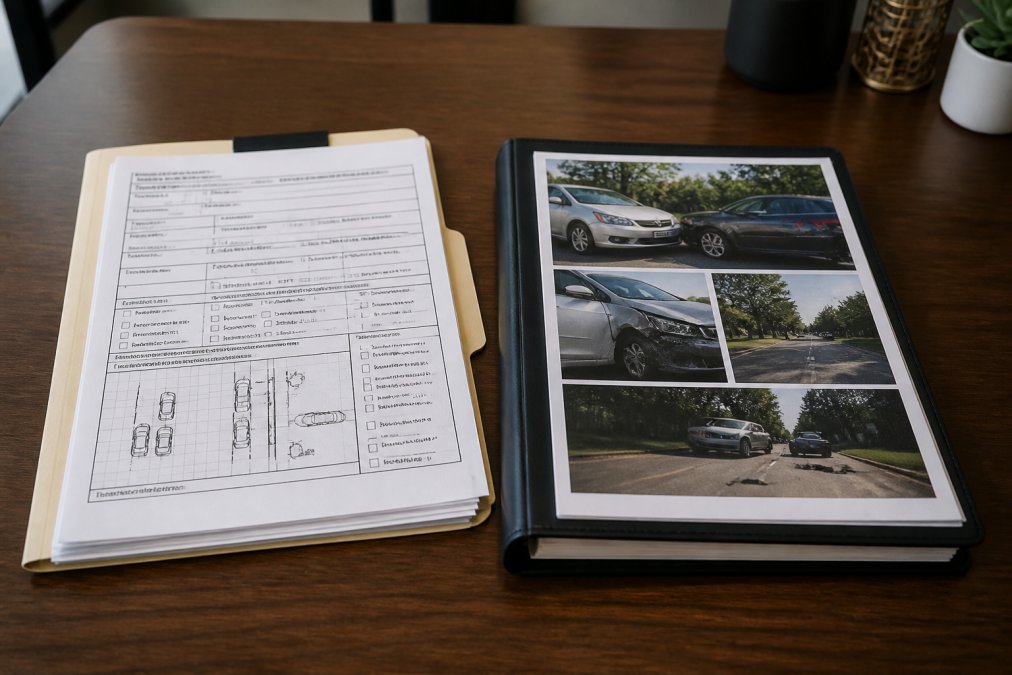
Table of Contents
- Official Crash Reports and Private Investigator Reports: Key Differences
- How to Get a Police Accident Report in Georgia
- Limitations of Police Accident Reports
- What Private Investigator Reports Reveal
- Admissibility of Private Investigator Reports in Court
- Cost-Benefit Analysis: Official Reports vs. Private Investigation
- Which Report Type Strengthens Your Case
- Key Comparison: Official Report vs. Private Investigation
- Getting Your Free Police Report and Next Steps
- Frequently Asked Questions
Last Updated: September 3, 2026
Official Crash Reports and Private Investigator Reports: Key Differences
To get your FREE accident report fill out the yellow form at the bottom of the page.
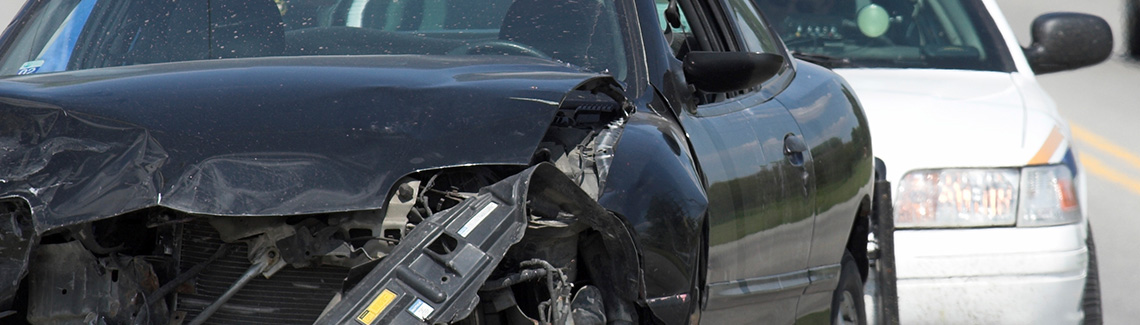
When you’re in a motor vehicle accident, documentation becomes critical. An official crash report and a private investigator report serve fundamentally different purposes, yet many people treat them as interchangeable. The official police report is the government’s factual record of what happened at the scene. A private investigator report is an independent, deeper analysis that often uncovers details the police missed or couldn’t investigate. (Source: National Highway Traffic Safety Administration (NHTSA) data)
This guide from Georgia Accident Report breaks down exactly what each report contains, where they fall short, and which one (or both) you actually need.
How to Get a Police Accident Report in Georgia
An official police accident report is the document filed by the responding officer at the scene of a crash. In Georgia, the process depends on where the accident occurred. If it happened on a state highway, request the report from the Georgia State Patrol. For city streets, contact the local police department. County roads typically fall under the sheriff’s office.
Georgia Accident Report simplifies this step. Instead of calling multiple departments, you submit one request and we handle the legwork of contacting the appropriate agency, retrieving your official report, and getting it to you. The service is completely free, with no obligation. Once you’ve requested your report, you also gain access to our network of car accident and injury lawyers if you need guidance on next steps.
Limitations of Police Accident Reports
Police officers are trained in traffic law and accident response, but they’re not accident reconstruction specialists. Their investigation is constrained by time, resources, and scope.
A police report typically includes the officer’s narrative, statements from drivers and witnesses present at the scene, citations issued, and basic vehicle damage descriptions. But they rarely dig into mechanical failures, sight line analysis, or detailed physics of the collision. Consider a scenario: two cars collide at an intersection. The officer notes that Driver A ran a red light based on Driver B’s statement. But what if Driver A’s brake system failed? What if the traffic signal was malfunctioning? The police report doesn’t investigate these possibilities.
Police reports also suffer from witness reliability issues. Eyewitnesses are notoriously unreliable in high-stress situations. An officer documents what witnesses say but doesn’t verify accuracy or identify inconsistencies. If a key witness doesn’t stay at the scene, their account is lost entirely.
Another critical limitation: police reports don’t address admissibility standards for litigation. An officer’s conclusions about fault may not hold weight in court. Finally, police reports have no obligation to investigate liability beyond traffic violations. If the accident involved a defective product, road hazard, or negligence by a third party, the police report won’t explore those angles.
What Private Investigator Reports Reveal
A private investigator specializing in motor vehicle accidents conducts a thorough, independent analysis focused on causation, liability determination, and evidence preservation. Unlike police reports, private investigator reports are built for litigation support and expert testimony.
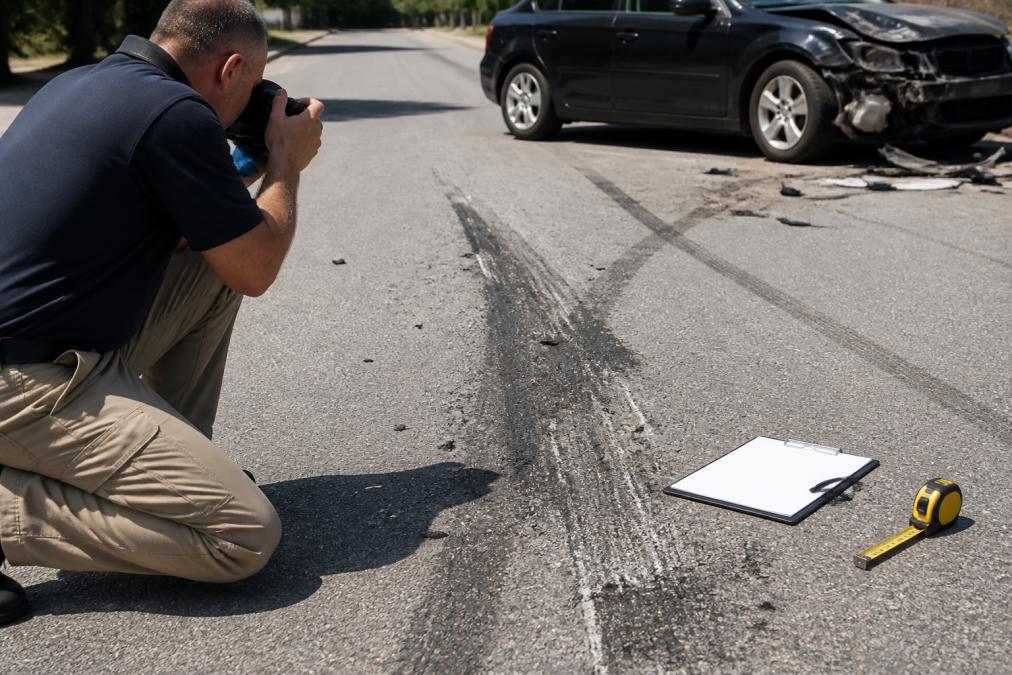
When a private investigator arrives at an accident scene shortly after the crash, they document everything the police report misses. They photograph and measure skid marks, analyze vehicle damage patterns to determine impact angles and force, examine roadway conditions and sight lines, and interview witnesses more thoroughly.
Private investigators use specialized tools and techniques. Accident reconstruction experts may use telematics data from the vehicle, review surveillance footage from nearby cameras, analyze weather conditions at the exact time of impact, and consult with engineers about mechanical systems. This level of detail transforms a simple collision into a detailed causation analysis.
A private investigator report also documents the chain of custody for physical evidence, which is critical for admissibility in court. Private investigators can identify evidence that contradicts the police report’s conclusions. For serious injury claims, private investigator reports often include expert testimony support, which carries weight in settlement negotiations and litigation.
The downside is cost and time. Private investigation is expensive, and a thorough analysis can take weeks or months, depending on evidence availability and expert consultation needs.
Admissibility of Private Investigator Reports in Court
In Georgia, evidence must be relevant, reliable, and obtained through proper chain of custody procedures. A private investigator report that documents physical evidence without proper chain of custody may be challenged or excluded. Experienced investigators follow strict protocols to meet court requirements.
If the report includes accident reconstruction analysis, that analysis typically requires expert testimony from a qualified accident reconstruction specialist. The investigator’s conclusions alone won’t carry the same weight as testimony from an ACTAR-accredited (Accreditation Commission for Traffic Accident Reconstruction) expert.
Courts also scrutinize potential bias. If a private investigator was hired by one party to the accident, the opposing counsel will argue the investigation was biased. To counter this, investigators document their methodology, maintain detailed records, and present findings objectively.
For insurance claims (pre-litigation), private investigator reports carry significant weight. Insurance adjusters understand that a professional investigation is more credible than a police report alone. If your investigator’s findings support your claim, the insurer is more likely to offer a fair settlement. (Source: Georgia Department of Public Safety website)
The key to admissibility is hiring a qualified investigator who understands evidence standards and follows proper procedures.
Cost-Benefit Analysis: Official Reports vs. Private Investigation
An official police report is free. A private investigator report costs money, sometimes substantial money, depending on the case’s complexity.
For minor accidents with clear liability and minimal injury, a police report may be sufficient. For serious injury cases, moderate property damage disputes, or complex liability scenarios, private investigation becomes cost-effective. If private investigation uncovers evidence that increases your settlement by even a few thousand dollars, it pays for itself.
There’s also the litigation risk. If your case goes to court, a private investigator report strengthens your position significantly. The opposing counsel will have a harder time challenging your evidence if it’s professionally documented and expert-backed. This increased credibility often translates to better settlement offers before trial.
Request a copy of your free accident report →
The cost-benefit calculation also depends on the accident’s complexity. A straightforward rear-end collision with clear fault requires less investigation than a multi-vehicle intersection crash with conflicting witness accounts. One more consideration: insurance coverage. Some liability policies or uninsured motorist coverage may include investigative services. Check your policy before hiring a private investigator.
Which Report Type Strengthens Your Case
The honest answer is: you often need both, but for different reasons.
An official police report is the foundation. It’s the government’s record of the accident, and it’s admissible in court and required by insurance companies. A private investigator report is the amplifier. If your police report supports your case, a private investigator report provides the detailed evidence and expert analysis that makes your case bulletproof. If your police report is ambiguous or works against you, private investigation can uncover evidence that contradicts the officer’s conclusions.
Get only the police report if: The accident was minor, liability is clear, injuries are minimal, and the other party’s insurance has already acknowledged fault.
Add private investigation if: Injuries are serious, liability is disputed, the police report contains errors or omissions, or the other party is offering a settlement you believe is too low.
Prioritize private investigation if: The accident involves potential mechanical failure, a third-party defendant, or complex causation.
The timing matters too. Private investigators perform best when they can visit the scene soon after the accident, while evidence is fresh and witnesses are easier to locate.
Georgia Accident Report connects you with car accident and injury lawyers who can advise on whether private investigation makes sense for your specific situation.
Key Comparison: Official Report vs. Private Investigation
|
Aspect |
Official Police Report |
Private Investigator Report |
|---|---|---|
|
Cost |
Free |
Paid (varies by complexity) |
|
Time to Obtain |
Days to weeks |
Weeks to months |
|
Scope |
Scene documentation, witness statements, officer observations |
Detailed causation analysis, expert testimony, evidence preservation |
|
Admissibility |
Yes, as government record |
Yes, if properly documented and expert-backed |
|
Liability Focus |
Traffic law violations |
Forensic analysis and negligence determination |
|
Evidence Chain of Custody |
Basic |
Detailed, court-ready documentation |
|
Usefulness for Insurance |
Essential |
Highly valuable for disputes |
|
Usefulness for Litigation |
Foundational |
Critical for complex cases |
|
Bias Risk |
Minimal (neutral officer) |
Present (hired by one party) |
|
Expert Testimony |
Limited |
Often included |
Getting Your Free Police Report and Next Steps
Start with what’s free and essential: your official police report. Once you have it, you can assess whether private investigation makes sense for your situation.
Georgia Accident Report retrieves your official police report at no cost. You submit your accident details, we contact the appropriate agency, and we get the report to you. There’s no obligation, no hidden fees, and no catch. We also connect you with car accident and injury lawyers who can review your report and advise whether further investigation is warranted.
Once you have your report, the next decision is whether to investigate further. If your injuries are serious, liability is unclear, or the police report seems incomplete, that’s when private investigation adds real value. The lawyers we connect you with can help you make that call based on the specifics of your case.
Georgia State Patrol accident report procedures
ACTAR accident reconstruction standards and expert qualifications
Federal Rules of Evidence standards for expert testimony and investigative reports
The bottom line: An official crash report vs private investigator report isn’t an either-or decision for serious cases, it’s a sequence. Get your police report first. If your case is complex, your injuries are significant, or liability is disputed, add professional investigation. The combination gives you the strongest foundation for insurance settlement or litigation.
Georgia Accident Report makes the first step free and fast. Request your official accident report today, and gain access to legal guidance that can help you understand what comes next.
Frequently Asked Questions
Can a private investigator find evidence that police missed at an accident scene?
Yes. Private investigators conduct detailed scene analysis using specialized tools and techniques to uncover details police may not document, such as precise measurements, sight line obstructions, or mechanical failure indicators. They focus on establishing causation and liability, while police reports prioritize immediate safety and basic facts. This deeper investigation can reveal evidence critical to personal injury claims or litigation, particularly in complex accidents involving multiple vehicles or unclear fault.
Are private investigator reports admissible in court?
Private investigator reports can be admissible in court when they meet evidence standards, though admissibility depends on how evidence was collected, chain of custody, and whether findings are based on expert analysis. Reports containing factual observations and scene documentation are generally stronger than opinions. Expert testimony from ACTAR-accredited accident reconstruction specialists carries significant weight. However, courts examine whether the investigator followed proper procedures and whether conclusions are supported by physical evidence, not speculation.
How long does it take to get an official police accident report in Georgia?
Police accident reports typically take 5-10 business days to complete after an accident, though timelines vary by jurisdiction and case complexity. Requesting through official channels directly can involve calling multiple departments or visiting in person. Services like Georgia Accident Report streamline retrieval by handling agency contact and paperwork, reducing the time you spend navigating the process yourself, though the underlying report completion time remains the same.
Do insurance companies rely solely on police reports to determine fault?
Insurance companies use police reports as a starting point but do not rely on them exclusively. Adjusters conduct their own investigations, interview witnesses, review medical records, and assess property damage. In disputed liability cases, independent investigations and expert testimony often carry equal or greater weight than the police report. This is why obtaining a private investigator report can strengthen your position if the police report contains factual discrepancies or incomplete findings.
Request a copy of your free accident report:
"*" indicates required fields