



Why Use Free Report Retrieval Service
August 23, 2026 | | Blog

Table of Contents
- Why Free Report Retrieval Services Matter After an Accident
- How to Get Police Accident Report Without the Hassle
- Importance of Official Crash Reports for Insurance Claims
- Accident Report Retrieval Timeline: What to Expect
- Free vs. Paid Report Retrieval: Key Differences
- Security and Scam Awareness When Requesting Reports
- When to Use a Free Service vs. Direct Agency Contact
- Conclusion
Last Updated: August 22, 2026
Why Free Report Retrieval Services Matter After an Accident
After a motor vehicle crash, you need official documentation to move forward. An accident report becomes your foundation for insurance claims, establishing fault, and any legal action that might follow. The problem is getting that report shouldn’t consume hours of your time calling police departments, navigating bureaucratic systems, or waiting in lines.
To get your FREE accident report visit georgiaaccidentreport.com and fill out the yellow form.
This is where a free report retrieval service changes everything. Georgia Accident Report and similar services handle the legwork of contacting law enforcement agencies on your behalf, retrieving your official crash report, and delivering it directly to you at no cost. No fees. No hidden charges. No obligation.
The real value isn’t just the zero price tag. It’s reclaiming time when you’re already dealing with injuries, property damage, and insurance adjusters. A free report retrieval service compresses what might take you days or weeks into a simplified process. You submit basic information about your accident, and the service handles the rest, contacting the right agency, tracking down your report, and ensuring you receive an official copy that insurance companies and courts will actually accept.
According to the National Highway Traffic Safety Administration, understanding your accident report and the details it contains is critical for protecting your interests after a crash. When you use a free retrieval service, you’re not just getting a document, you’re getting professional assistance that ensures accuracy and completeness before you need it most.
How to Get Police Accident Report Without the Hassle
Getting an official police accident report directly typically means calling your local police department or state patrol, finding the right department if the accident occurred outside your jurisdiction, providing case numbers or dates, and waiting for processing. Each step introduces delays and friction.
A free report retrieval service eliminates this friction entirely. Here’s what the process looks like:
- Submit your accident details, You provide basic information: date of accident, location, vehicle information, and your contact details. This takes five minutes.
- Service contacts relevant agencies, The retrieval service identifies which police department or state patrol office handled your accident and submits an official request on your behalf.
- Service tracks the report, While you focus on recovery or handling insurance matters, the service monitors the request status and follows up if needed.
- You receive official documentation, The service delivers your official police report directly to you, ready for insurance claims or legal proceedings.
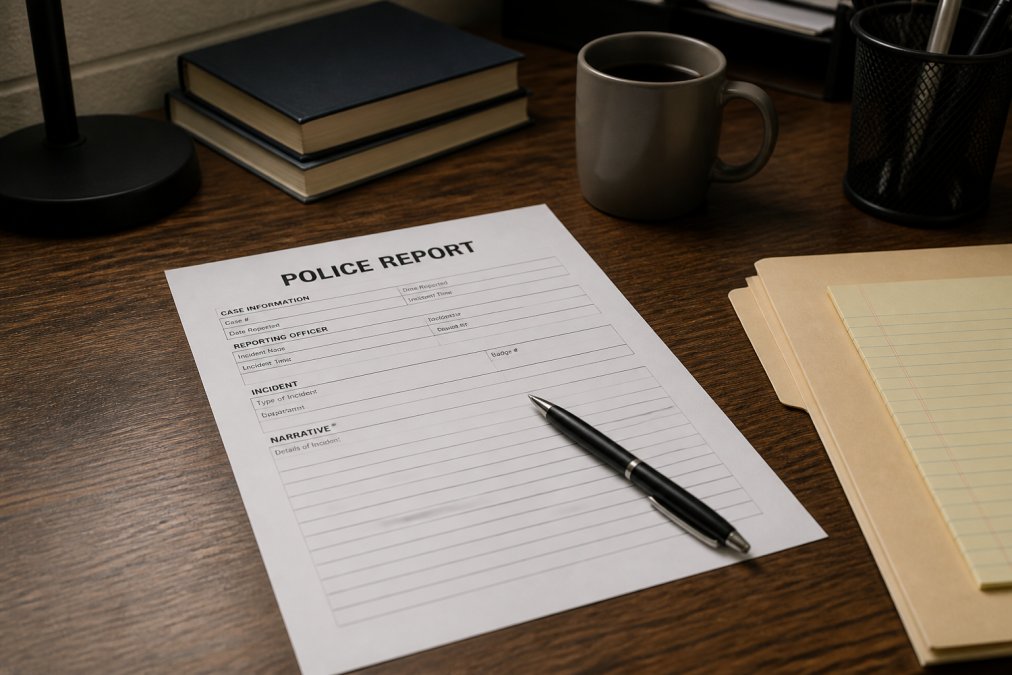
The key difference from doing it yourself: you’re not managing the bureaucracy. You’re not waiting on hold. You’re not wondering whether you contacted the right department or whether your request got lost. A service like Georgia Accident Report handles verification, follow-up, and delivery, all without charging you anything.
This matters most when you’re injured, dealing with medical appointments, or managing property damage. Your attention should be on recovery and your claim, not on tracking down paperwork.
Importance of Official Crash Reports for Insurance Claims
Your insurance company won’t process a claim based on your word alone. They need official documentation. An official police accident report serves as a neutral, third-party account of what happened, including details about fault, contributing factors, weather conditions, and witness statements.
Without an official report, insurance adjusters have limited information. They rely on your account and the other driver’s account, which often conflict. An official report breaks that tie. It documents what law enforcement observed at the scene and what they determined about how the accident occurred.
Here’s what an official report typically includes:
- Accident date, time, and exact location, This establishes jurisdiction and verifies the claim timeline
- Vehicle information, Registration details for both vehicles involved
- Driver information, Names, contact details, and insurance information for all parties
- Witness statements, Accounts from people who saw the accident
- Officer observations, Weather, road conditions, traffic signals, and vehicle damage
- Fault determination, Many reports include the officer’s assessment of contributing factors or citations issued
- Accident diagram, A visual representation of how vehicles were positioned and how the accident occurred
Insurance companies use this information to determine liability and process your claim. Without it, your claim faces delays, disputes, or denial. With it, you have documentation that supports your version of events.
When you use a free report retrieval service, you ensure you have this critical documentation quickly. You’re not waiting weeks for a report to arrive by mail. You’re not dealing with incomplete information. You’re getting the official record that insurers expect and require.
Accident Report Retrieval Timeline: What to Expect
Understanding realistic timelines helps you plan your insurance claim and any legal action. The timeline varies depending on which agency handled your accident and how busy they are.
Police department reports typically take 5-10 business days to become available after the accident. Some departments process faster; others slower. Rural areas sometimes take longer due to smaller staffing.
State patrol reports often follow similar timelines, though state agencies sometimes have faster processing systems than local departments. Georgia Department of Public Safety reports, for example, are processed through their EPORTS system and typically available within three business days of submission (georgia.gov).
Using a retrieval service compresses your waiting time. Instead of you calling the department, waiting on hold, providing information, and waiting for processing, the service submits the request immediately and monitors status. Many services can deliver reports within 5-15 business days from your initial request, depending on agency processing times.
Delays occur when:
- The accident report wasn’t filed yet (rare, but happens if the accident was very recent)
- The police department requires a case number or report number you don’t have
- The accident occurred in a different jurisdiction than where you filed your insurance claim
- The agency requires you to request the report in person or by mail only
- High volume at the agency slows processing
A free report retrieval service navigates these delays for you. They know which agencies accept electronic requests, which require specific information, and how to follow up when processing stalls. This expertise typically saves you 1-2 weeks compared to handling it yourself.
Free vs. Paid Report Retrieval: Key Differences
You have three basic options: retrieve the report yourself, use a free retrieval service, or pay a third-party service to retrieve it.
Retrieving it yourself:
- Cost: Free (except possible police department fees)
- Time: 2-4 hours of your time plus 5-10 business days waiting
- Effort: Multiple phone calls, potential trips to the police department, managing follow-ups
- Risk: You might contact the wrong department or provide incomplete information
Using a free retrieval service like Georgia Accident Report:
- Cost: Completely free
- Time: 5-15 business days from your request
- Effort: 5 minutes to submit your information; service handles the rest
- Additional benefit: Access to legal consultation if you need it
- Risk: None, you’re not obligated to use legal services if you don’t want them
Using a paid retrieval service:
- Cost: Typically $30-$50 per report
- Time: Similar to free services (5-15 business days)
- Effort: Same minimal effort as free services
- Benefit: Slightly faster processing in some cases
- Risk: You’re paying for something free services provide at no cost
The practical difference between free and paid services is minimal for most people. Both handle the paperwork. Both contact the relevant agencies. Both deliver official reports. The main distinction: paid services may prioritize faster processing, but free services like Georgia Accident Report deliver the same official documentation without the cost.
Request a copy of your free accident report →
A free service makes sense unless you have an urgent deadline requiring expedited processing. Most people don’t. Your insurance company will accept a report that arrives in two weeks just as readily as one that arrives in five days.
Security and Scam Awareness When Requesting Reports
When you submit personal information to any service, even a free one, you need to verify you’re dealing with a legitimate operation. Accident report scams exist, and they target people in vulnerable situations right after a crash.
Red flags to watch for:
- Requests for payment upfront, Legitimate free services don’t charge you anything
- Requests for your Social Security number, Services need your driver’s license information and accident details, not your SSN
- Unsolicited contact, Scammers often call or email accident victims directly; legitimate services wait for you to submit a request
- Pressure to use their legal services, Free retrieval services may offer legal consultation, but they shouldn’t pressure you into it
- Unclear privacy policies, Legitimate services clearly state how they protect your information and whether they share it with third parties
- No verifiable business address or contact information, Check whether the service has a real office, phone number, and online reviews

How to verify a legitimate service:
- Check for compliance with privacy regulations, Services handling accident reports should comply with privacy regulations. Look for statements about HIPAA compliance.
- Verify they’re connected to legal professionals, Georgia Accident Report, for example, connects users with actual car accident and injury lawyers. You should be able to verify these connections exist.
- Look for independent reviews, Check Google reviews, Better Business Bureau ratings, and testimonials from actual users.
- Confirm they contact official agencies, Legitimate services contact police departments and state patrol offices directly. They don’t use unofficial channels or workarounds.
- Read their privacy policy, Legitimate services clearly explain how they use your information and whether they share it with partner attorneys.
Never submit sensitive information to a service you can’t verify. When in doubt, contact your local police department directly, it’s slower, but it’s always safe.
When to Use a Free Service vs. Direct Agency Contact
Sometimes contacting the police department directly makes sense. Other times, a free retrieval service is clearly the better choice. Here’s how to decide:
Use a free retrieval service when:
- You’re injured or dealing with significant property damage and don’t have time for multiple phone calls
- You’re uncertain which police department handled your accident (especially if it occurred in an unfamiliar area)
- You’ve already called the department and gotten incomplete information
- You want to avoid the back-and-forth of tracking down case numbers and following up
- You might need legal consultation alongside your report retrieval
- You’re managing insurance claims and want everything coordinated through one point of contact
Contact the agency directly when:
- You know exactly which police department or state patrol office handled your accident
- You have your accident report number or case number already
- You need the report urgently and want to ask about expedited processing
- You prefer handling everything yourself and have the time available
- You only need the report for your own records, not for insurance or legal purposes
The practical reality: a free service saves time and reduces frustration for most people. Direct contact works fine if you’re organized, patient, and have availability. For anyone dealing with injuries, property damage, or insurance pressure, a free service removes stress from an already stressful situation.
|
Retrieval Method |
Time Required |
Cost |
Best For |
Effort Level |
|---|---|---|---|---|
|
Direct agency contact |
2-4 hours plus 5-10 business days |
Free (possible department fees) |
Organized individuals with time |
High |
|
Free retrieval service |
5 minutes plus 5-15 business days |
Free |
Most accident victims |
Low |
|
Paid retrieval service |
5 minutes plus 3-7 business days |
$30-$50 |
Urgent deadlines |
Low |
Conclusion
A free report retrieval service exists for one reason: getting your official accident report shouldn’t add stress to an already difficult situation. You’ve dealt with the crash itself, potential injuries, and insurance complications. Retrieving paperwork shouldn’t be another burden.
Georgia Accident Report simplifies this process by handling agency contact, tracking, and delivery at no cost to you. You submit your information once, and the service manages everything else. You receive an official police report that insurance companies will accept, all without paying anything or feeling obligated to use legal services you don’t need.
The Federal Trade Commission emphasizes the importance of verifying services before sharing personal information. When you choose a legitimate free retrieval service, you’re making a smart choice for both your wallet and your peace of mind.
Request a copy of your free accident report from Georgia Accident Report and eliminate one task from your post-accident to-do list.
=== FAQ ANSWERS (audit these too, same rules) ===
[1] Q: Why is it difficult to obtain a police accident report on my own? A: Police departments handle thousands of requests and often require specific information like the report number, date, and location. You may need to contact multiple agencies if you’re unsure which department responded. Processing times vary by jurisdiction, sometimes taking weeks. A free report retrieval service handles these coordination steps, tracks your request, and follows up with agencies on your behalf, eliminating the need for repeated phone calls or emails.
[2] Q: How long does it typically take to get an accident report through a retrieval service? A: Accident report retrieval timeline depends on the responding agency and report availability. State Patrol reports typically process within three business days through official channels. Local police departments may take longer. A retrieval service accelerates this by submitting requests immediately and maintaining contact with agencies, often delivering reports faster than if you request directly. Expect a realistic timeframe of several business days to one week for most reports.
[3] Q: Is it safe to use a free service for accident report retrieval? A: Legitimate free report retrieval services operate transparently and protect your information through secure portals and HIPAA-compliant systems. Verify the service has a clear privacy policy and secure data handling practices. Avoid services that ask for payment upfront, guarantee instant results, or request sensitive information via unsecured email. Established services like Georgia Accident Report connect you with verified legal professionals and maintain strong data security practices.
[4] Q: What information is required to request a police accident report? A: Most report requests require the accident date, location, names of involved parties, and vehicle information. If you have the police report number, include it to speed up the process. Some agencies ask for your driver’s license number or insurance information. A retrieval service will guide you through what information they need and what the responding agency requires, ensuring your request is complete and reducing delays from missing details.
Frequently Asked Questions
Q: Why is it difficult to obtain a police accident report on my own?
A: Police departments handle thousands of requests and often require specific information like the report number, date, and location. You may need to contact multiple agencies if you're unsure which department responded. Processing times vary by jurisdiction, sometimes taking weeks. A free report retrieval service handles these coordination steps, tracks your request, and follows up with agencies on your behalf, eliminating the need for repeated phone calls or emails.
Q: How long does it typically take to get an accident report through a retrieval service?
A: Accident report retrieval timeline depends on the responding agency and report availability. State Patrol reports typically process within three business days through official channels. Local police departments may take longer. A retrieval service accelerates this by submitting requests immediately and maintaining contact with agencies, often delivering reports faster than if you request directly. Expect a realistic timeframe of several business days to one week for most reports.
Q: Is it safe to use a free service for accident report retrieval?
A: Legitimate free report retrieval services operate transparently and protect your information through secure portals and HIPAA-compliant systems. Verify the service has a clear privacy policy and secure data handling practices. Avoid services that ask for payment upfront, guarantee instant results, or request sensitive information via unsecured email. Established services like Georgia Accident Report connect you with verified legal professionals and maintain strong data security practices.
Q: What information is required to request a police accident report?
A: Most report requests require the accident date, location, names of involved parties, and vehicle information. If you have the police report number, include it to speed up the process. Some agencies ask for your driver's license number or insurance information. A retrieval service will guide you through what information they need and what the responding agency requires, ensuring your request is complete and reducing delays from missing details.
Request a copy of your free accident report:
"*" indicates required fields