
5 Best Ways to Use Crash Reports for Claims
August 31, 2026 | | Blog
Table of Contents
- How to Get a Police Report
- Use Crash Reports to Establish Liability and Fault
- How to Read a Georgia Accident Report
- Submit Crash Reports to Your Insurance Company
- Disputing Information on a Police Crash Report
- Use Crash Reports to Support Personal Injury Claims
- Work With a Lawyer to Maximize Your Crash Report
- Frequently Asked Questions
Last Updated: August 30, 2026
When a car accident happens, the police report becomes your most valuable document. It establishes who caused the crash, details what happened, and provides the official record insurance companies need to process your claim. Understanding how to use crash reports for claims transforms confusing paperwork into a strategic tool that protects your interests.
To get your FREE accident report visit georgiaaccidentreport.com and fill out the yellow form.
At Georgia Accident Report, we’ve helped accident victims navigate this process. The difference between a claim that gets approved quickly and one that stalls often comes down to how effectively you use the police report. Below, we’ll walk you through exactly how to obtain your report, read it correctly, challenge inaccuracies, and use it to support your case.
How to Get a Police Report
Obtaining your official police accident report is straightforward. If law enforcement responded to your crash, an investigating officer filed a formal report documenting the incident, witness statements, and preliminary fault determination.
Contact the police department or highway patrol agency that responded to your accident. Call their non-emergency number, provide your name, driver’s license number, and the date and location of the crash, and ask for the report number. The waiting period typically ranges from a few days to several weeks, depending on the agency’s workload (nhtsa.dot.gov). If the crash involved serious injuries or remains under investigation, the report may not be immediately available.
Georgia Accident Report eliminates the back-and-forth with multiple agencies. Our service handles the entire retrieval process at no cost, you submit your information once, and we contact the appropriate department on your behalf. This approach saves hours of phone calls and removes uncertainty about where to send your request.
Use Crash Reports to Establish Liability and Fault
The police report is the foundation for determining who bears legal responsibility for the accident. The investigating officer’s assessment of fault, based on witness testimony, physical evidence, and traffic law violations, carries significant weight in insurance settlements and legal proceedings.
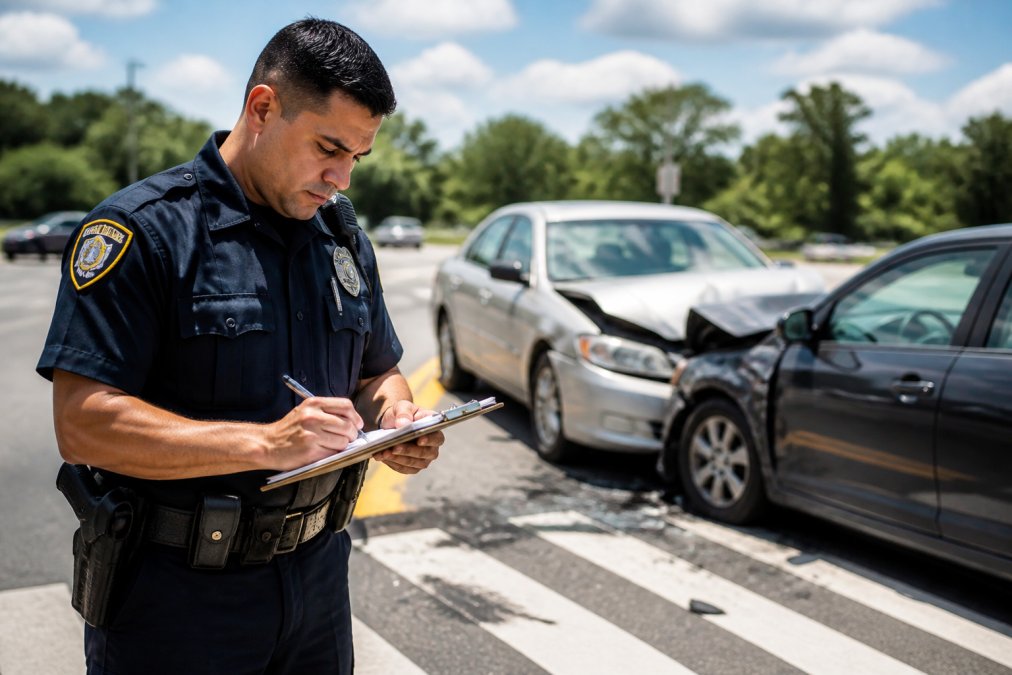
The report documents critical fault indicators: traffic violations, road conditions, driver statements, and witness accounts. If the other driver ran a red light, was speeding, or violated another traffic law, that violation appears in the official record. Insurance adjusters use these documented violations to determine liability percentages and approve or deny claims.
In many states, comparative negligence rules allow both parties to share fault. A report showing the other driver was 80% at fault and you were 20% at fault affects how much compensation you receive. Some jurisdictions follow pure comparative negligence, meaning you can recover damages even if you’re partially responsible (peer-reviewed research). Others use modified comparative negligence, which bars recovery if you’re more than 50% at fault.
The investigating officer’s narrative section is particularly valuable. This section describes how the crash occurred, the sequence of events, and any statements made by drivers or witnesses at the scene. A detailed narrative that clearly shows the other driver’s negligence strengthens your position significantly.
How to Read a Georgia Accident Report
Police accident reports follow a standardized format. The report typically opens with basic information: the date, time, location, weather conditions, and road surface conditions at the time of the crash.
The vehicle information section lists details about both vehicles involved: make, model, year, license plate, VIN, and insurance information. Verify this information is accurate; errors here can complicate your insurance claim.
The driver information section contains the names, addresses, phone numbers, driver’s license numbers, and insurance details for all drivers involved. Check that your information is recorded correctly.
The narrative section is where the officer describes what happened. This section typically begins with the officer’s assessment of fault, followed by a chronological account of events. The officer may note traffic violations, such as failure to yield, speeding, or improper lane changes. Pay close attention to whether the narrative accurately reflects what you witnessed.
The witness section lists all individuals who provided statements at the scene. Their accounts are summarized, and their contact information is included. Witnesses provide independent corroboration of what happened, making their statements powerful evidence in your favor.
The diagram or sketch section shows the accident scene layout, vehicle positions, and point of impact. This visual representation helps clarify how the collision occurred and can be crucial in disputed liability cases.
The injuries and property damage section documents any reported injuries and damage estimates. If you were injured, ensure your injuries are documented here.
Understanding these sections allows you to identify gaps, errors, or omissions that could affect your claim.
Submit Crash Reports to Your Insurance Company
Your insurance company requires the official police report to process your claim. Submitting it promptly, typically within 30 days of the accident, demonstrates your commitment to resolving the matter quickly and can expedite the claims process (naic.org).

When you contact your insurance company, have your policy number and the accident details ready. Most insurers allow you to submit the report through their online portal, by email, or by mail. Digital submission is fastest and provides immediate confirmation of receipt.
Include a cover letter with your submission that briefly summarizes the accident and references the police report number. This simple step ensures your report reaches the right department and gets attached to your claim file promptly.
Your insurance adjuster will review the police report as part of their investigation. The report’s fault determination significantly influences their liability assessment and settlement offer. However, insurance companies don’t automatically accept the police officer’s fault determination. Adjusters conduct their own investigations and may request additional documentation.
Keep copies of your police report for your records and provide copies to any lawyers you hire.
Request a copy of your free accident report →
Disputing Information on a Police Crash Report
Police reports aren’t always accurate. Officers make mistakes, misinterpret witness statements, or fail to document important details. If you believe your report contains errors or omissions that harm your case, you have the right to challenge them.
The first step is requesting an amended or supplemental report. Contact the investigating officer or the police department’s records division and explain the inaccuracy. Provide specific details about what’s wrong and offer evidence such as dashcam footage, witness statements, or speed calculations.
Some departments are responsive to correction requests and will issue supplemental reports documenting the error and providing accurate information. Others view the original report as final.
Document your dispute in writing. Create a detailed letter explaining the error, why it matters, and what the correct information should be. Include supporting evidence: photographs, witness contact information, medical records, or expert analysis. This written dispute becomes part of your claim file and demonstrates to insurance companies and courts that you’ve challenged the inaccuracy formally.
Common errors in accident reports include incorrect vehicle descriptions, inaccurate driver statements, missing witness information, or mischaracterized traffic violations. These errors can swing fault determination dramatically, making correction essential.
Use Crash Reports to Support Personal Injury Claims
If you sustained injuries in the accident, the police report becomes critical evidence in your personal injury claim. The report documents the accident’s severity, circumstances, and initial observations about injuries, information that supports the connection between the crash and your medical condition.
Insurance companies and juries want to understand how the accident happened and why it caused injury. A report describing a high-speed collision or a crash with significant property damage supports claims of serious injury.
The report’s injury section should document any injuries you reported at the scene. If you told the officer you experienced back pain, neck stiffness, or other symptoms, that information should appear in the report. Medical records later documenting these same injuries establish a clear causal chain: the accident caused the injury.
However, many accident victims don’t realize the full extent of their injuries immediately. Symptoms like whiplash, concussions, or internal injuries may not appear until hours or days after the crash. If your report doesn’t mention injuries because you felt fine at the scene, this doesn’t weaken your claim, but you’ll need medical documentation showing when symptoms began and their connection to the accident.
Gather medical records, diagnostic imaging, physical therapy notes, and expert opinions linking your injuries to the accident. These documents work alongside the police report to establish causation.
Work With a Lawyer to Maximize Your Crash Report
A personal injury or car accident lawyer knows how to extract maximum value from your police report. They understand which details matter most, how to challenge inaccuracies, and how to present the report strategically to insurance companies and courts.
Lawyers use the police report as a foundation for investigation. They may request the complete accident file from the police department, which includes photographs, video footage, and detailed witness statements not always included in the public report.
An attorney can also identify gaps or weaknesses in the police investigation. If critical witnesses weren’t interviewed, if the scene investigation was incomplete, or if the officer’s conclusions don’t align with physical evidence, your lawyer can commission expert analysis to fill those gaps.
When disputing the police report’s fault determination, a lawyer’s advocacy carries weight. Insurance adjusters take legal representation seriously and are more likely to reconsider their position when an attorney presents evidence of inaccuracy.
Georgia Accident Report connects you with experienced car accident and injury lawyers who understand how to use police reports for maximum recovery. These attorneys work on contingency in many cases, meaning they only get paid if you win, aligning their interests with yours.
A lawyer also protects you from common mistakes. Many accident victims settle claims too quickly, before understanding the full extent of their injuries or the true value of their case.
Getting your police report is just the beginning. The real power lies in understanding what it says, using it strategically, and knowing when to challenge it. Whether you’re filing an insurance claim or pursuing a personal injury lawsuit, your police report is your most important document.
If you’re navigating this process alone and feel uncertain about next steps, Georgia Accident Report makes it simple. Request your free accident report and connect with a qualified lawyer who can review it with you, identify opportunities to strengthen your claim, and guide you toward the best outcome.
Frequently Asked Questions
How long does it take to get an official crash report?
Turnaround time varies by jurisdiction and reporting agency. Most police departments process reports within 7-10 business days, though some may take longer. Digital submission systems can sometimes expedite this timeline. Georgia Accident Report handles the legwork of contacting the appropriate agency on your behalf, which can reduce the time you spend waiting and coordinating with multiple departments.
What information in a crash report is most important for insurance adjusters?
Insurance adjusters prioritize the investigating officer’s determination of fault, driver statements, witness testimony, and the accident scene description. The report’s factual details about vehicle damage, property damage, and bodily injury claims directly influence how your claim is evaluated. The official documentation also establishes the accident as a recorded event, which strengthens the credibility of your claim.
How does an official police report influence liability in an insurance claim?
An official police report serves as an unbiased third-party record that documents the accident scene, driver statements, and the investigating officer’s preliminary assessment of fault. Insurance companies use this official documentation to determine liability and settle claims. A report that clearly documents the other driver’s responsibility can significantly support your claim and help you avoid contributory negligence findings.
What should I do if my crash report contains factual errors?
If you find inaccuracies in your police report, contact the reporting agency or investigating officer to request a supplemental report that corrects the errors. Document the specific discrepancies and provide evidence to support your correction request. A lawyer can help you challenge contested facts in the report and ensure the official record reflects what actually happened at the accident scene.
Request a copy of your free accident report:
"*" indicates required fields